Library · Public domain

The Principlesof Chemistry

Основы химии

Cover illustration of the book

Choose your version

The same text, told at every level, in every language and look shown here. Pick, then listen or download.

Listen and watch

The same player the product gives for your own book: the voice, the drawings as they are drawn, the text.

The textbook in which Mendeleev first set out his periodic law, in its last edition from his lifetime. Its Introduction asks what changes when one substance turns into another and what stays the same: the weight on Lavoisier's balance, the elements, the fixed proportions in which they combine.

This is a sample: 1 of 25 chapters.

From the lectures

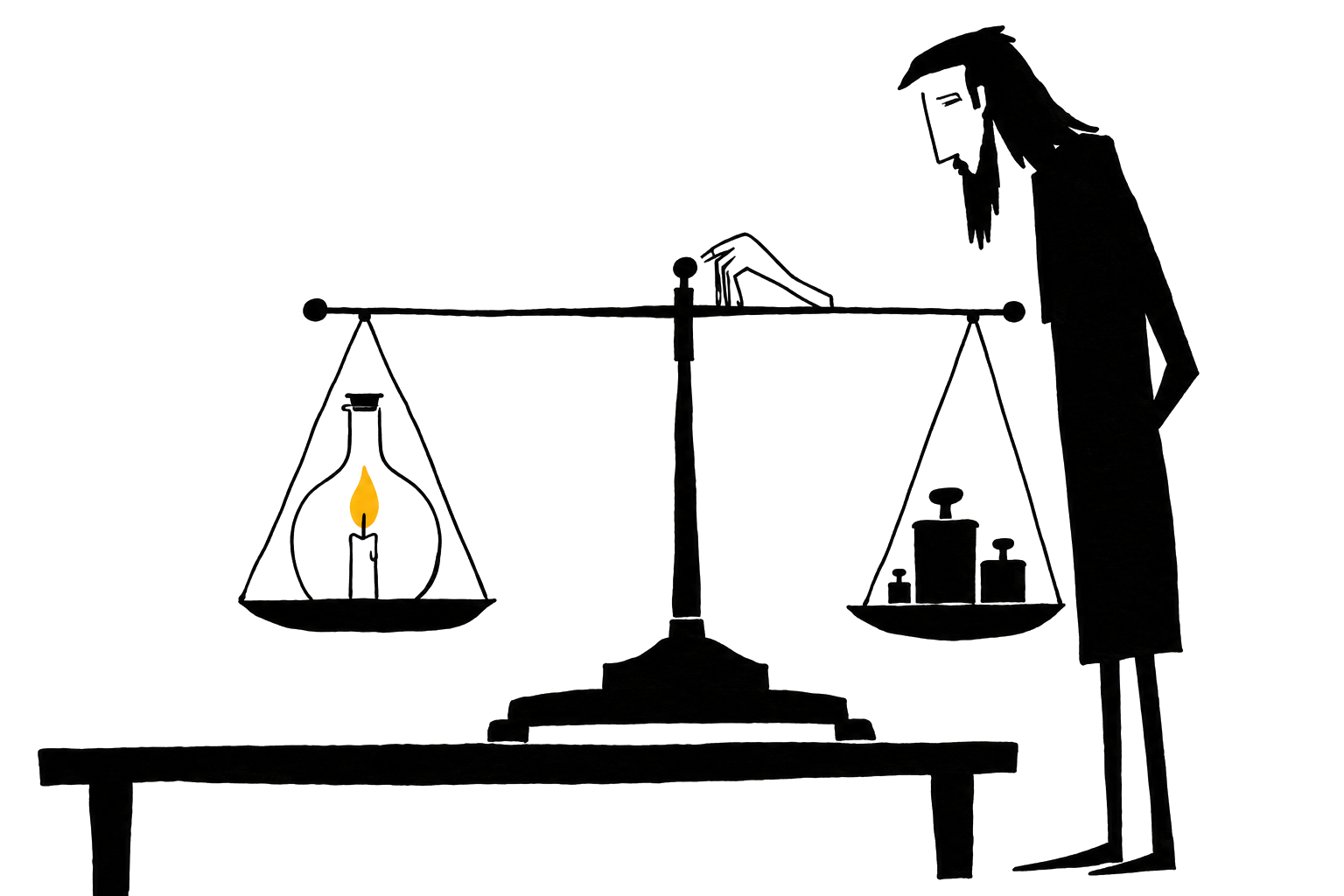
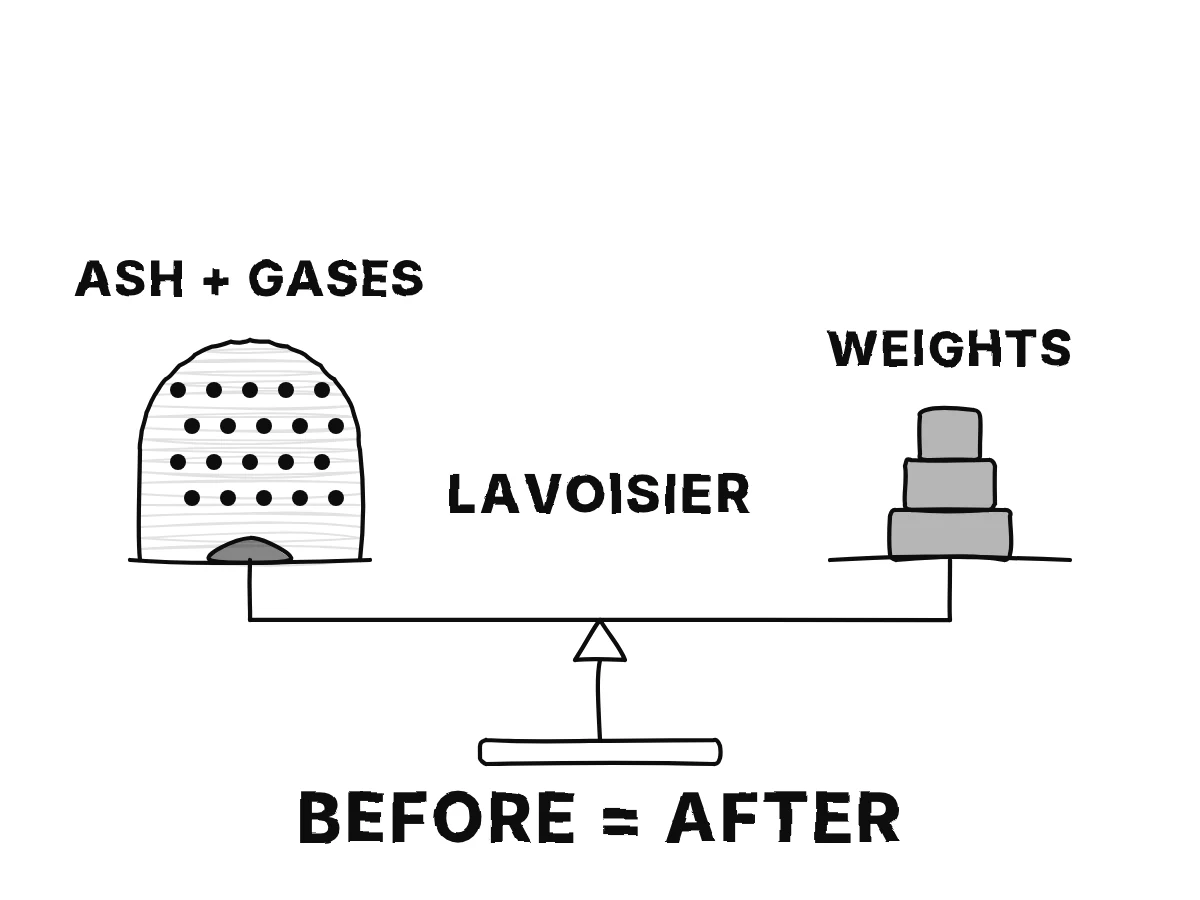
A balance with a glass bell on the left pan holding a log in air and weights on the right pan; the log turns to ash and smoke inside the bell and the beam stays level.
Nothing Disappears

Lavoisier Weighs Everything

Go back to the burning log. If you could catch all the smoke and weigh it, you would find that the gases weigh more than the wood did, because the wood has combined with part of the air. The acorn grows into an oak by taking gases from the air and water with dissolved substances from the soil.
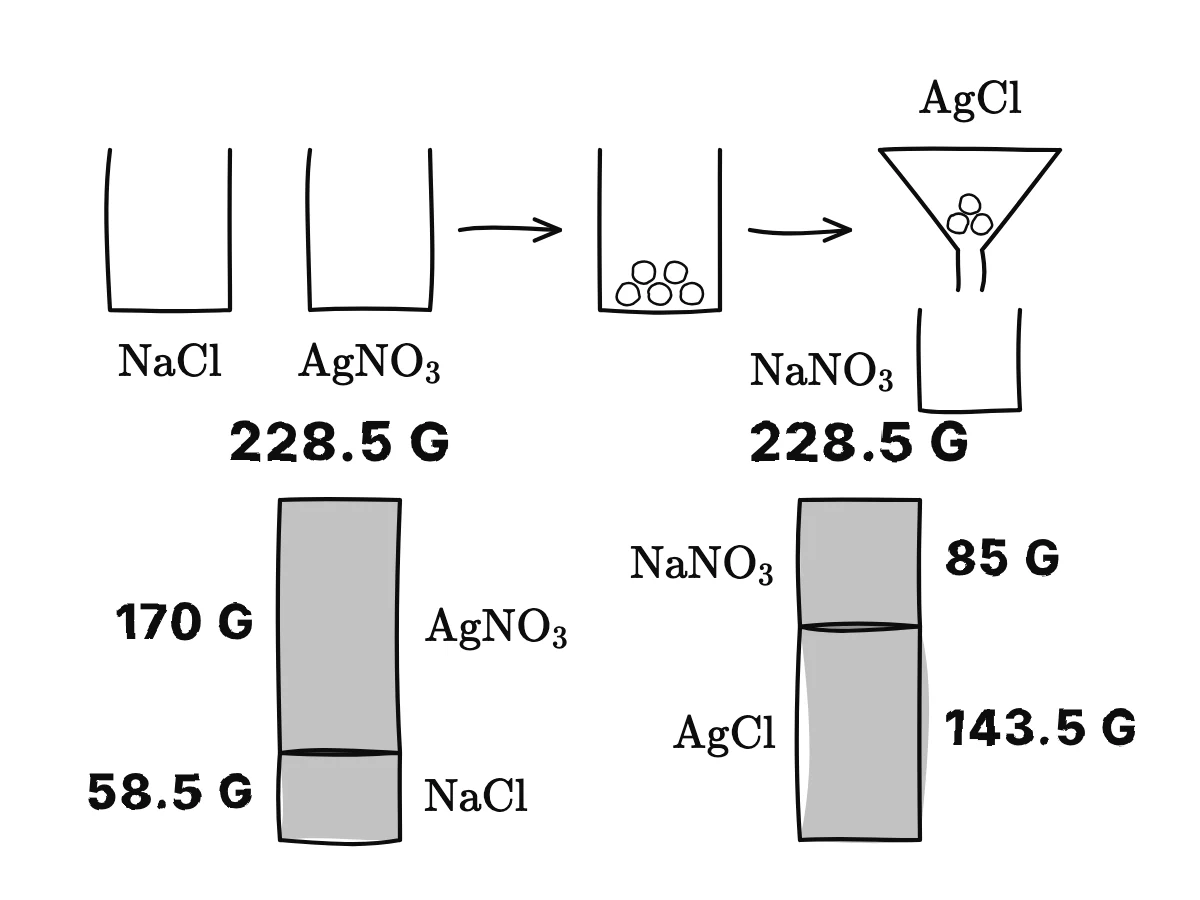
Two glasses, salt solution and silver nitrate, poured together; a filter keeps white silver chloride and lets sodium nitrate through; the weights 58.5 plus 170 on the left and 143.5 plus 85 on the right both total 228.5 grams.
Gases You Cannot See

A Swap That Still Adds Up

A third experiment shows a swap, and this time with numbers. Dissolve common salt in water, and dissolve silver nitrate, which was once used to cauterise wounds, in another glass. Pour the two clear solutions together, and at once a white powder appears and sinks to the bottom.

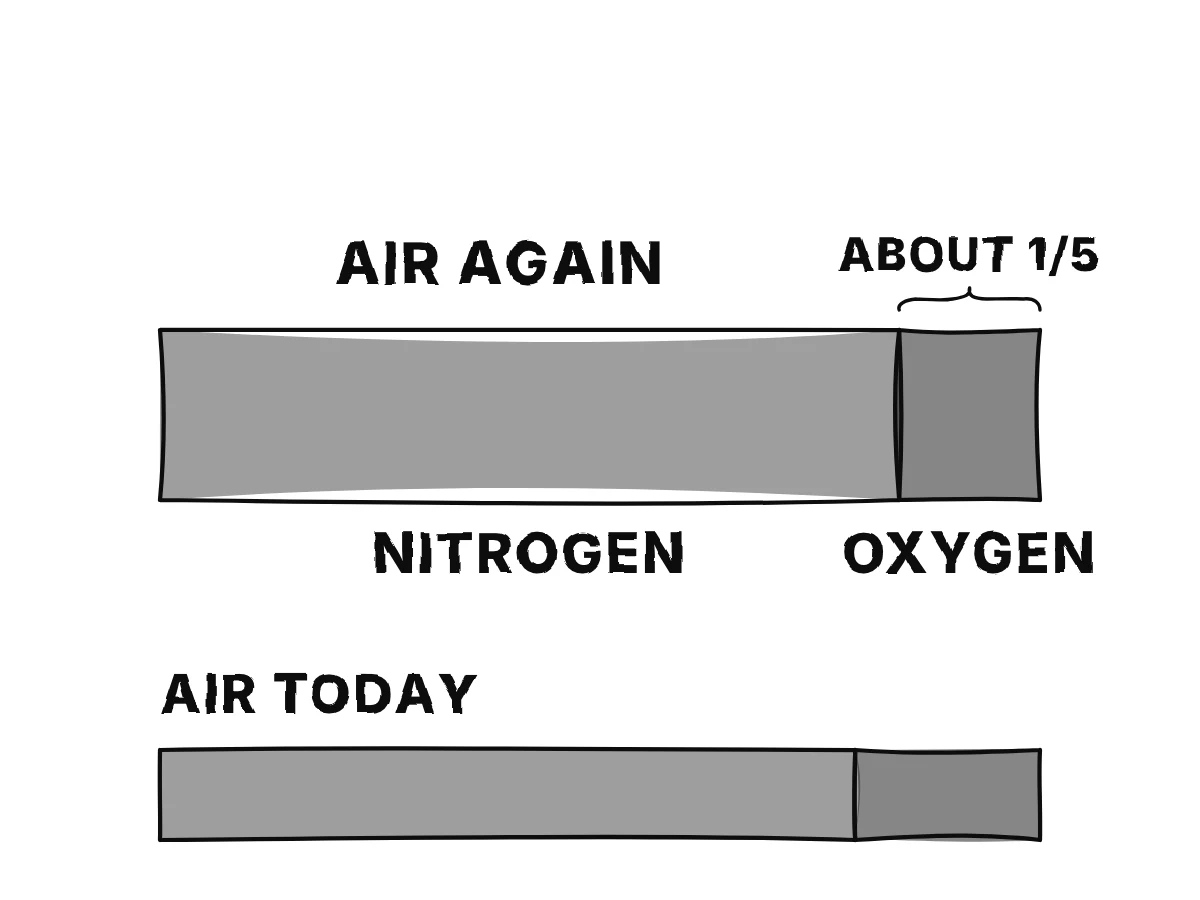
A bar for 50 cubic inches of air split into 42 parts nitrogen and 8 parts oxygen; the oxygen part goes to the mercury, and a splinter goes out in the nitrogen.
Twelve Days with Mercury

Air Is Two Gases

The air left in the bell was strange. It would not turn any metal into scale, and it supported neither burning nor breathing. A lit splinter plunged into it went out at once, in Lavoisier's own words, as if it had been dipped into water.

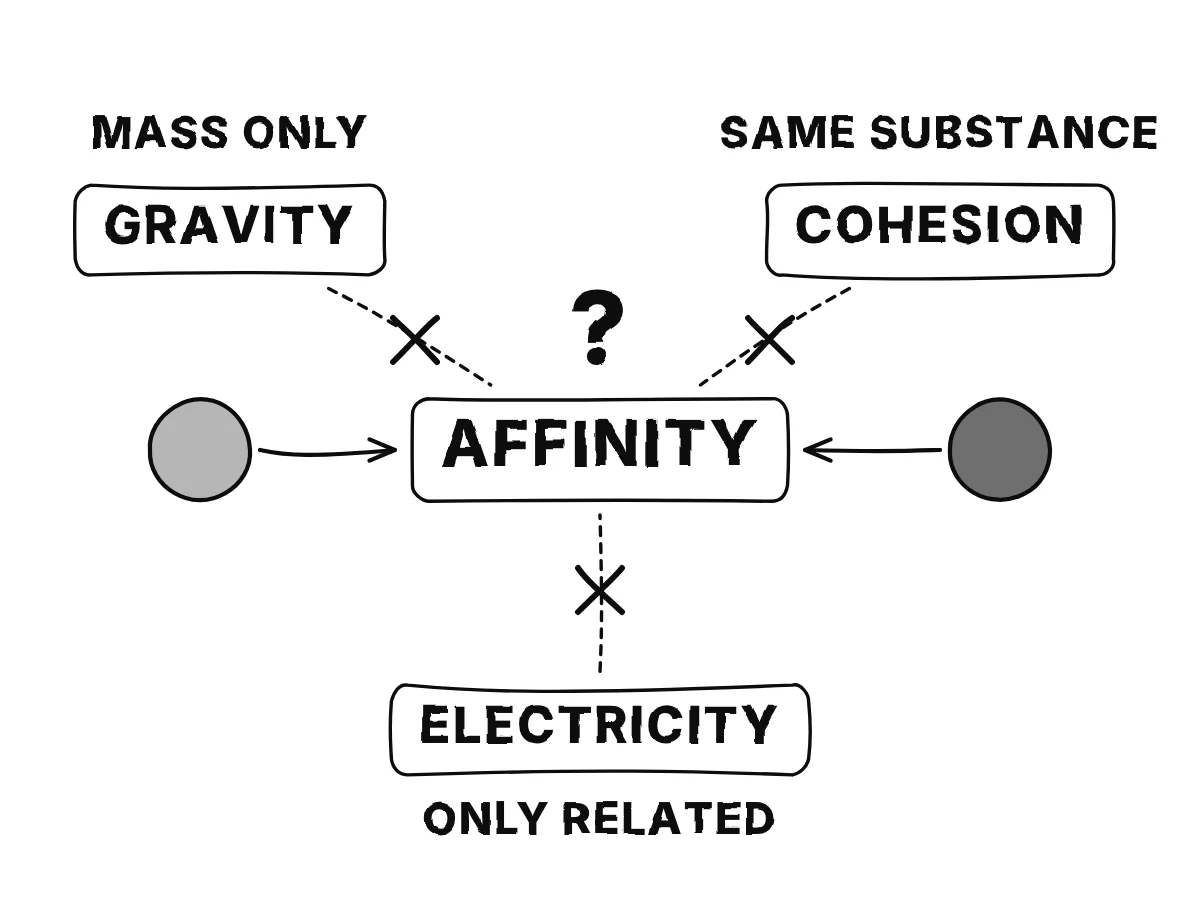
A central box labelled affinity with three crossed-out candidates around it, gravity, cohesion and electricity, and a note that its nature is still hidden.
What Holds Substances Together

What Affinity Is Not

Now to the real question: what drives substances to combine, and what then holds them together? Each element has its own character. Sulphur combines easily with metals, with oxygen, with chlorine and with carbon; gold and silver combine reluctantly, and many of their compounds fall apart when heated.

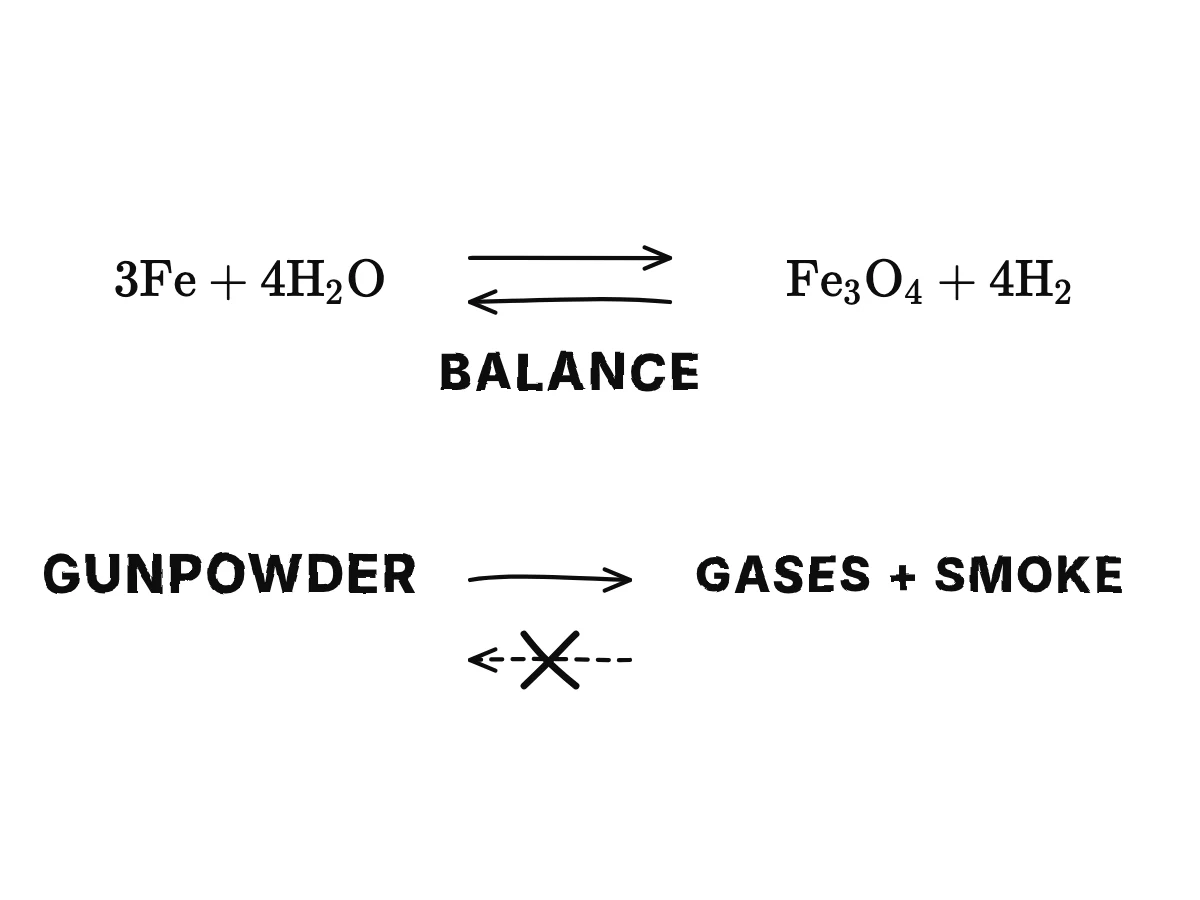
Top, iron and water vapour give iron oxide and hydrogen, with a double arrow showing it runs both ways; bottom, gunpowder gives gases and smoke with a one-way arrow and a crossed-out return arrow.
A Window of Temperature

Reactions That Run Back

Mendeleev's next distinction is between reactions that can run backwards and those that cannot. Salt dissolves in water, and at the same temperature the solution can give back salt as the water evaporates.

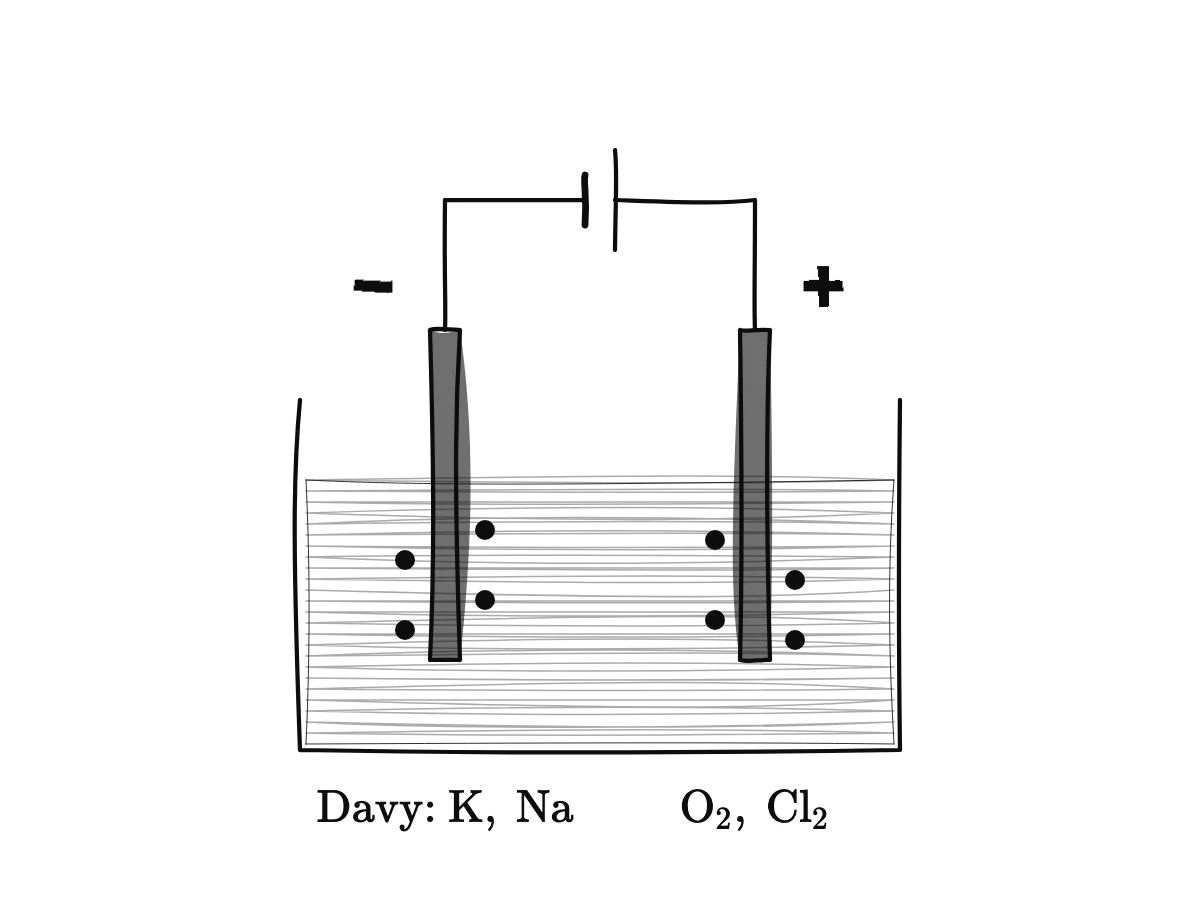
An electrolysis cell: a vessel of liquid with two rods, the negative one collecting metal and hydrogen, the positive one oxygen and chlorine.
Halfway Apart

Current Splits Compounds

Heat is not the only thing that sways reactions. An electric current does much the same: it splits most compounds that conduct it, and near those conditions it can also make substances combine. Its great advantage is that it works at room temperature and can split even the most stubborn compounds.

How it was made

Examples for: a curious adult with school chemistry; add one modern instance per idea, such as a kitchen, a battery, a lab scale or a factory

The source

The lectures retell the Russian text of the 7th edition, St Petersburg 1903 (Internet Archive 20200627_mendeleev_basic). The author died in 1907; the work is in the public domain. The retelling, the drawings and the voice are made by AI and checked against the book by a second model; nothing was edited by hand. How AI is used.

The lectures are free to read, share and quote with a link to this page.

Your own hard book, the same way

Upload a textbook or any difficult book. The first five minutes are free.

Upload a book