Auf Ihrem Niveau erklärt
Alle Formeln behalten oder ganz darauf verzichten. Sie bestimmen die Tiefe.
Laden Sie ein Lehrbuch oder ein anderes schwieriges Buch hoch. Sie erhalten es auf Ihrem Niveau erklärt, vorgelesen und mit einer Zeichnung zu jeder Idee.
Ziehen Sie Ihr Buch hierher
EPUB, FB2, PDF, DjVu oder TXT, bis zu 200 MB
Ihre Datei bleibt privat
Die Brennweite f′ eines Systems ist der Abstand von seiner hinteren Hauptebene H′ zum hinteren Brennpunkt F′. Bei einer dünnen Linse in Luft wird sie durch die Krümmungsradien r₁, r₂ ihrer Flächen und den Brechungsindex n des Glases bestimmt: 1/f′ = (n − 1)(1/r₁ − 1/r₂).
A lens is stronger when its glass is denser and its surfaces are more curved. Take ordinary glass, in which light travels one and a half times slower than in air, and curve both sides like a ball twenty centimetres across. Work it through and the focal length comes out at about ten centimetres: sunlight gathers into a point a palm's width behind the lens.
Alle Formeln behalten oder ganz darauf verzichten. Sie bestimmen die Tiefe.
Ihr Gerät liest jeden Vortrag kostenlos vor. Der gerade vorgelesene Satz wird im Text hervorgehoben.
Schemata und Diagramme entstehen Schritt für Schritt, im Takt mit der Stimme.
Sagen Sie, womit Sie arbeiten. Die Beispiele nutzen Ihre Werkzeuge, nicht die anderer.
The same hard book is a different problem for a student before an exam and for an engineer on a deadline. Pick yours.
The textbook the course is built on, at a level you can follow tonight.
See howThe reference book of your field, at the depth today’s task needs.
See howRead into the neighbouring field without losing a month to its textbook.
See howSee a hard chapter explained five ways before you explain it yourself.
See howThe great hard books you always meant to read, finally followed to the end.
See howDerselbe Absatz auf fünf Niveaus. Bevor etwas erstellt wird, wählen Sie anhand eines Absatzes aus Ihrem Buch ein Niveau.
Formeln in Worten, mit einem durchgerechneten Beispiel.
Eine Linse ist stärker, wenn ihr Glas dichter und ihre Flächen stärker gekrümmt sind. Nehmen Sie gewöhnliches Glas, in dem Licht eineinhalbmal langsamer ist als in Luft, und krümmen Sie beide Seiten wie eine Kugel mit zwanzig Zentimetern Durchmesser. Die Rechnung ergibt etwa zehn Zentimeter Brennweite: Sonnenlicht sammelt sich eine Handbreit hinter der Linse in einem Punkt.
Ein Beispielabsatz. Ihrer stammt aus Ihrem Buch.
Add questions after each part, worked examples and a pointer back to the page. Each is optional. Try them here.
Question 1 of 3
You swap a lens for one of the same shape made of denser glass. What happens to the point where sunlight gathers?
Ordinary glass, in which light travels one and a half times slower than in air. Both sides are curved like a ball twenty centimetres across. How far behind the lens does sunlight gather?
The same glass, but now one side is flat and only the other is curved. Where does the light gather?
Chapter 2. The thin lens · pages 41–44
Starts at: «The focal length f′ of a system is the distance from its rear principal plane H′ to the rear focal point F′…»
Every part says which chapter and pages of your book it retells. Cite the book, not the retelling, and open the original where it matters.
An example. Yours are written from your own book, and a second model answers every question before you see it. Available in the player
Five hard passages, five styles, every drawing made by our stage. Pick one style and every scene of the book follows it.
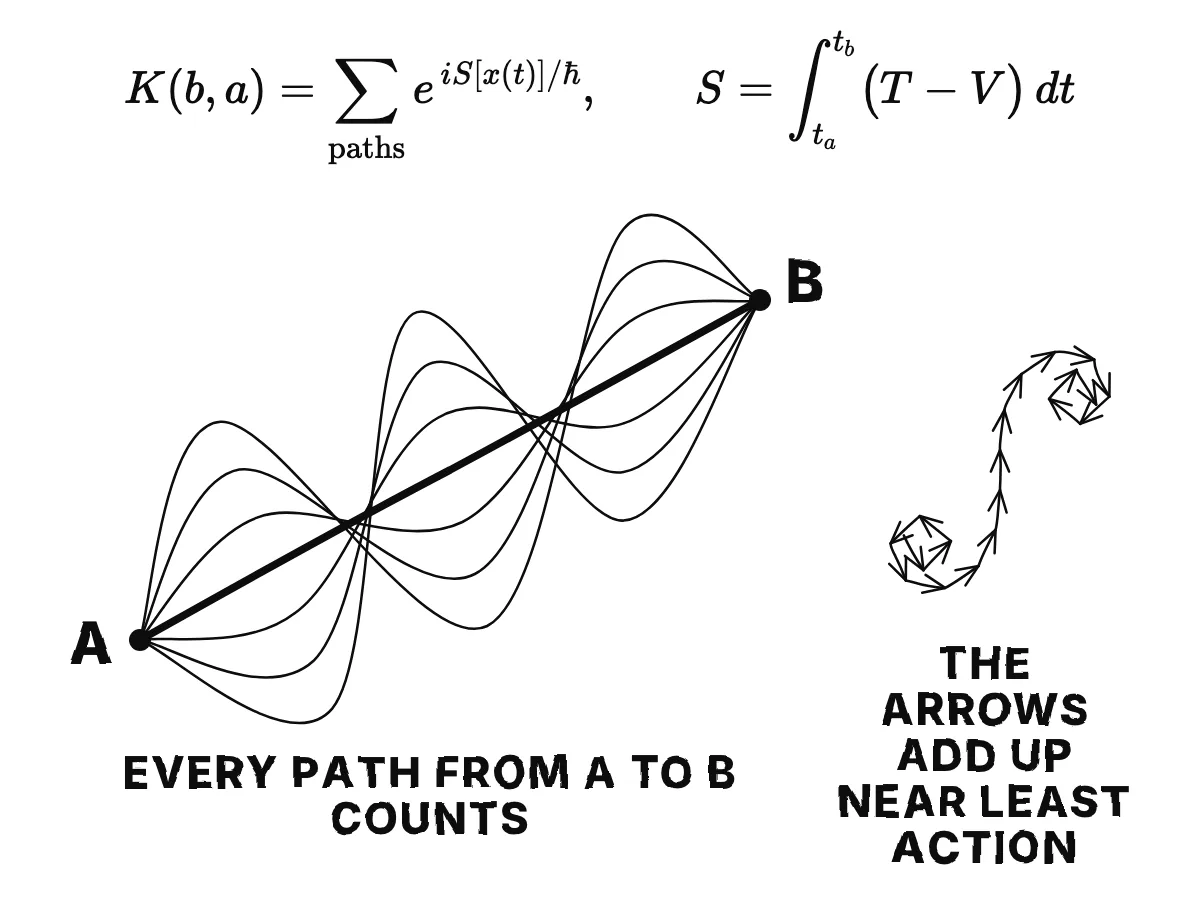
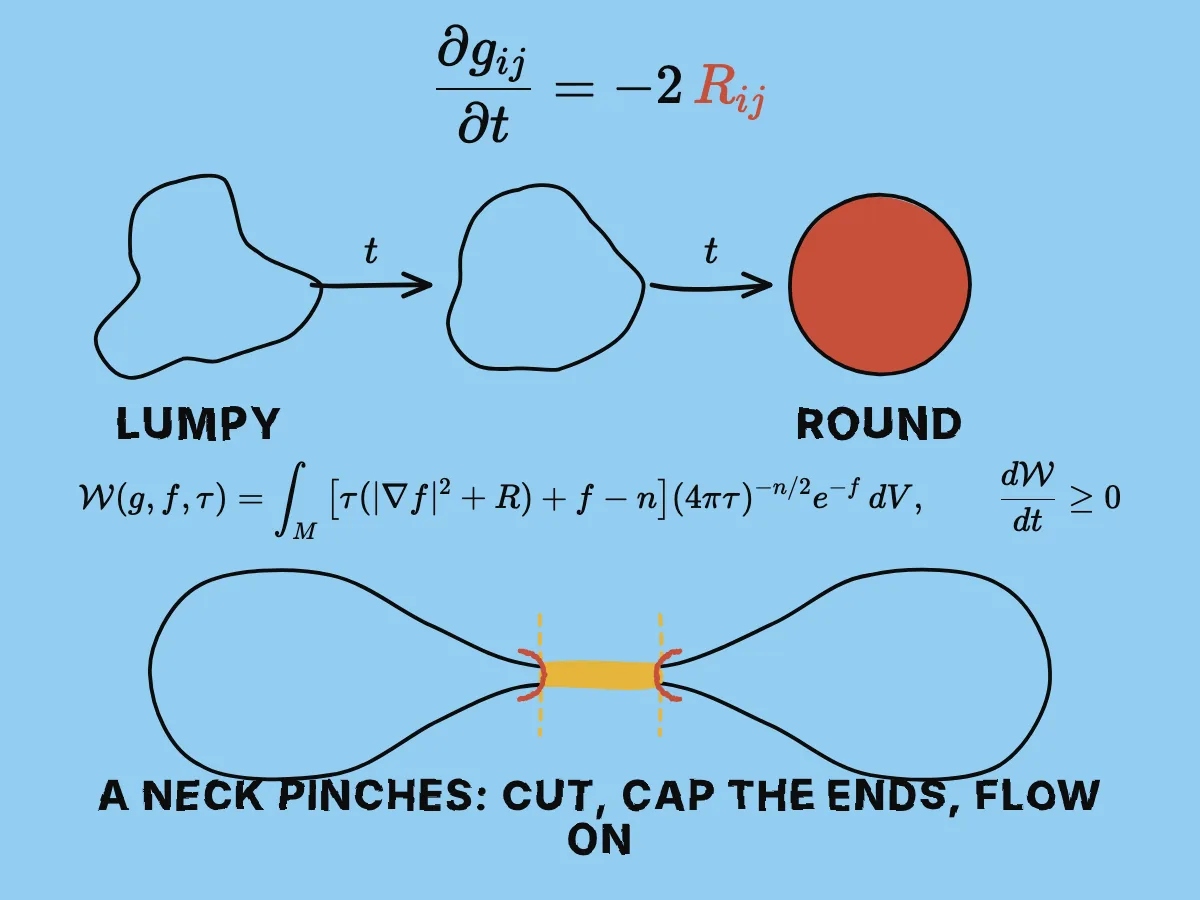
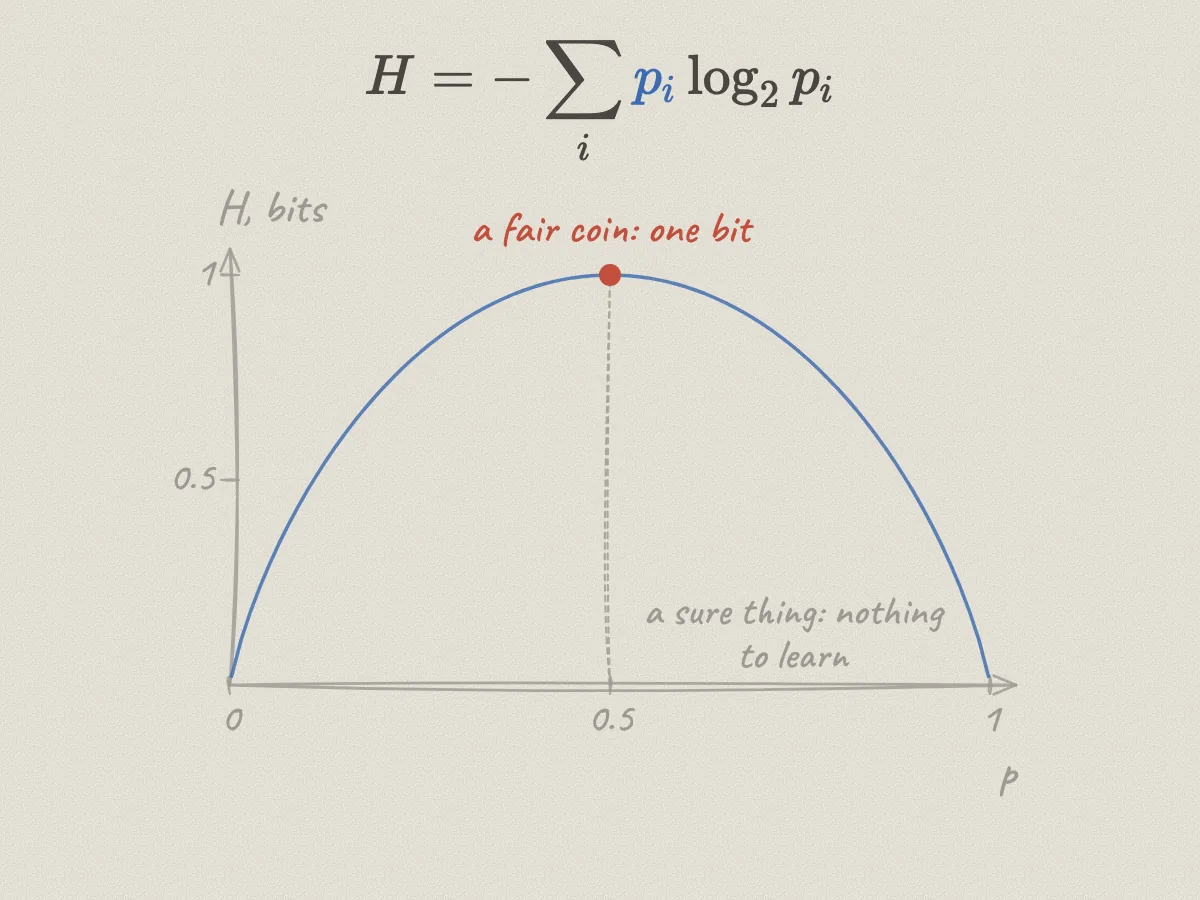
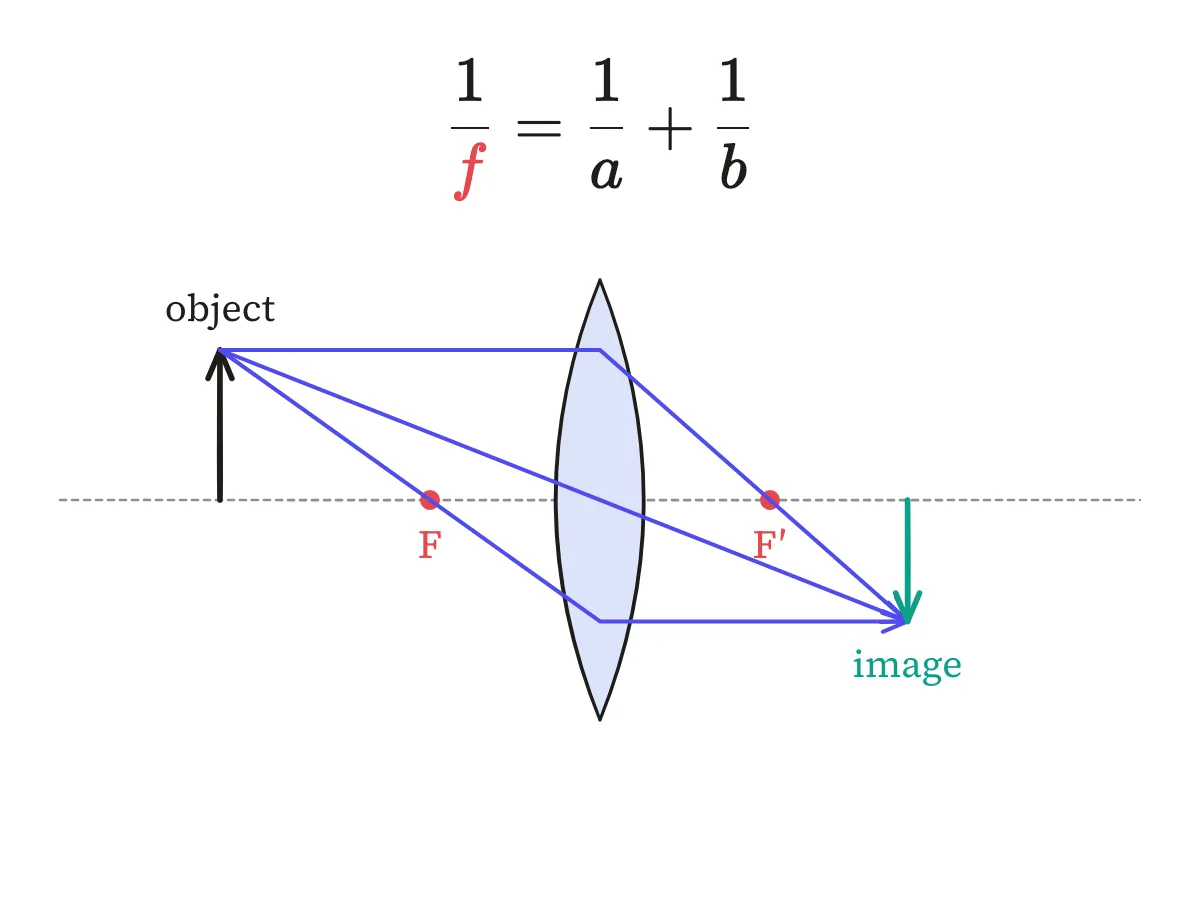
Stimme, Zeichnungen und Text in jeder Kombination. Wechseln Sie jederzeit.
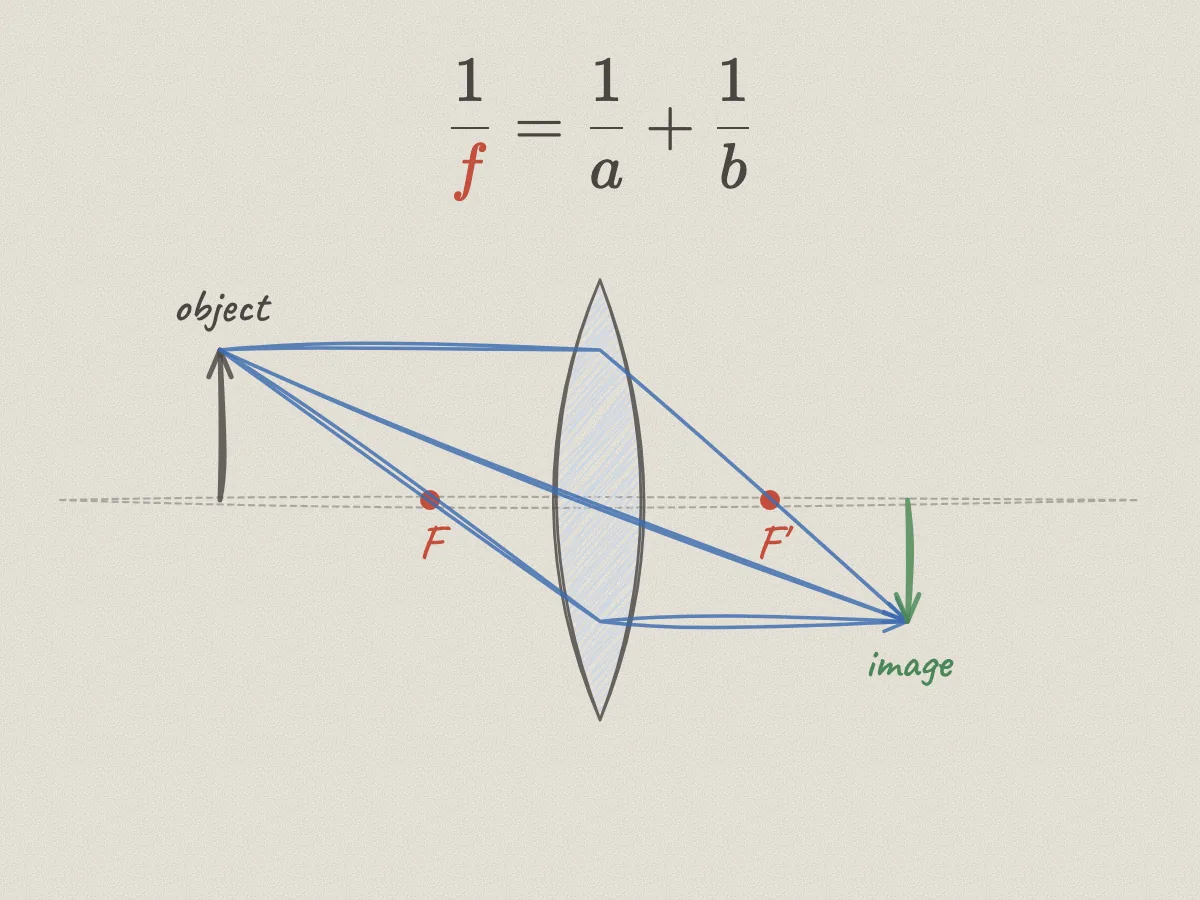
The first thing to know about a lens is how hard it bends light. Hold a magnifying glass in the sun: the rays arrive side by side, leave it leaning towards one another, and a little way behind the glass they meet in a bright dot. The distance from the glass to that dot is the focal length, and nearly everything else about the lens follows from it.
A lens is stronger when its glass is denser and its surfaces are more curved. Take ordinary glass, in which light travels one and a half times slower than in air, and curve both sides like a ball twenty centimetres across. Work it through and the focal length comes out at about ten centimetres: sunlight gathers into a point a palm's width behind the lens.
The book writes this as a formula, and we will come to it in a moment. It says no more than what we have just seen: denser glass or more curved surfaces, and the focal length gets shorter.
The distance from the glass to that dot is the focal length, and nearly everything else about the lens follows from it.
A lens is stronger when its glass is denser and its surfaces are more curved.
Die Zeichnung auf der linken Seite, der Text rechts, der vorgelesene Satz deutlich hervorgehoben.
Die Zeichnung oben, der aktuelle Satz darunter. Oder nur die Stimme, beim Spaziergang.
Zum Mitnehmen: MP3, MP4, EPUB, FB2, PDF.
EPUB, FB2, PDF oder DjVu. Gescannte Seiten werden erkannt.
Niveau, Sprache, Vortragsweise, Zeichenstil, Stimme, eigene Beispiele.
Die ersten zehn Seiten, mit Stimme und Zeichnungen.
Das ganze Buch oder die ersten hundert Seiten. Sie sehen den Preis, bevor etwas erstellt wird.
Die Probe ist kostenlos. Danach richtet sich der Preis danach, wie viel Text neu erzählt und wie viele Zeichnungen erstellt werden. Sie sehen ihn vor dem Start. Das Vorlesen mit der Gerätestimme kostet nichts; eine Studiovertonung kostet extra. Laden Sie Guthaben auf und nutzen Sie es Buch für Buch.
Buch hochladenLehrbücher, Naturwissenschaft und Technik sowie anspruchsvolle Sachbücher: Philosophie, Wirtschaft, Geschichte. Formeln sind willkommen.
EPUB, FB2, PDF, DjVu und reiner Text. Gescannte Bücher werden per Texterkennung verarbeitet.
Vorträge sind in vielen Sprachen möglich. Ein Buch kann auch in einer anderen Sprache erzählt werden.
Ja. Ihre Uploads und Vorträge sind nur für Sie sichtbar. Wenn Sie möchten, können Sie einen Vortrag per Link teilen.
Jedes Buch wird als Sitzung gespeichert. Sie können jederzeit Einstellungen ändern, das Buch weiter bearbeiten oder ein Downloadformat hinzufügen.
Auf dem ersten Niveau ja: Das Buch wird so vorgelesen, wie es geschrieben ist. Auf den anderen Niveaus wird es in neuen Worten erzählt; Reihenfolge, Schlussfolgerungen und Ergebnisse bleiben erhalten.