Library · Public domain

The Mathematical Principlesof Natural Philosophy

Philosophiæ Naturalis Principia Mathematica

Cover illustration of the book

Choose your version

The same text, told at every level, in every language and look shown here. Pick, then listen or download.

Listen and watch

The same player the product gives for your own book: the voice, the drawings as they are drawn, the text.

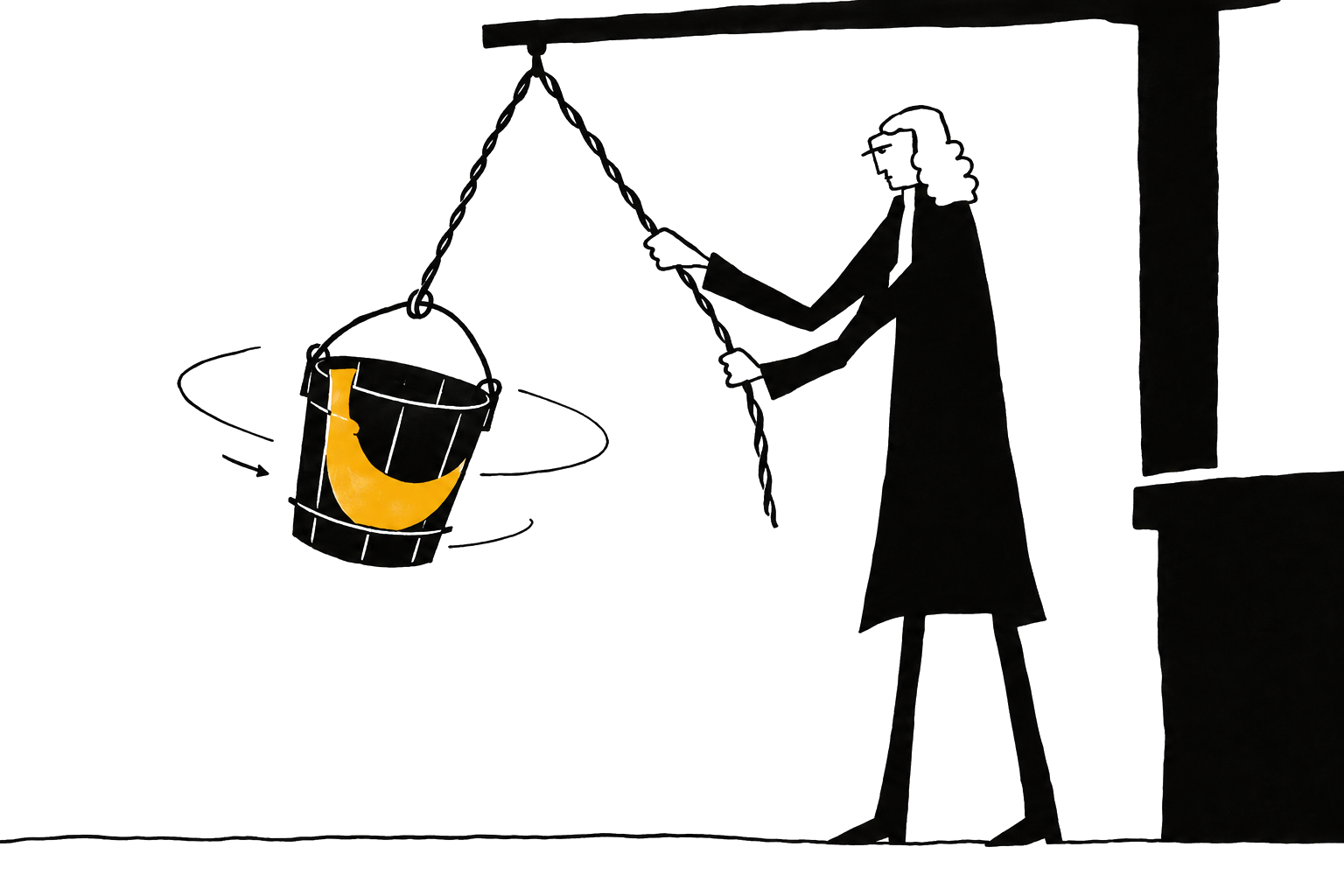
The book that founded physics. Its opening chapter defines mass, momentum and force, and asks what it means to move at all: absolute and relative time, space and motion, with the spinning bucket and the two globes on a cord.

This is a sample: 1 of 5 chapters.

From the lectures

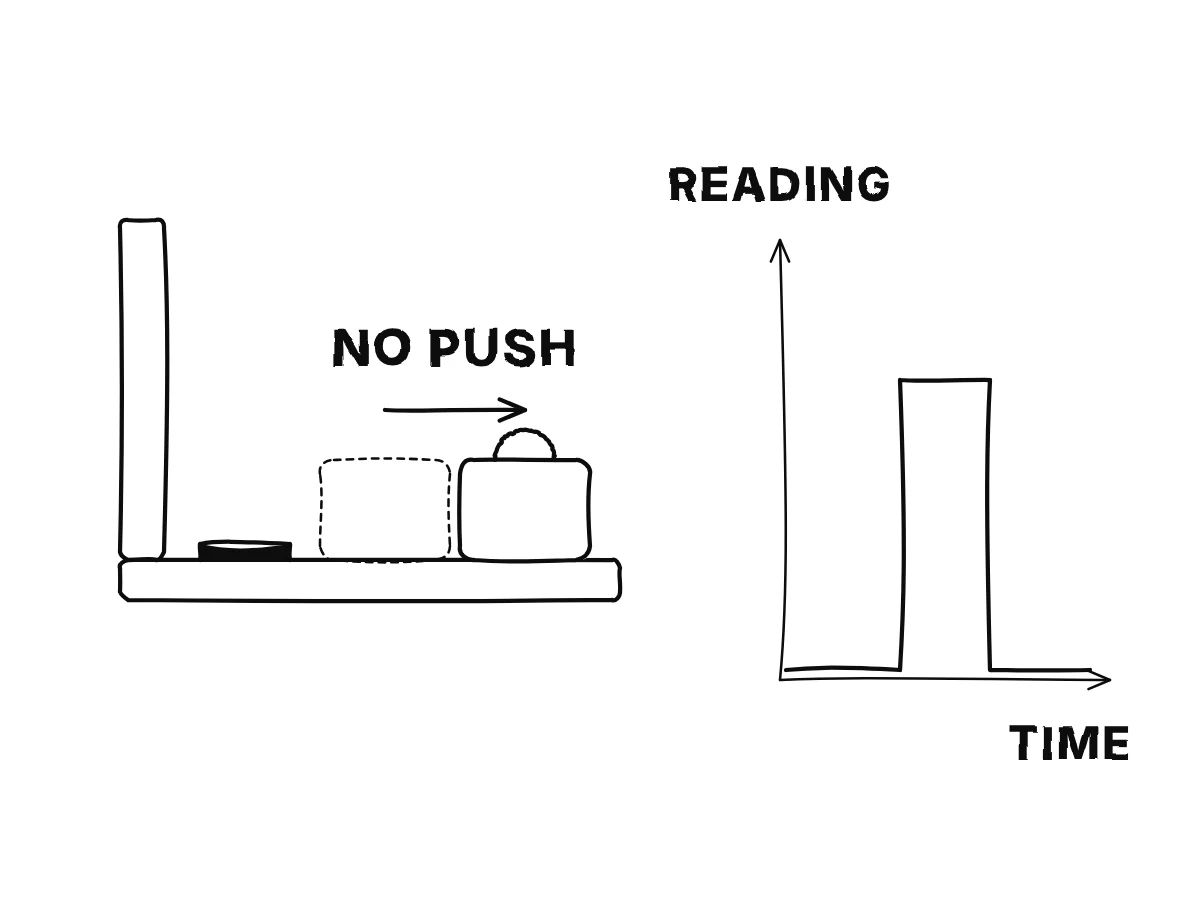
A car seat with a phone and a bag; the accelerometer trace is flat while the car cruises and jumps when it brakes, while the bag slides forward with nothing pushing it.
Stuff, Motion and the Pull to the Centre

The Bag Keeps Going

Put your phone flat on the passenger seat of a car and open any free sensor app that shows the accelerometer. On a straight road at steady speed the reading barely moves. When the driver brakes, the reading jumps and a loose bag on the seat slides forward.
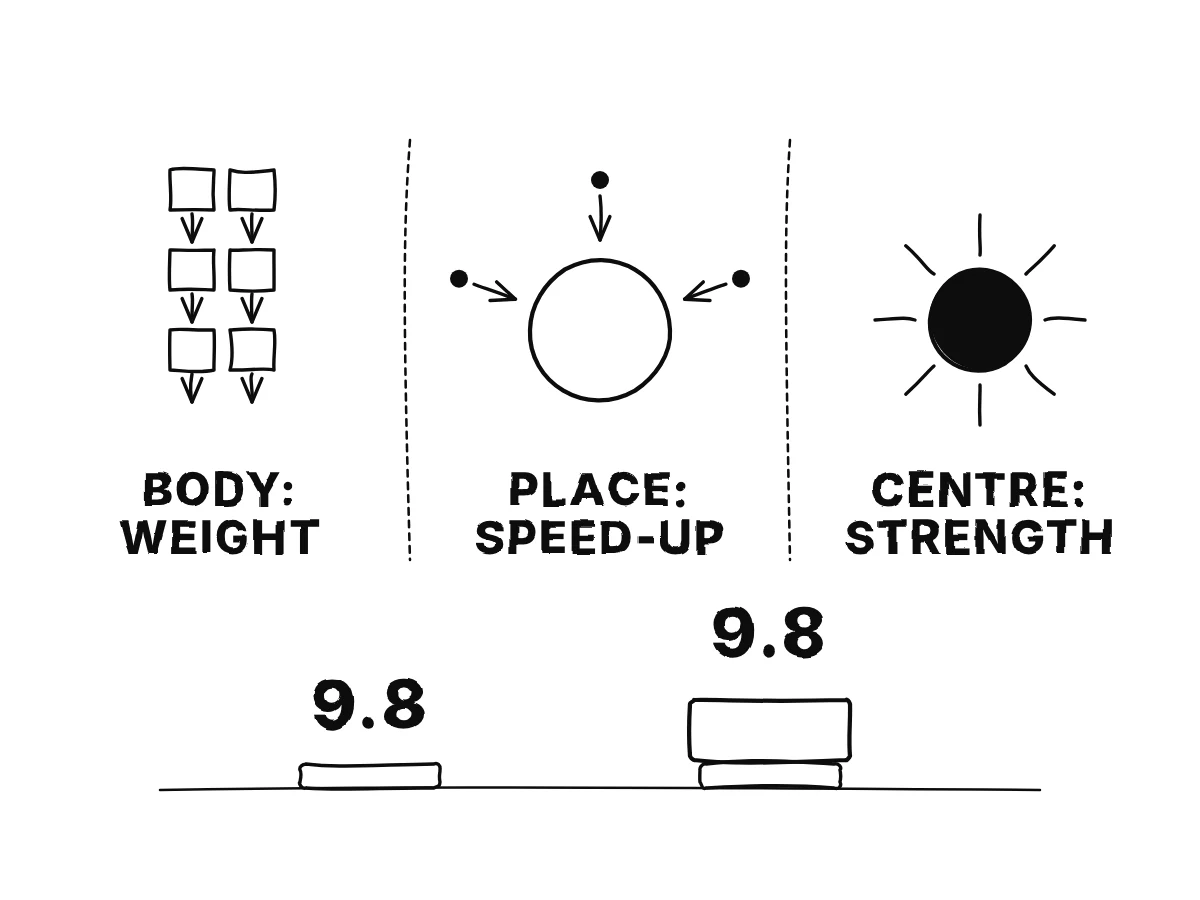
Three columns: the strength belongs to the centre, the speed-up to the place, the weight to the body; below, a phone under a book reading the same g.
Weight, Time and Where Things Really Are

Three Homes for a Pull

Newton gives each measure a home. Weight belongs to the body, as the sum of the pulls on all its little parts. The speed-up belongs to the place, like a power spread out from the centre to every spot around it.

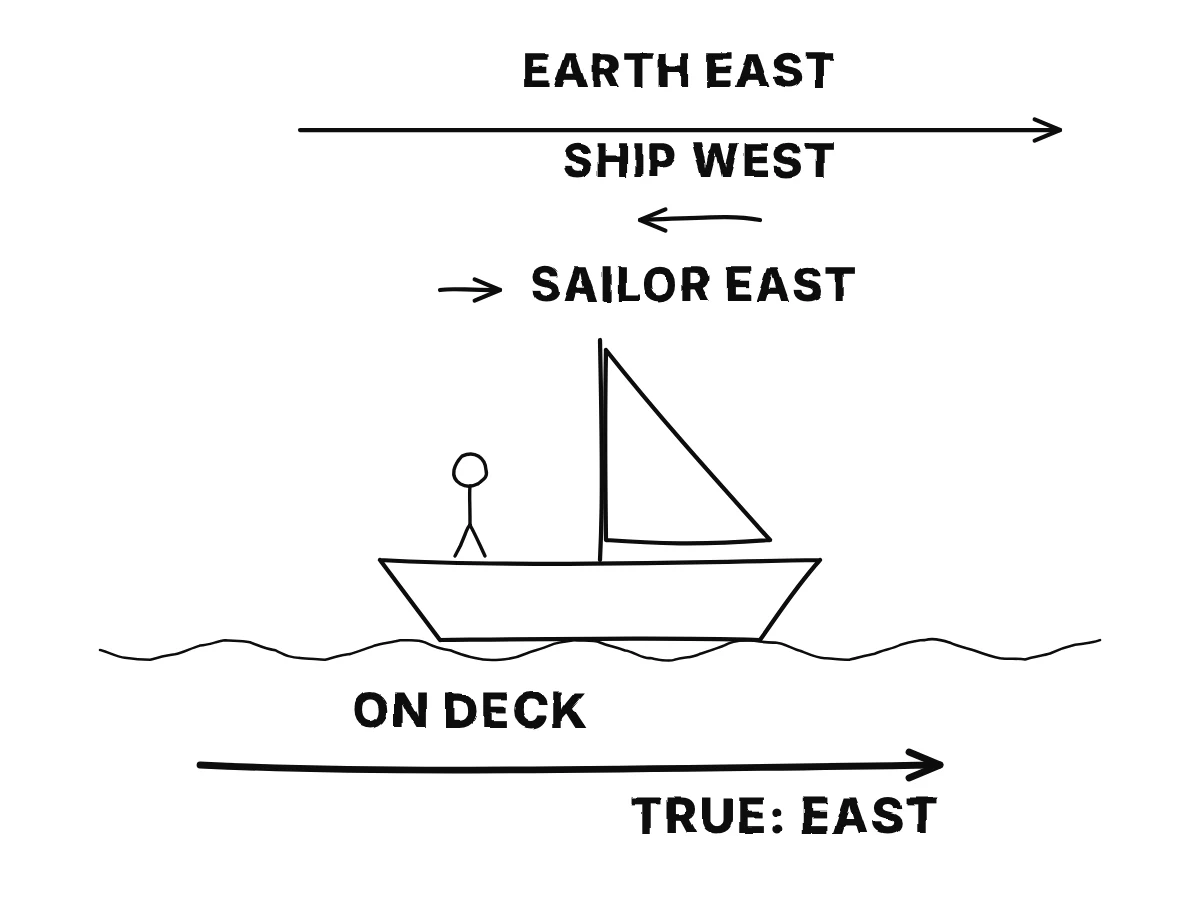
A ship on the sea with a sailor; a long arrow east for the Earth, a short arrow west for the ship, a very short arrow east for the sailor, adding to a long arrow east for the true motion.
Weight, Time and Where Things Really Are

The Ship and the Sailor

Motion splits the same way. True motion is a body's passage from one true place to another; relative motion is its passage from one place to another among the things around it.

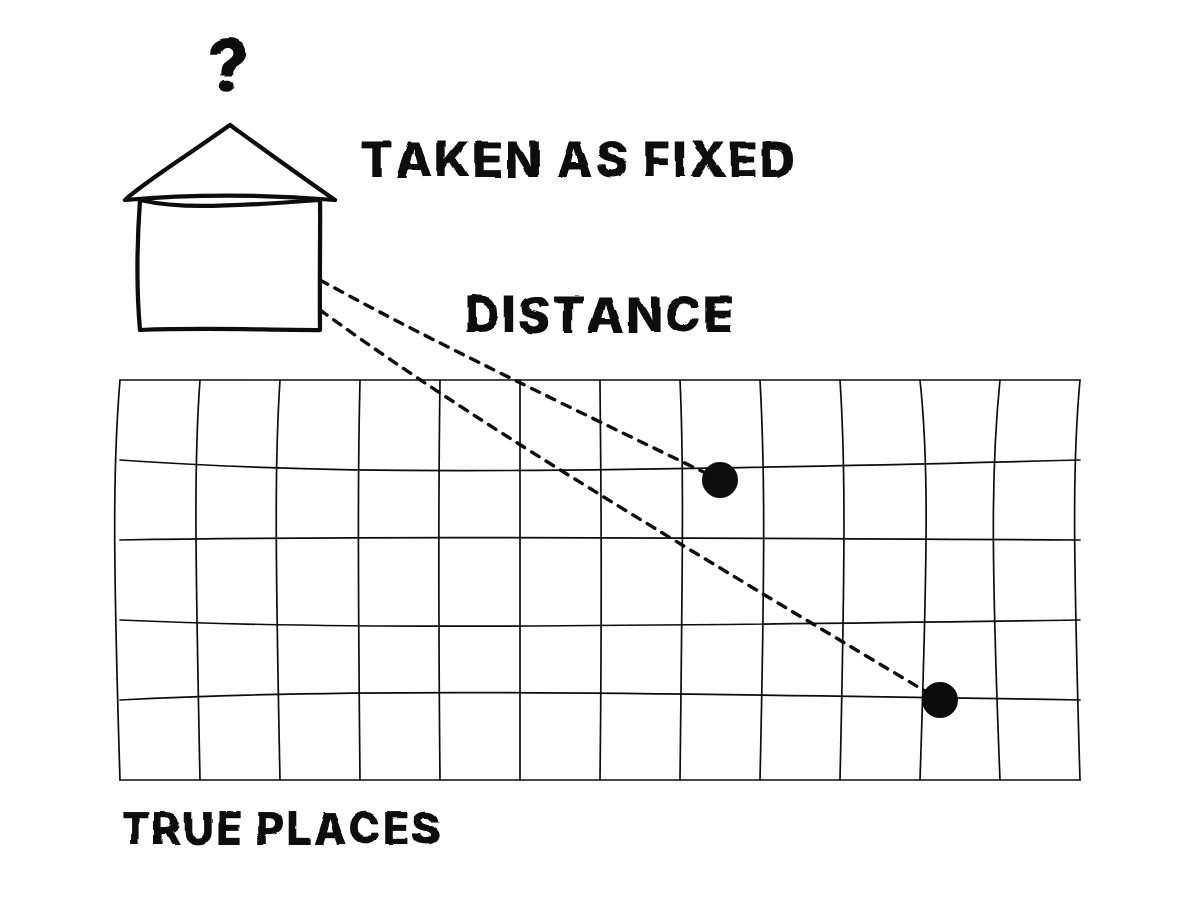
A station taken as fixed, with measured distances to two bodies; behind them a faint fixed grid of true places that cannot be seen; a question mark over the station.
The Spinning Bucket and the Uneven Days

Places Measured From a Body

Space is like time: its parts keep their order forever, and moving a part of space out of its place would be moving it out of itself. Those unmoving parts are the true places, and passing out of them is the only true motion.

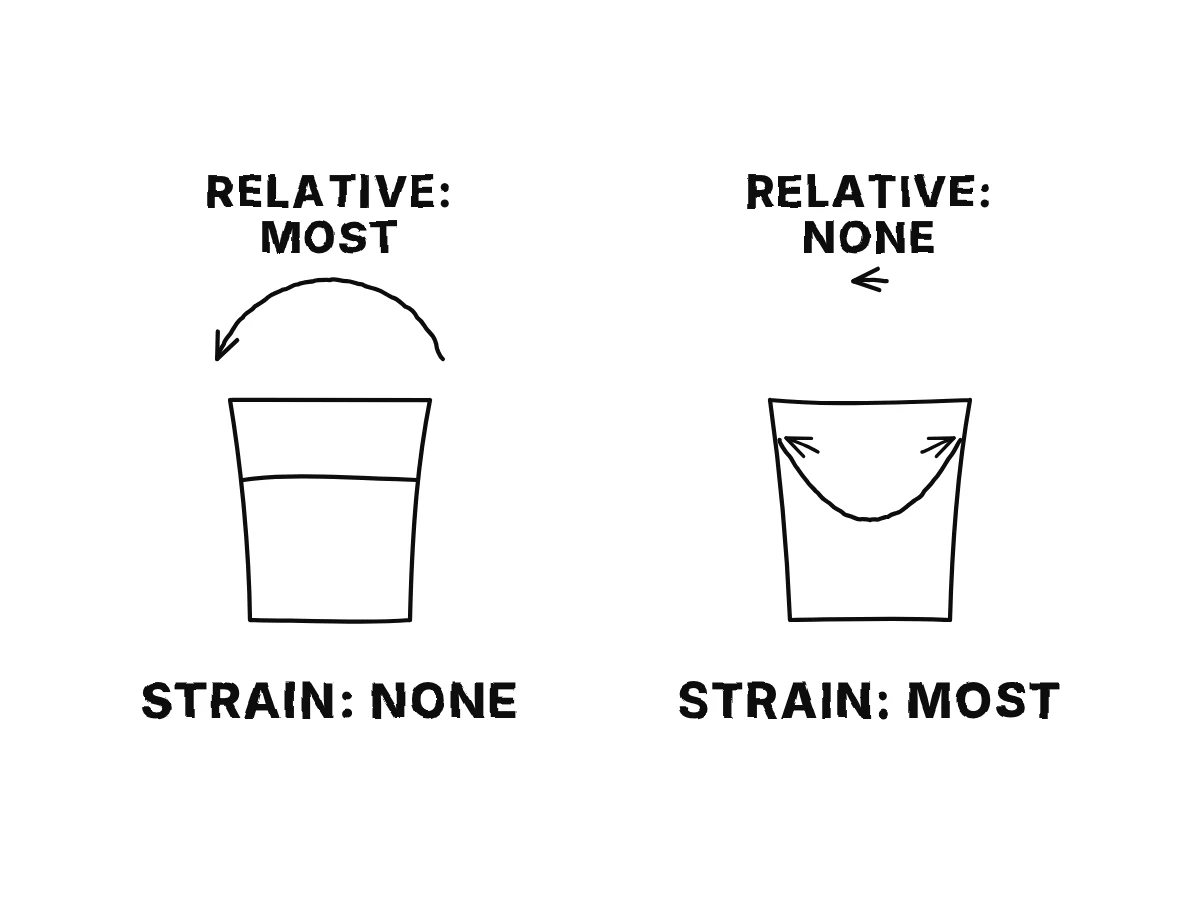
Two stages of the bucket side by side: at the start, large relative motion and a flat surface with no strain; later, no relative motion and a deep hollow with the most strain.
The Spinning Bucket and the Uneven Days

Strain Follows True Spinning

And the effect that gives true motion away is the outward strain of spinning. A merely relative circling produces no outward strain; a true spinning does, more the faster it spins. This is where the bucket comes in.

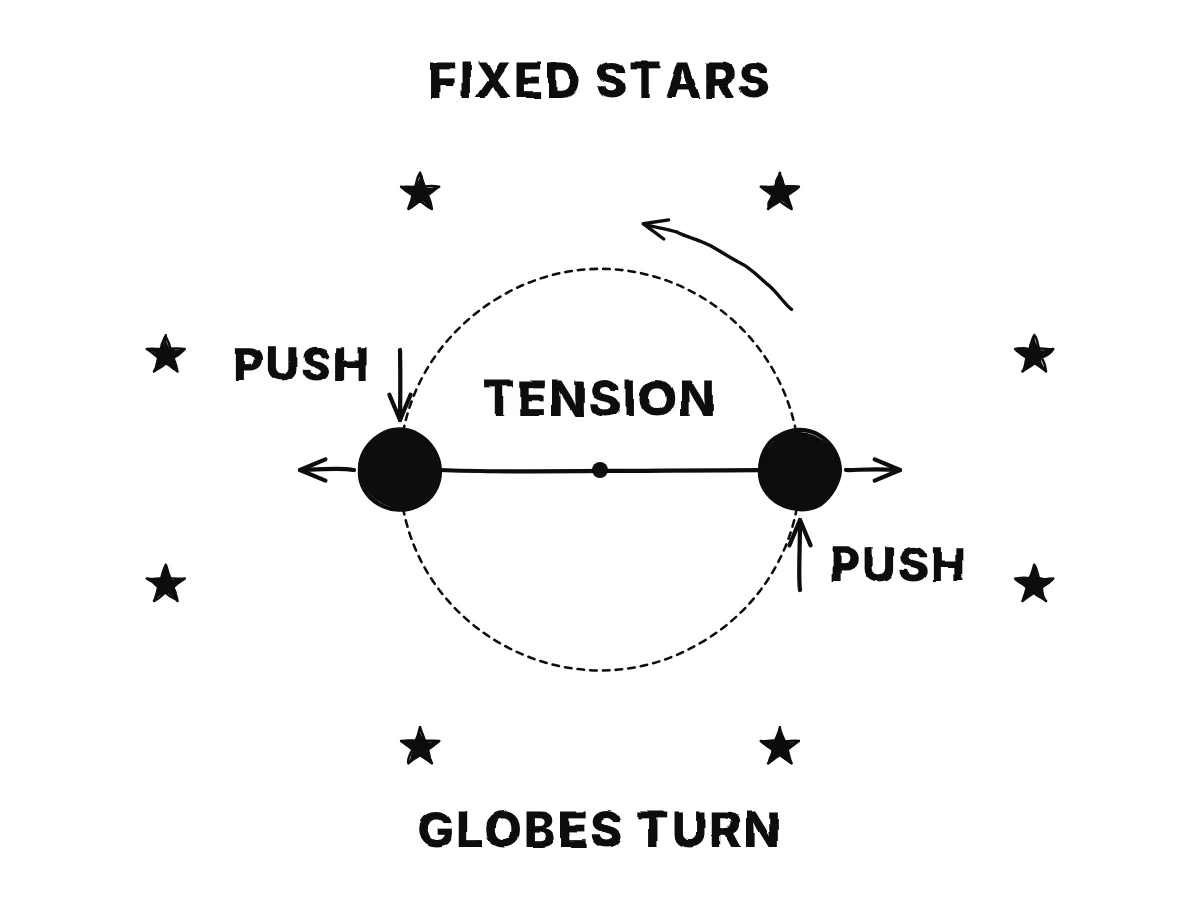
The two globes on their cord: outward arrows and the label tension on the cord, equal pushes on the trailing faces, and a ring of fixed stars around them.
Finding True Motion

Tension, Pushes and the Stars

The cord between the two balls is pulled tight by their outward strain, so its tightness tells how fast they spin. Push both balls at once on matching sides: if the cord tightens, the push sped them up, and that reveals which way they are turning.

How it was made

Examples for: a curious adult with school physics who uses a smartphone every day; add one modern instance per idea, such as GPS satellites, a phone's accelerometer or a car braking

The source

The lectures retell the English text of Project Gutenberg #76404, Andrew Motte's translation (first American edition, 1846). The author died in 1727; the work is in the public domain. The retelling, the drawings and the voice are made by AI and checked against the book by a second model; nothing was edited by hand. How AI is used.

The lectures are free to read, share and quote with a link to this page.

Your own hard book, the same way

Upload a textbook or any difficult book. The first five minutes are free.

Upload a book