Library · Public domain

The Mathematical Principlesof Natural Philosophy

Philosophiæ Naturalis Principia Mathematica

Cover illustration of the book

Choose your version

The same text, told at every level, in every language and look shown here. Pick, then listen or download.

Listen and watch

The same player the product gives for your own book: the voice, the drawings as they are drawn, the text.

The book that founded physics. Its opening chapter defines mass, momentum and force, and asks what it means to move at all: absolute and relative time, space and motion, with the spinning bucket and the two globes on a cord.

This is a sample: 1 of 5 chapters.

From the lectures

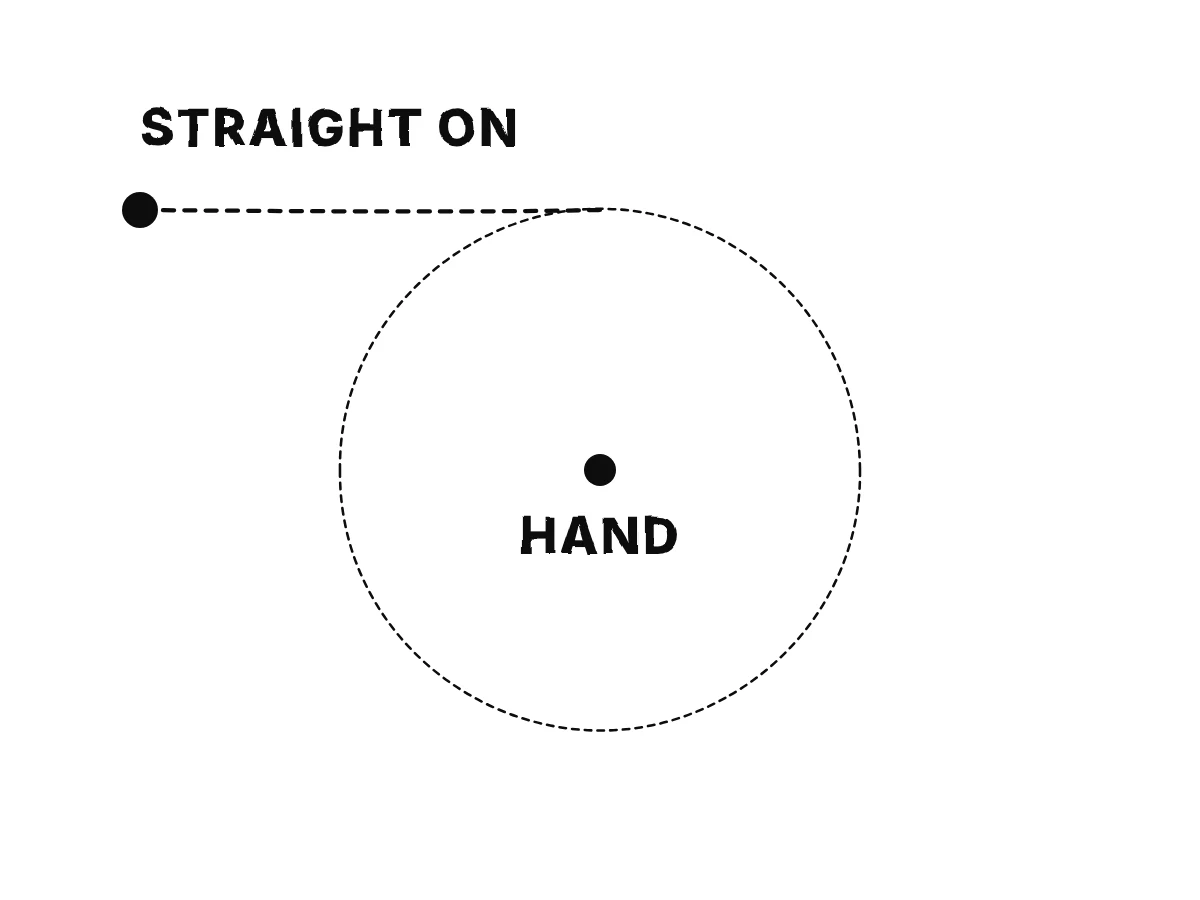
A hand at the centre whirls a stone on a cord round a circle; the cord pulls the stone toward the hand, and when it is let go the stone flies off along a straight line touching the circle.
Definitions

The Stone in the Sling

A stone, whirled about in a sling, endeavours to recede from the hand that turns it; and by that endeavour distends the sling, and that with so much the greater force as it is revolved with the greater velocity; and as soon as ever it is let go, it flies away.
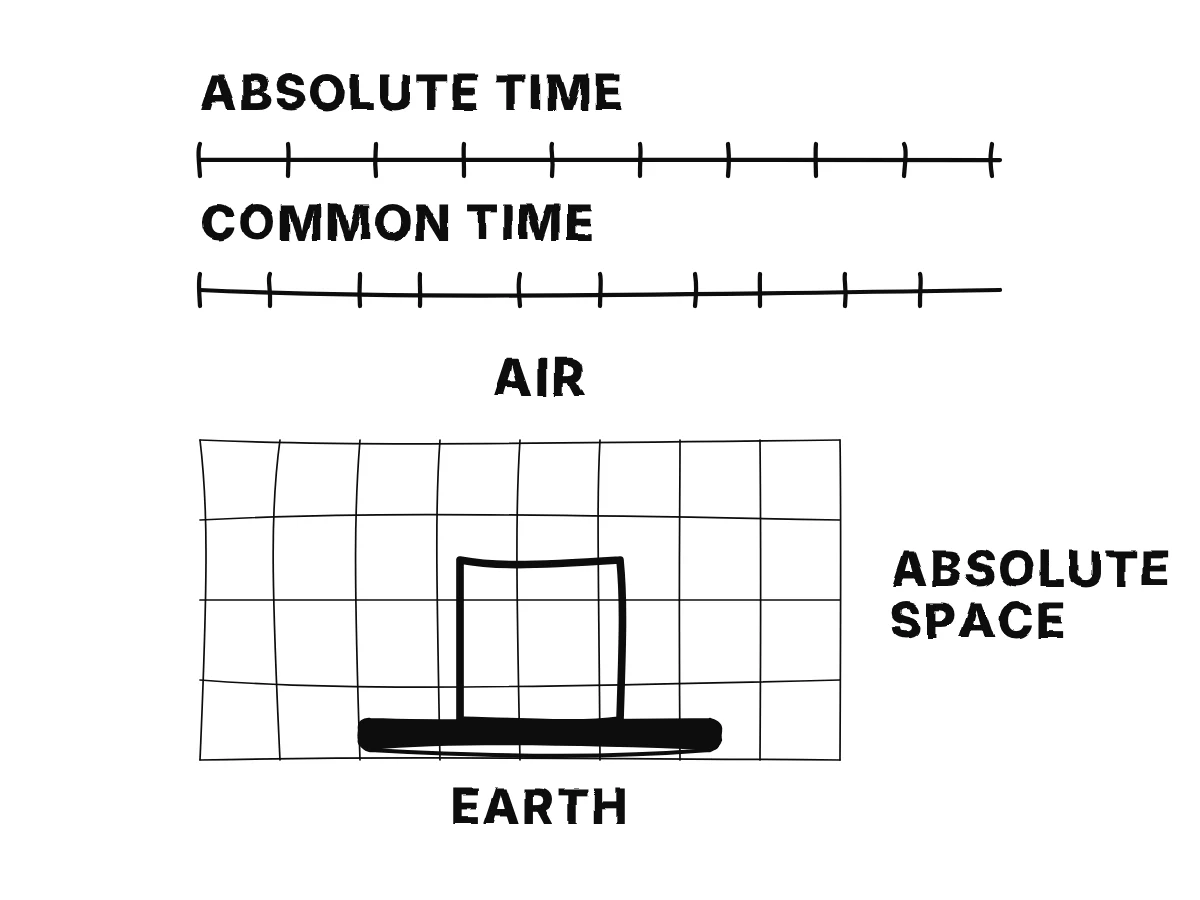
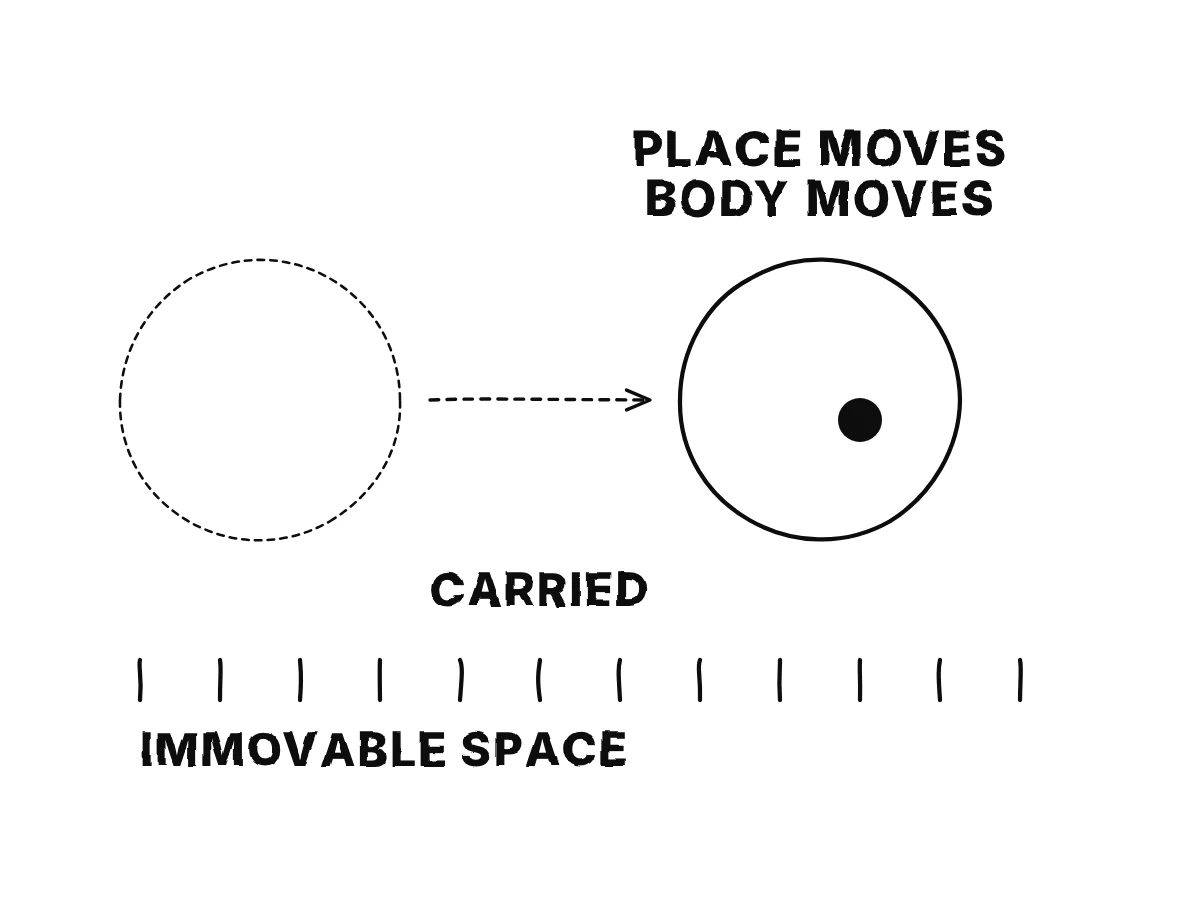
Two time lines, one with perfectly even ticks labelled absolute, one with uneven ticks labelled common; below them a fixed grid with a box of air carried across it by the moving Earth.
Definitions VII and VIII, and the Scholium on Time, Space, Place and Motion

True and Common Time and Space

Scholium. Hitherto I have laid down the definitions of such words as are less known, and explained the sense in which I would have them to be understood in the following discourse. I do not define time, space, place and motion, as being well known to all.

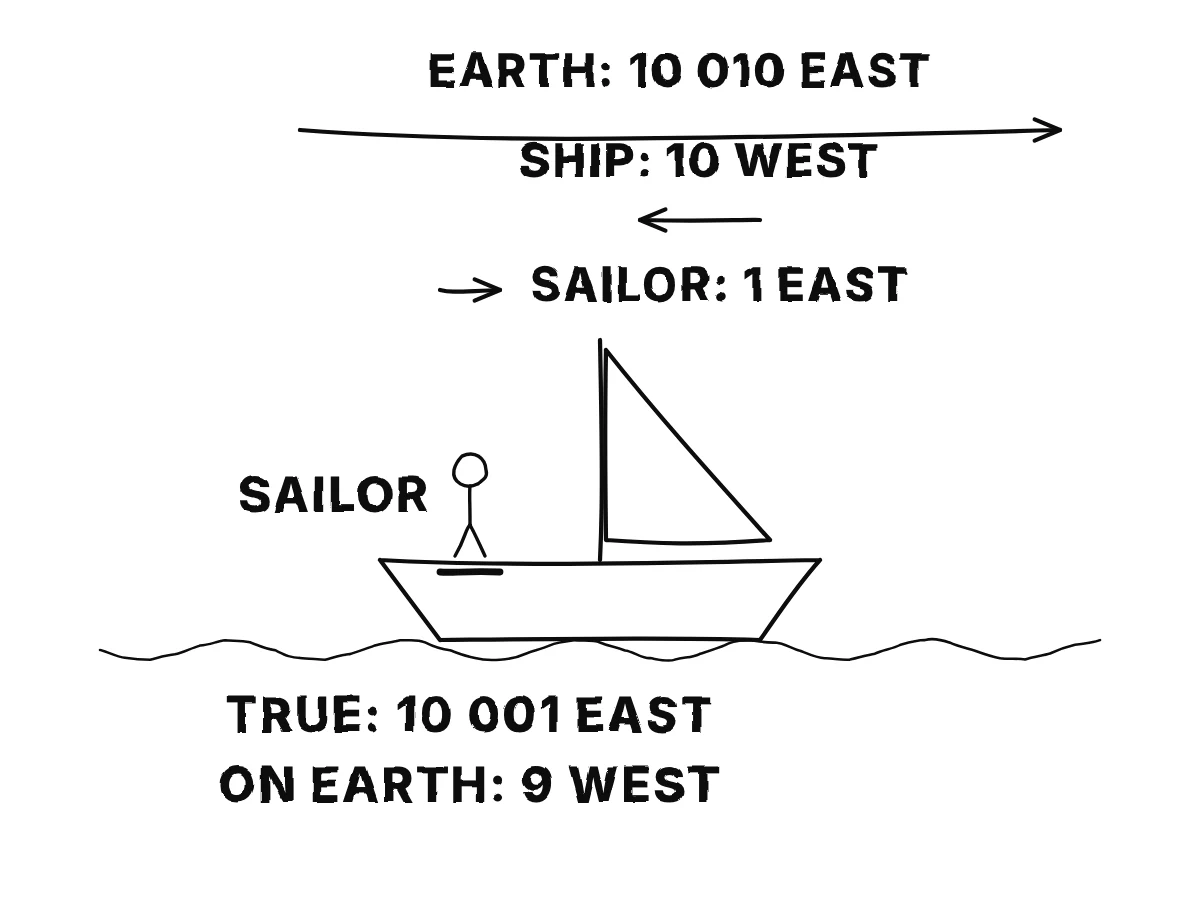
Three arrows add up the sailor's motion: the Earth moving east 10 010 parts, the ship sailing west 10 parts, the sailor walking east 1 part; the sum is 10 001 east in absolute space and 9 west relative to the Earth.
Definitions VII and VIII, and the Scholium on Time, Space, Place and Motion

The Sailor's True Motion

Fourth: absolute motion is the translation of a body from one absolute place into another, and relative motion the translation from one relative place into another.

A shell with a kernel inside is carried to the right; the kernel, at rest inside the shell, moves with it.
True and Relative Time, Place and Motion; the Rotating Vessel

If the Shell Moves, the Kernel Moves

It is a property of motion that the parts which retain given positions to their wholes do partake of the motions of those wholes. For all the parts of revolving bodies endeavour to recede from the axis of motion, and the impetus of bodies moving forward arises from the joint impetus of all the parts.

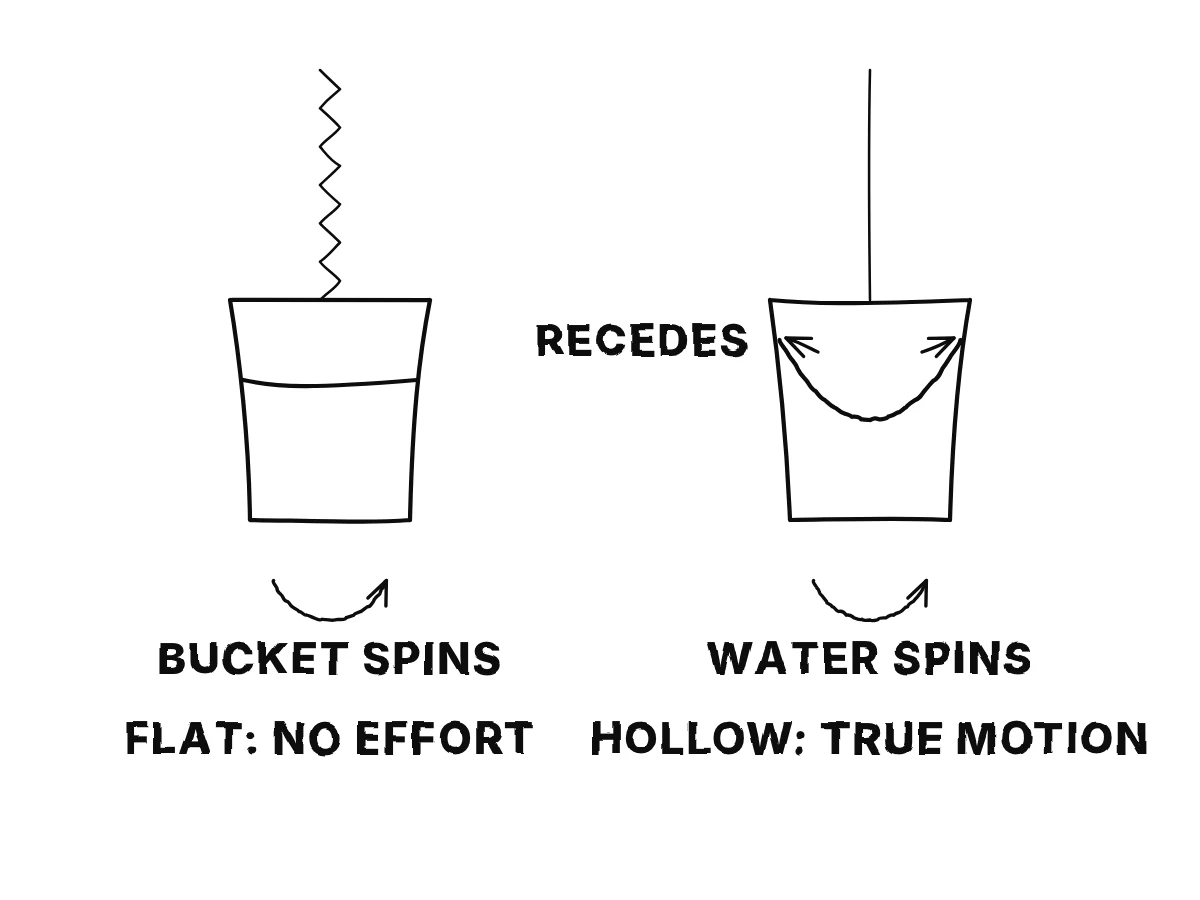
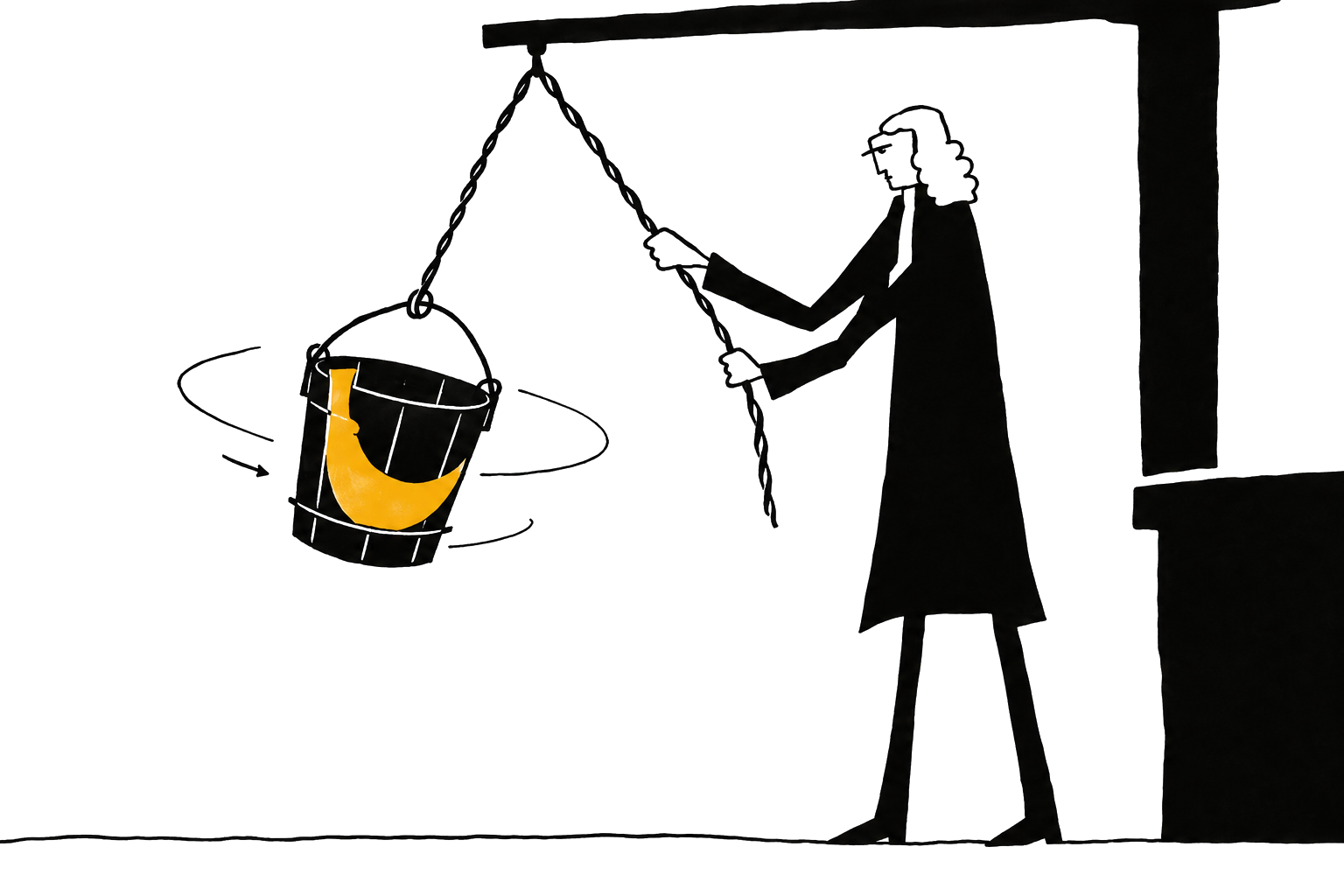
A bucket hung on a twisted cord in three stages: spinning with flat water, spinning water climbing the sides into a hollow, the hollow showing the water's true rotation.
True and Relative Time, Place and Motion; the Rotating Vessel

The Spinning Bucket

The effects which distinguish absolute from relative motion are the forces of receding from the axis of circular motion. For there are no such forces in a circular motion purely relative; but in a true and absolute circular motion they are greater or less, according to the quantity of the motion.

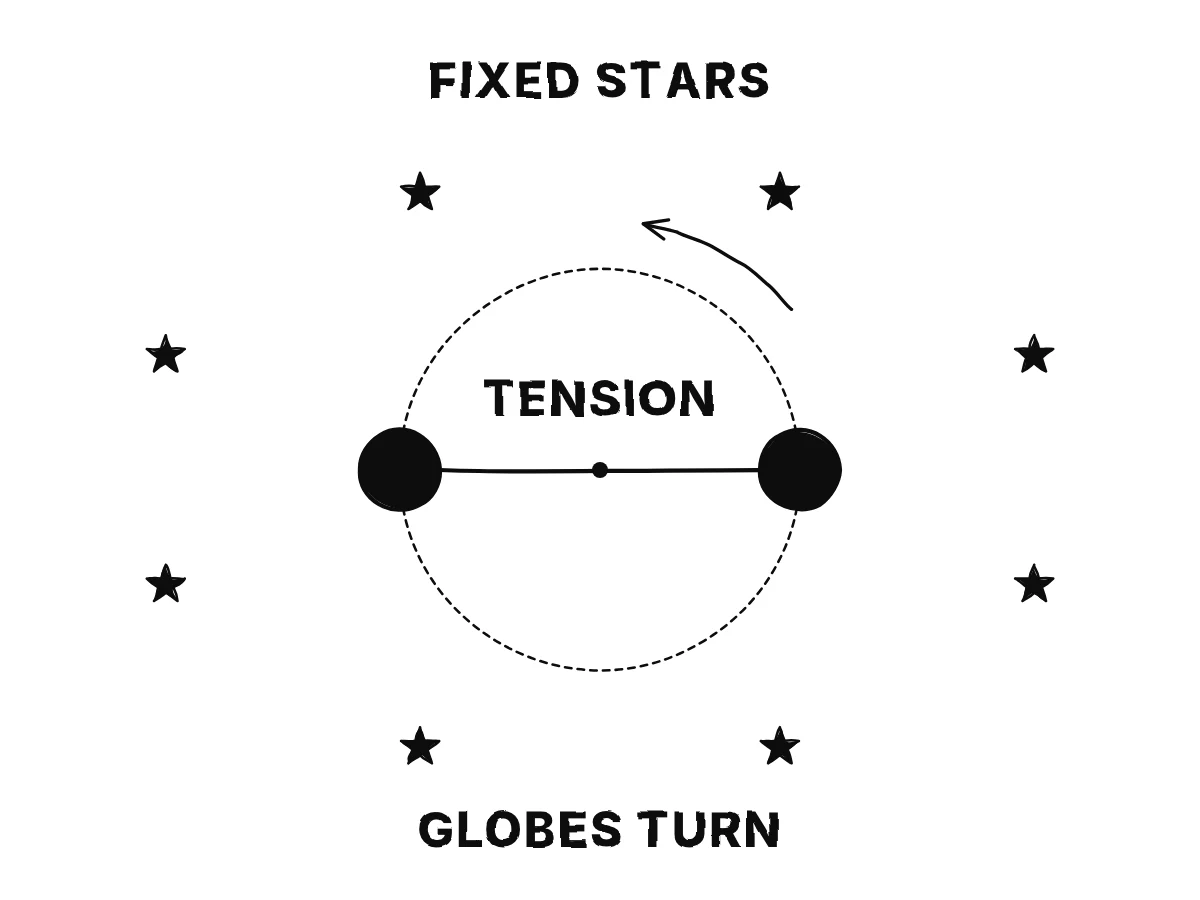
The same two globes on their cord with a ring of fixed stars around them: the turning seen against the stars could belong to either, but the tension on the cord says the globes turn.
Measures and Quantities; the Two Globes

Globes Among the Stars

But now, if in that space some remote bodies were placed that kept always a given position one to another, as the fixed stars do in our regions, we could not indeed determine, from the relative translation of the globes among those bodies, whether the motion belonged to the globes or to the bodies.

How it was made

Examples for: a curious adult with school physics who uses a smartphone every day; add one modern instance per idea, such as GPS satellites, a phone's accelerometer or a car braking

The source

The lectures retell the English text of Project Gutenberg #76404, Andrew Motte's translation (first American edition, 1846). The author died in 1727; the work is in the public domain. The retelling, the drawings and the voice are made by AI and checked against the book by a second model; nothing was edited by hand. How AI is used.

The lectures are free to read, share and quote with a link to this page.

Your own hard book, the same way

Upload a textbook or any difficult book. The first five minutes are free.

Upload a book