Library · Public domain

The Mathematical Principlesof Natural Philosophy

Philosophiæ Naturalis Principia Mathematica

Cover illustration of the book

Choose your version

The same text, told at every level, in every language and look shown here. Pick, then listen or download.

Listen and watch

The same player the product gives for your own book: the voice, the drawings as they are drawn, the text.

The book that founded physics. Its opening chapter defines mass, momentum and force, and asks what it means to move at all: absolute and relative time, space and motion, with the spinning bucket and the two globes on a cord.

This is a sample: 1 of 5 chapters.

From the lectures

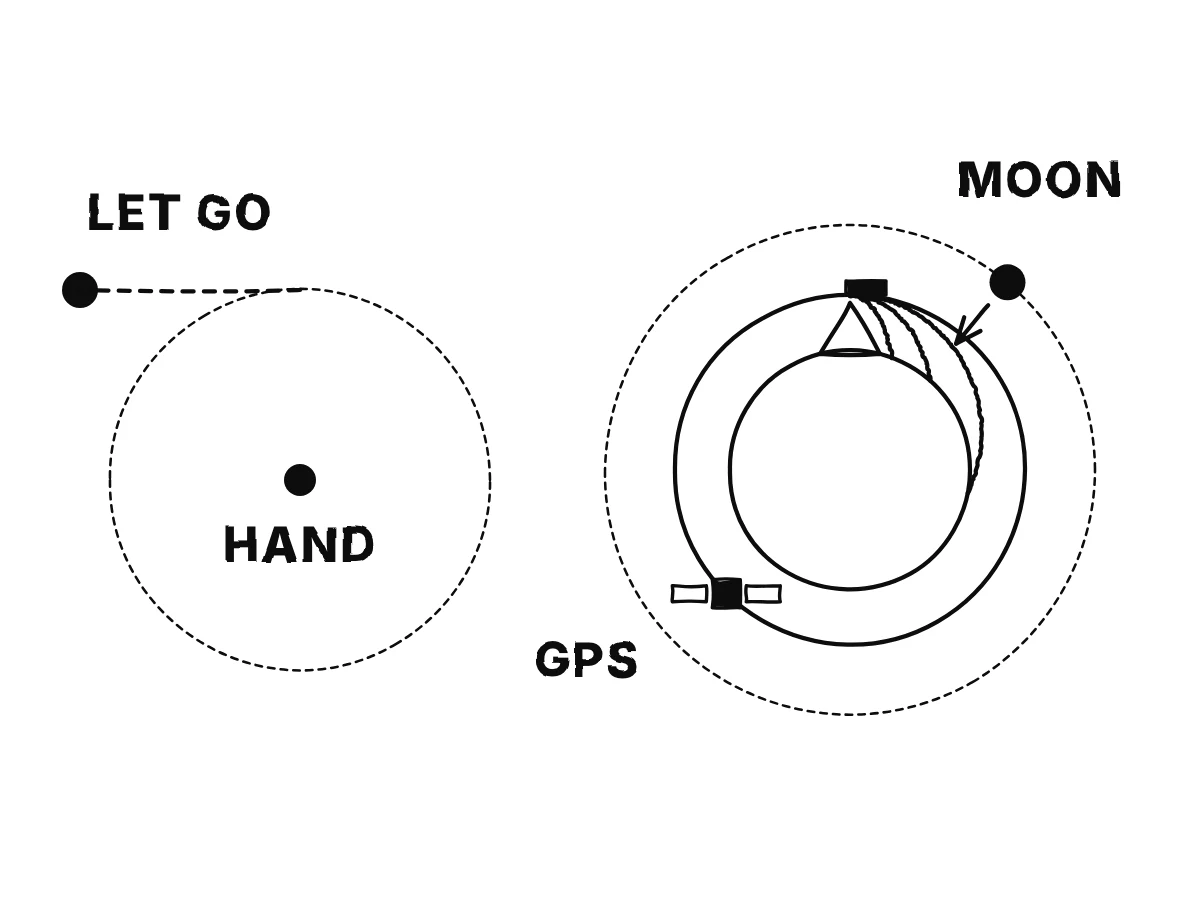
Left, a stone on a sling pulled toward the hand; right, a cannon on a mountain whose fastest ball falls all the way round the Earth, a satellite on that orbit, and the Moon on a larger one, each pulled toward the Earth.
What Newton Needed Before His Laws

Pulled Toward a Centre

The fourth idea is the force the whole book is about: a pull towards a centre, which he calls centripetal. Gravity, magnetism, and whatever holds the planets on their curved paths are all of this kind.
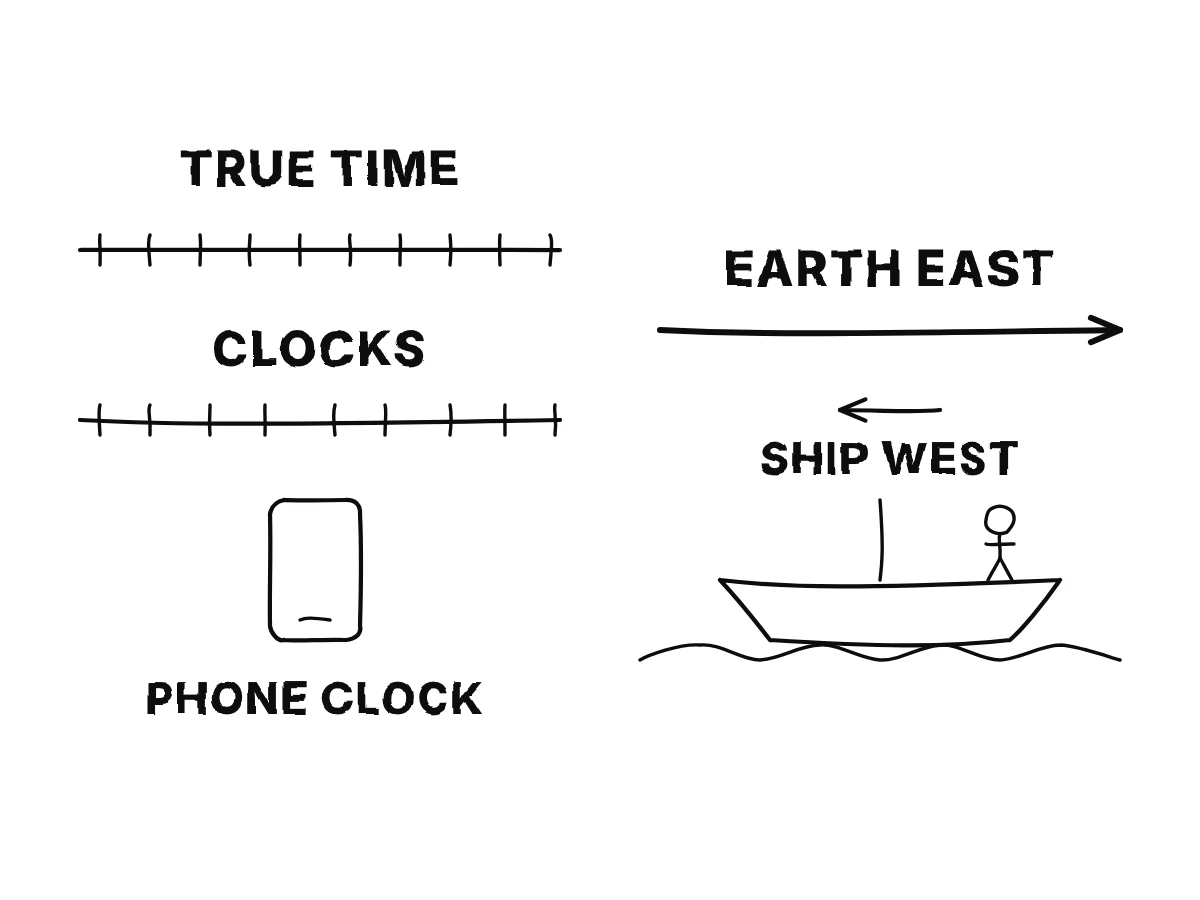
On the left an evenly ticked line for true time above an unevenly ticked line for clocks; on the right a ship on the sea with a sailor, and arrows showing the Earth carrying the ship east while the ship sails west.
Measuring Pulls, and the World Behind the Clock

True and Measured

On the second question, he refuses to define time, space, place and motion, which everyone thinks they know, but he warns that people know them only through the things they see, and that leads them astray. So he splits each into a true version and a measured one.

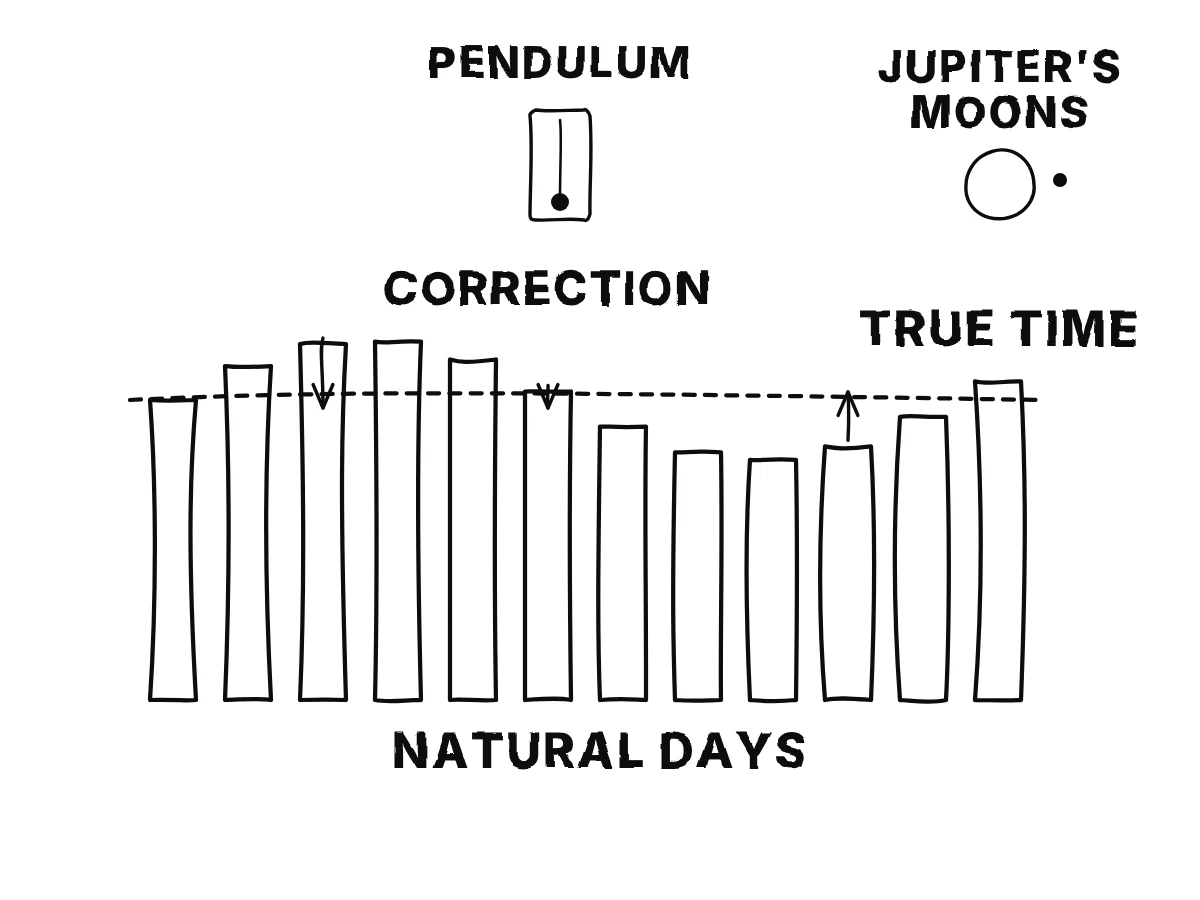
A row of bars for the lengths of natural days, slightly different from one another, against a dashed line for the even day of true time, with corrections and a pendulum clock and Jupiter's moons as checks.
How to Tell That Something Really Moves

Natural Days Are Unequal

Newton begins with time, because time has the same problem. We measure time by days, by the sun going from noon to noon, and everybody treats those days as equal. But they are not quite equal, and astronomers have to correct them before they can calculate the motions of the planets accurately.

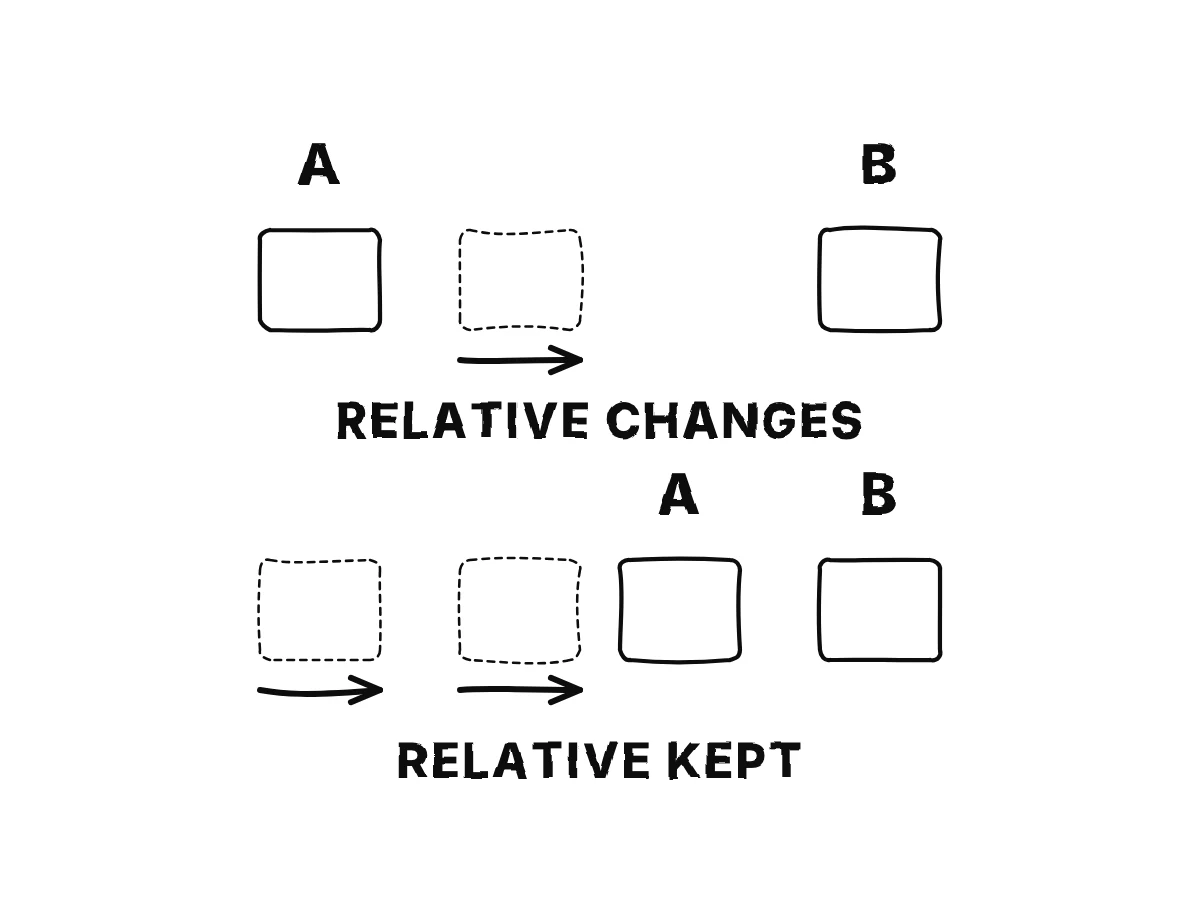
Two rows of two boxes, A and B: pushing only B changes their relative motion though A is untouched; pushing both equally keeps their relative position though both truly move.
How to Tell That Something Really Moves

Push the Other Body

The causes are more helpful. True motion only ever changes when a force acts on the body itself.

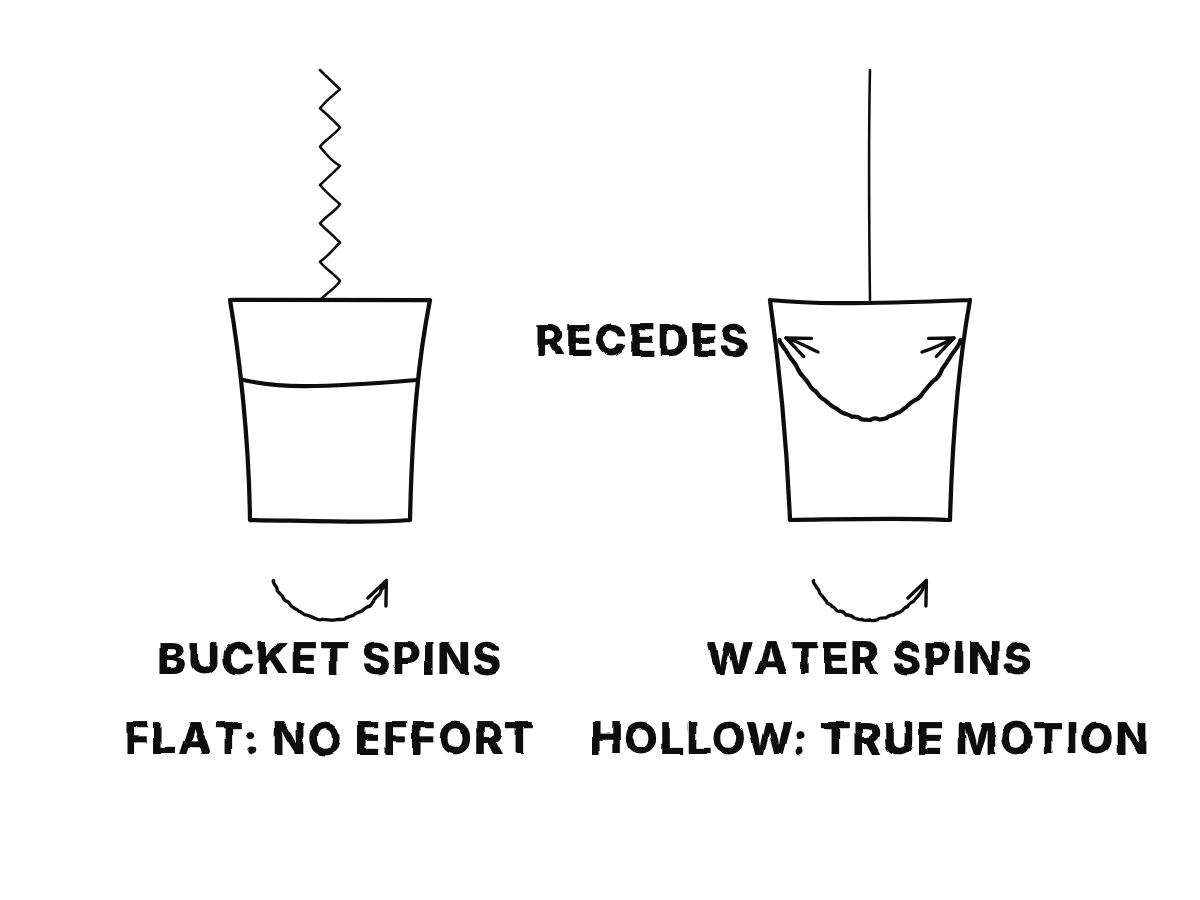
Two buckets hung on cords: the first spins on a twisted cord with flat water and no effort; the second has the water spinning with it, climbing the walls into a hollow, the sign of true motion.
How to Tell That Something Really Moves

Newton's Bucket

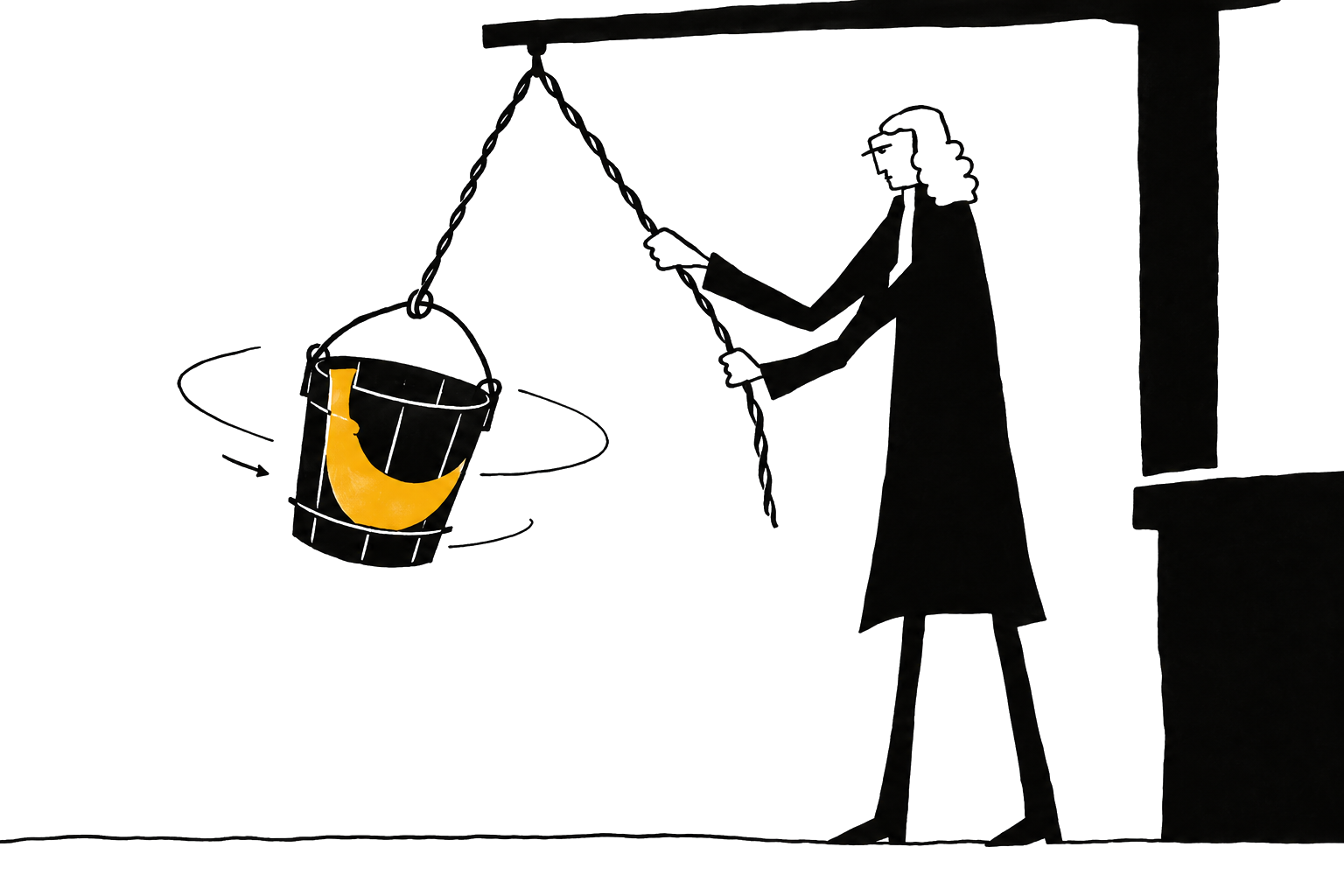
The effects are the decisive clue, and here Newton describes an experiment he did himself. He hung a bucket of water from a long cord, twisted the cord many times, held the bucket still, and then let it go.

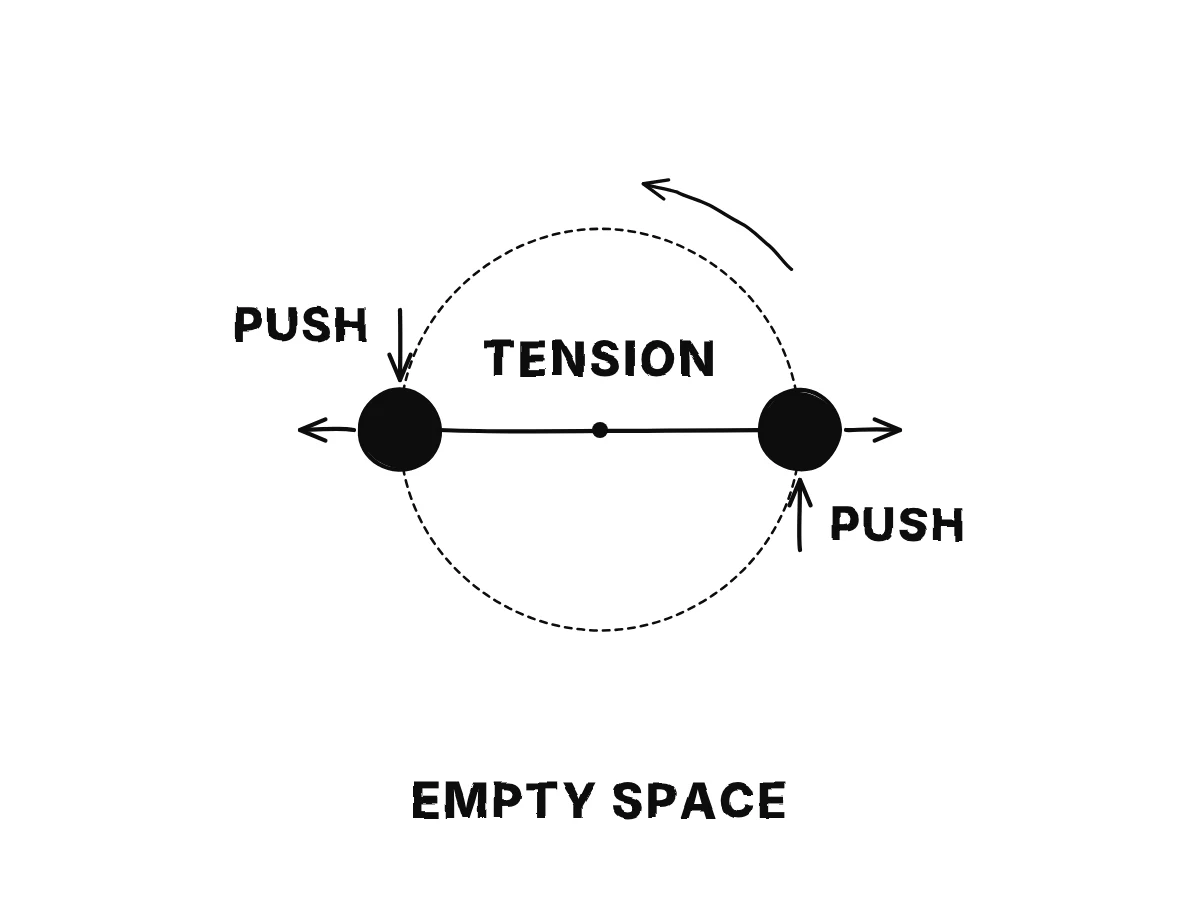
Two globes joined by a cord turn about their common centre in empty space; the cord's tension shows the turning, and pushes on matching faces show its direction.
What Newton Wrote the Book For

Two Globes on a Cord

The cord between the two balls is pulled tight by their outward strain, so its tightness reveals how fast they spin, and a push on matching sides of both balls reveals which way, even with nothing else in sight.

How it was made

Examples for: a curious adult with school physics who uses a smartphone every day; add one modern instance per idea, such as GPS satellites, a phone's accelerometer or a car braking

The source

The lectures retell the English text of Project Gutenberg #76404, Andrew Motte's translation (first American edition, 1846). The author died in 1727; the work is in the public domain. The retelling, the drawings and the voice are made by AI and checked against the book by a second model; nothing was edited by hand. How AI is used.

The lectures are free to read, share and quote with a link to this page.

Your own hard book, the same way

Upload a textbook or any difficult book. The first five minutes are free.

Upload a book