Library · Public domain

The Principlesof Chemistry

Основы химии

Cover illustration of the book

Choose your version

The same text, told at every level, in every language and look shown here. Pick, then listen or download.

Listen and watch

The same player the product gives for your own book: the voice, the drawings as they are drawn, the text.

The textbook in which Mendeleev first set out his periodic law, in its last edition from his lifetime. Its Introduction asks what changes when one substance turns into another and what stays the same: the weight on Lavoisier's balance, the elements, the fixed proportions in which they combine.

This is a sample: 1 of 25 chapters.

From the lectures

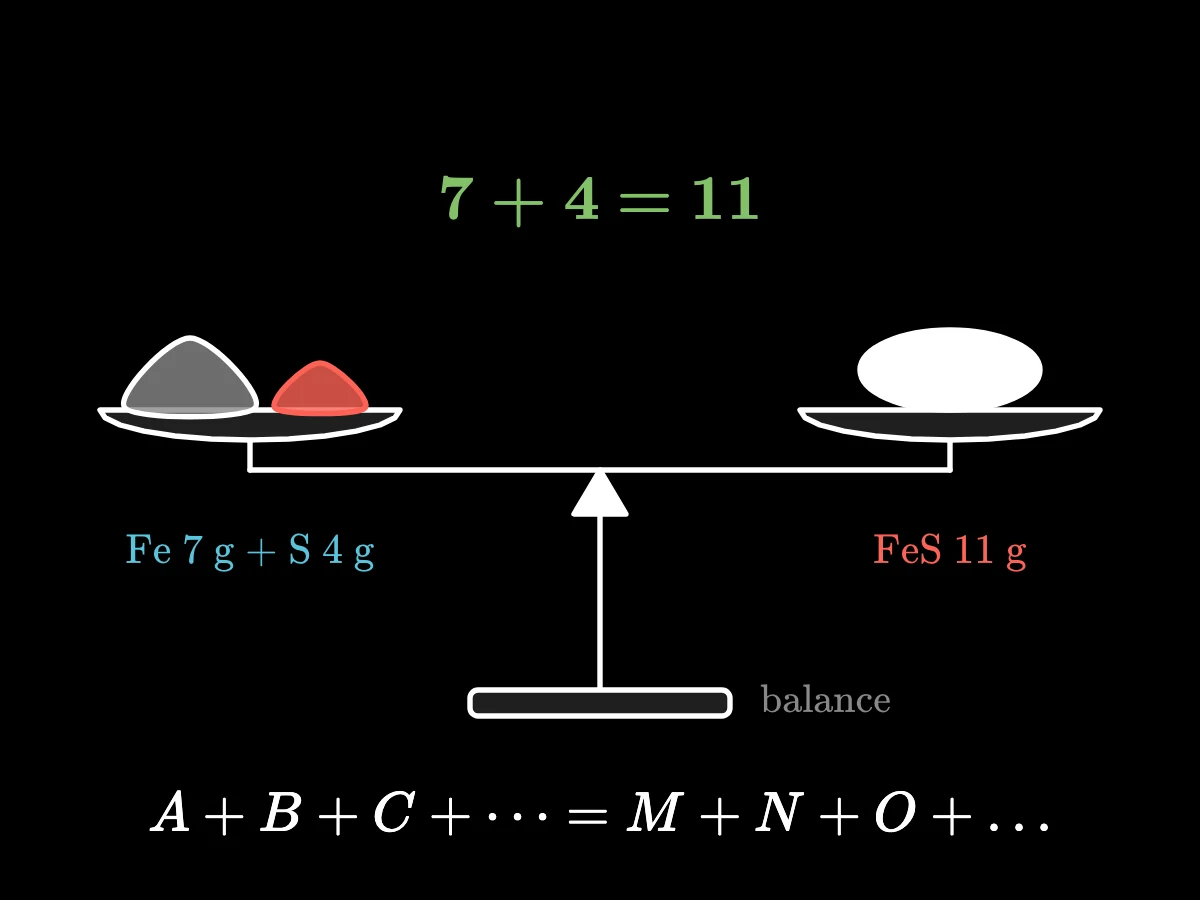
An equal-arm balance stays level with 7 grams of iron and 4 grams of sulphur on the left pan and 11 grams of iron sulphide on the right; below, A plus B plus C equals M plus N plus O.
Where Does the Wood Go?

What Goes In Comes Out

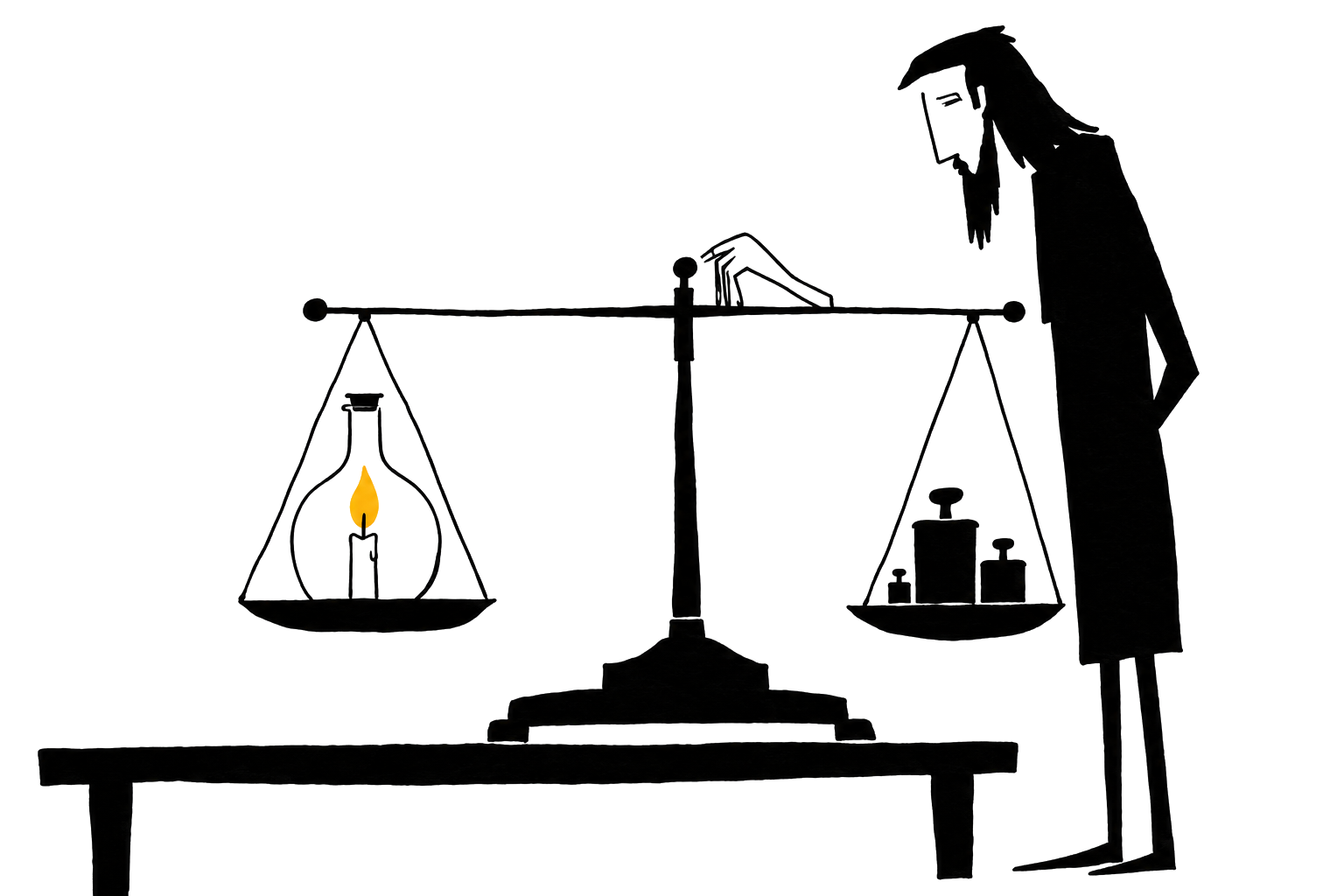
His tool was the balance, the only instrument, as Mendeleev says, that measures the quantity of matter directly and exactly. Lavoisier weighed everything that went into an experiment, even the vessels, and everything that came out.
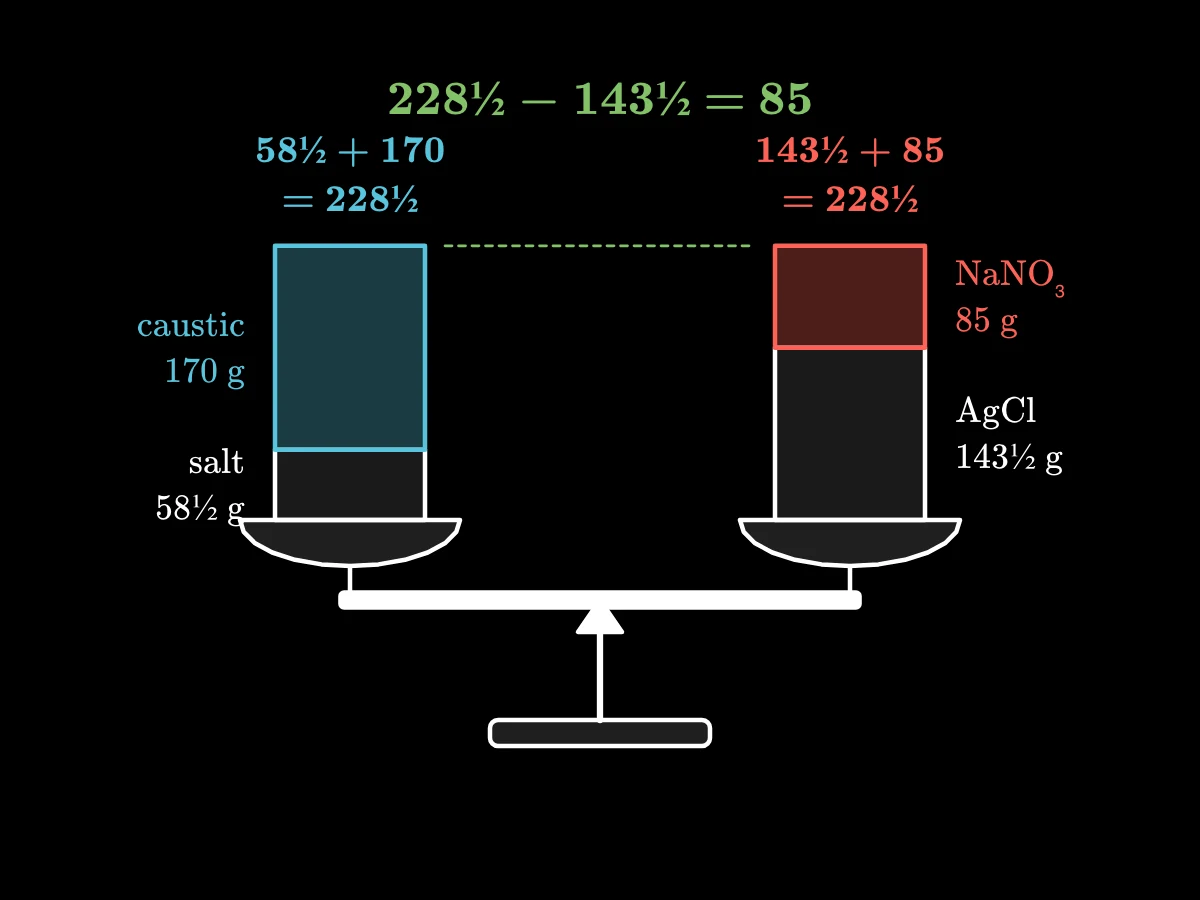
A level balance with salt and lunar caustic stacked on one bowl and silver chloride and sodium nitrate stacked on the other; both stacks are 228½ grams.
Salt, Silver and the Alchemists' Mistake

228½ on Both Sides

Now the balance. Mendeleev gives the numbers: about 58½ grams of dry salt and 170 grams of dry lunar caustic give 143½ grams of silver chloride and 85 grams of sodium nitrate. Let us check them aloud. On the left, 58½ + 170 = 228½ grams. On the right, 143½ + 85 = 228½ grams.

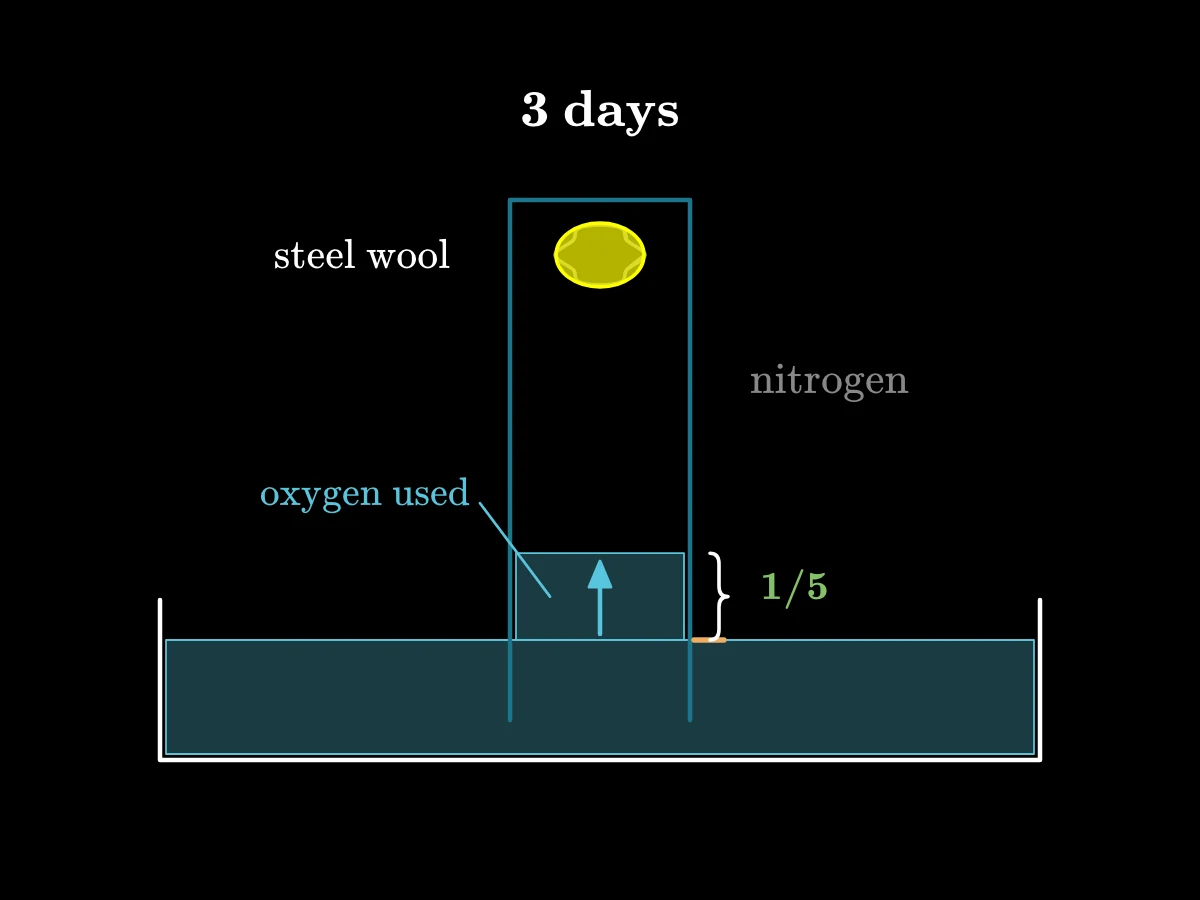
A narrow jar stands upside down in a dish of water with steel wool at its top; after days the wool rusts and the water rises a fifth of the way up.
Twelve Days with Mercury

Steel Wool in an Upturned Jar

Wet the inside of a narrow glass jar, push a pad of steel wool to the bottom so it stays put, and stand the jar upside down in a dish of water. Mark the water level inside the jar with a pen. Leave it for two or three days.

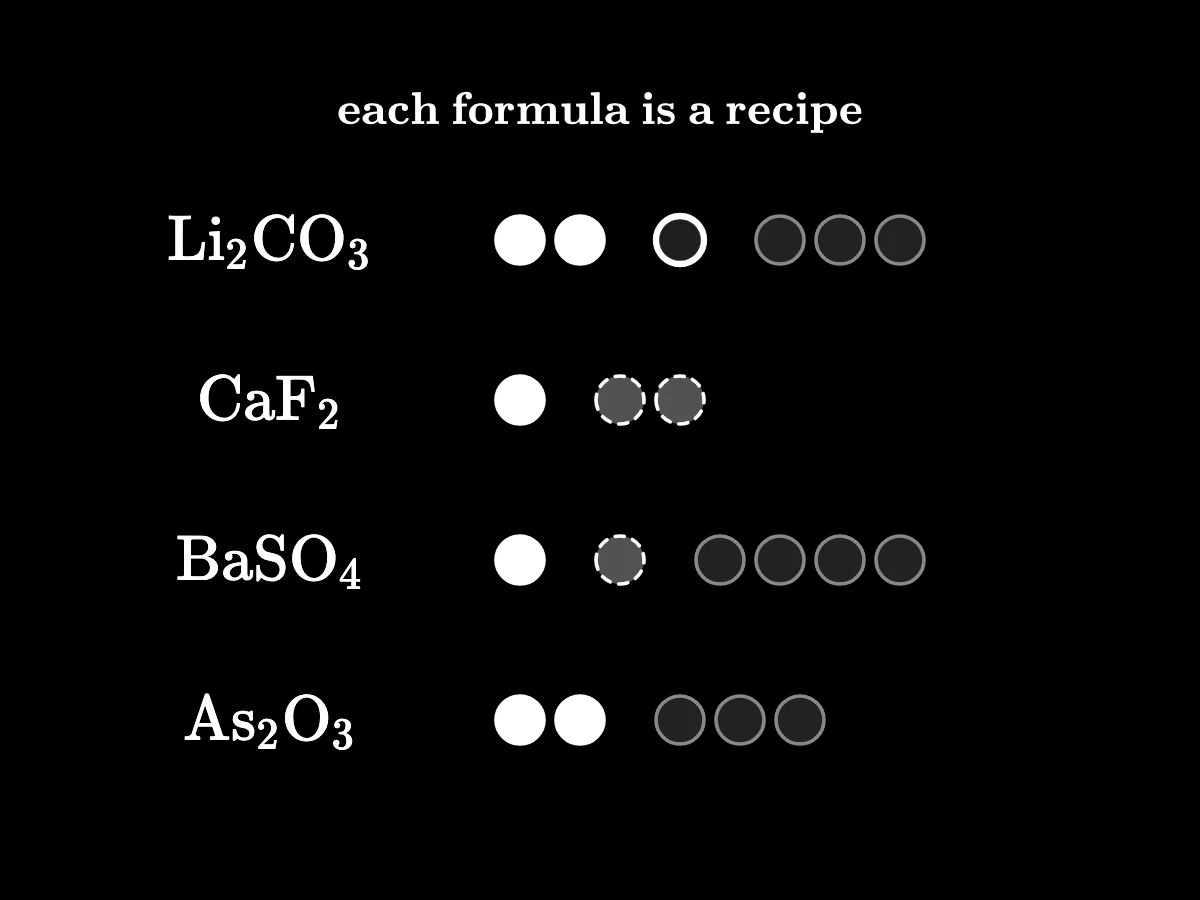
Four formulas in a column with their counts: Li₂CO₃, two lithium, one carbon, three oxygen; CaF₂; BaSO₄; As₂O₃.
A Roll Call of the Elements, and the Force That Binds Them

Formulas as Recipes

Next comes a longer group: simple bodies that are not common in nature, but are used in daily life or industry. Here Mendeleev gives formulas, and they are worth reading slowly, because each formula is a short recipe.

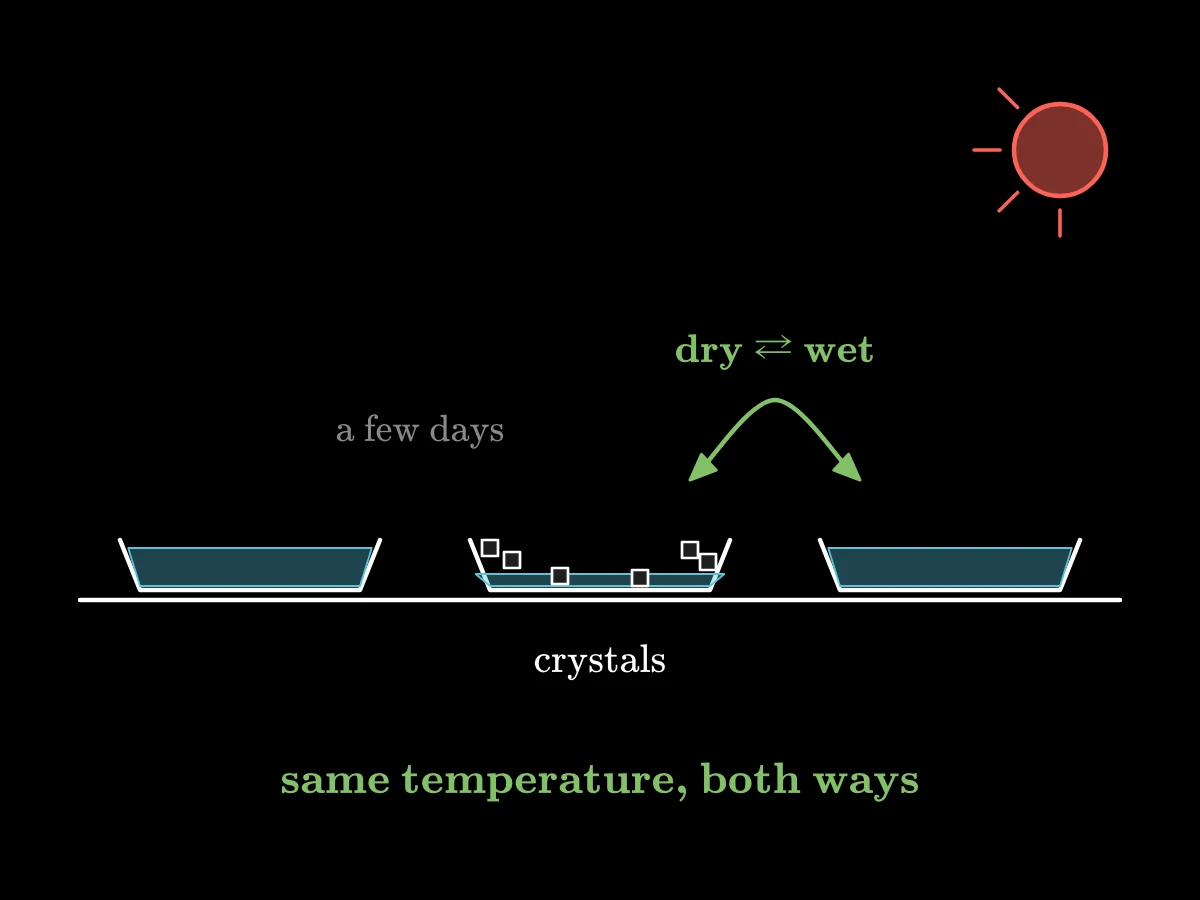
A saucer of salt water on a windowsill in the sun; as days pass the water dries and crystals appear; water added again dissolves them.
Stored Energy, Fixed Recipes and Roads That Run Both Ways

Salt That Comes and Goes

Dissolve a spoonful of salt in a saucer of water and leave the saucer on a sunny windowsill for a few days. As the water evaporates, salt crystals appear at the edges and then across the bottom. Add water again, and they dissolve; let it dry, and they return.

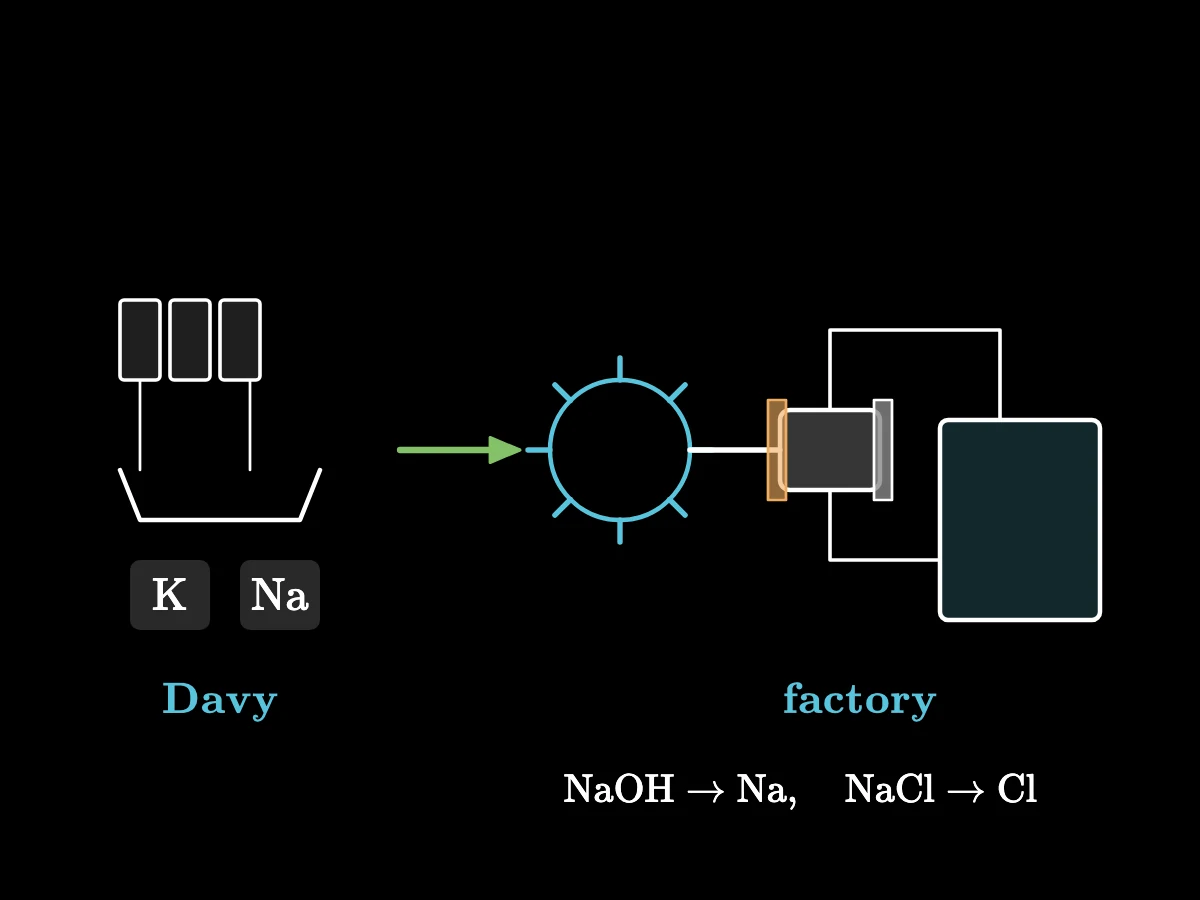
On the left a small battery and dish with tiles K and Na, labelled Davy; an arrow to the right to a dynamo turned by a water wheel feeding a large cell, labelled factory.
Half-Finished Decompositions and the Power of the Current

From Davy's Bench to the Factory

This method made history. Many simple bodies were first obtained with the current.

How it was made

Examples for: a curious adult with school chemistry; add one modern instance per idea, such as a kitchen, a battery, a lab scale or a factory

The source

The lectures retell the Russian text of the 7th edition, St Petersburg 1903 (Internet Archive 20200627_mendeleev_basic). The author died in 1907; the work is in the public domain. The retelling, the drawings and the voice are made by AI and checked against the book by a second model; nothing was edited by hand. How AI is used.

The lectures are free to read, share and quote with a link to this page.

Your own hard book, the same way

Upload a textbook or any difficult book. The first five minutes are free.

Upload a book