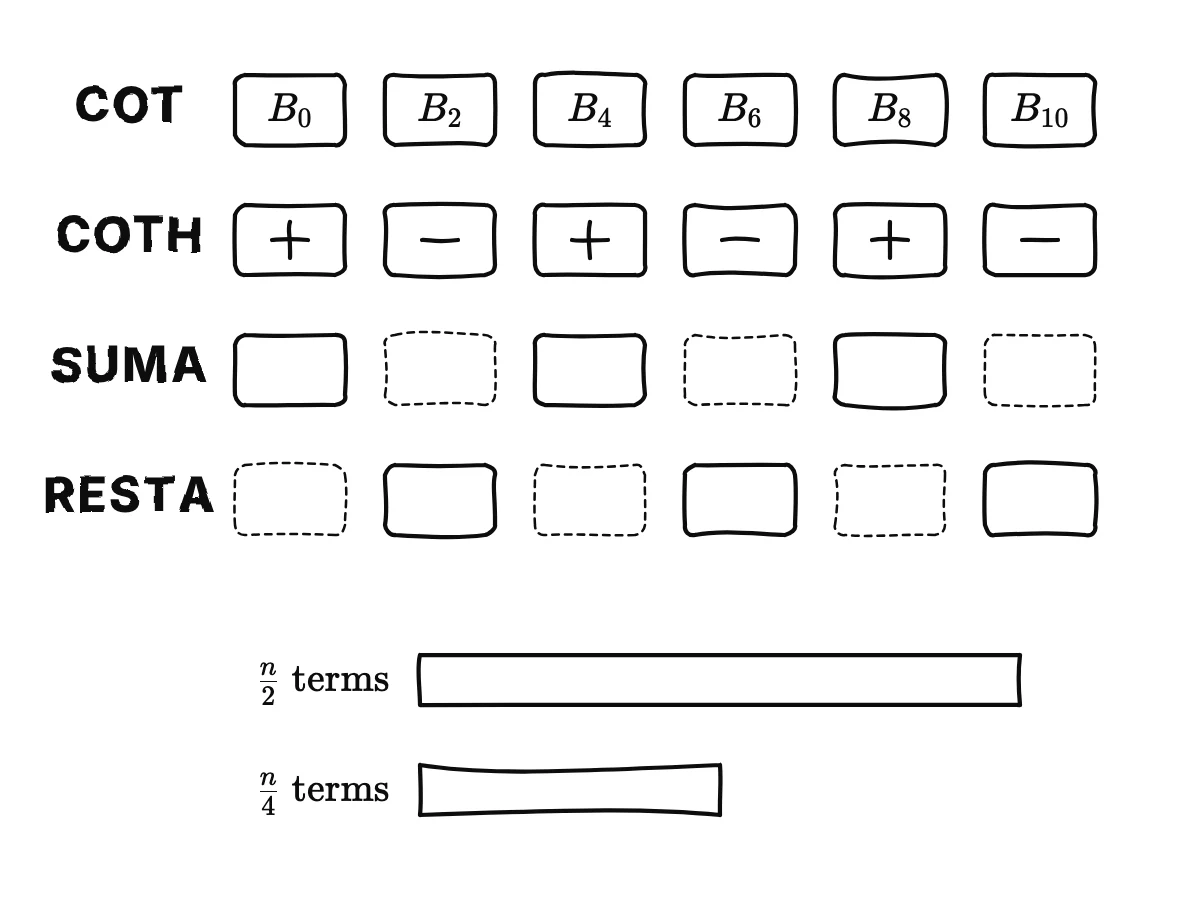
Algunas propiedades de los números de Bernoulli
Se cancela un término de cada dos
Sección 3. De nuevo, −½x(cot ½x + coth ½x) = −½x(cot ½x + i cot ½ix) = 2(B₀ + B₄ x⁴/4! + B₈ x⁸/8! + ⋯), usando la ecuación uno.
Collected Papers of Srinivasa Ramanujan
The same text, told at every level, in every language and look shown here. Pick, then listen or download.
The same player the product gives for your own book: the voice, the drawings as they are drawn, the text.
The first paper the self-taught genius ever published, written in Madras at 23: strange patterns in the Bernoulli numbers, the numbers behind sums of powers. Most of his claims are true, some are guesses, and one is false; the lectures show which is which.
This is a sample: 1 of 37 papers.
Sección 3. De nuevo, −½x(cot ½x + coth ½x) = −½x(cot ½x + i cot ½ix) = 2(B₀ + B₄ x⁴/4! + B₈ x⁸/8! + ⋯), usando la ecuación uno.
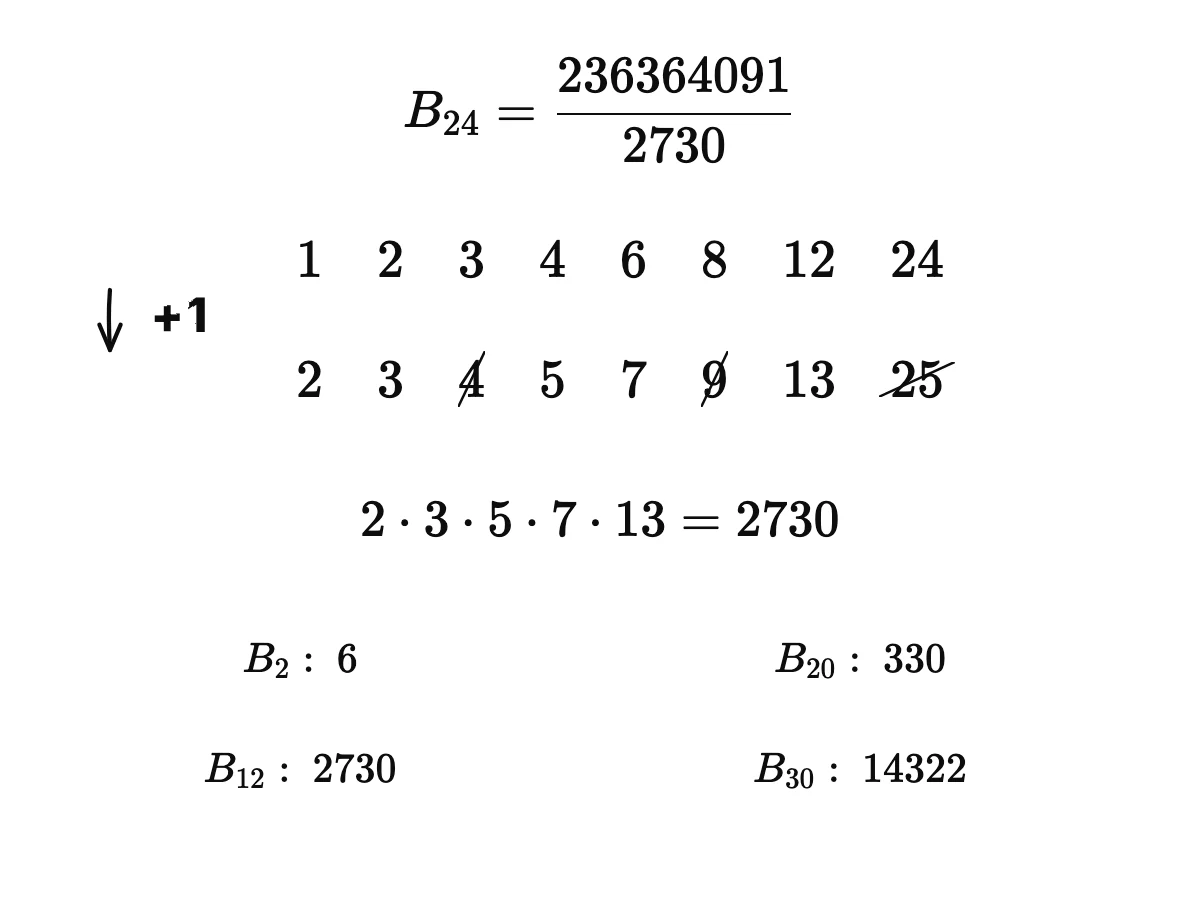
Sección 7. Consideremos ahora los denominadores.
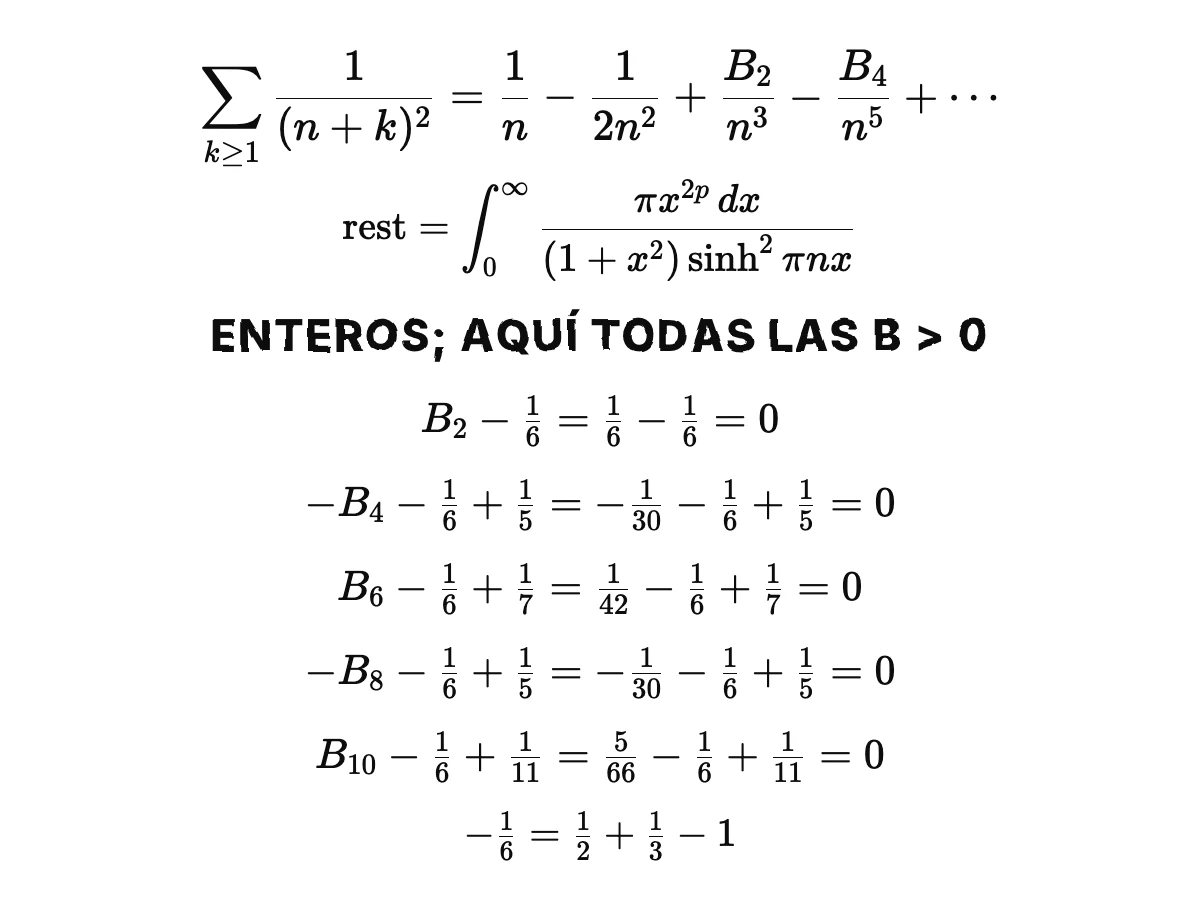
De la ecuación veintisiete tenemos d² log Γ(n + 1)/dn² = 1/(n + 1)² + 1/(n + 2)² + 1/(n + 3)² + ⋯ = 1/n − 1/(2n²) + B₂/n³ − B₄/n⁵ + B₆/n⁷ − B₈/n⁹ + ⋯ − (−1)^p B₂ₚθ/n^(2p+1), la ecuación veintinueve. Aquí B₂ₚθ/n^(2p+1) = B₂ₚ/n^(2p+1) − B₂ₚ₊₂/n^(2p+3) + ⋯.
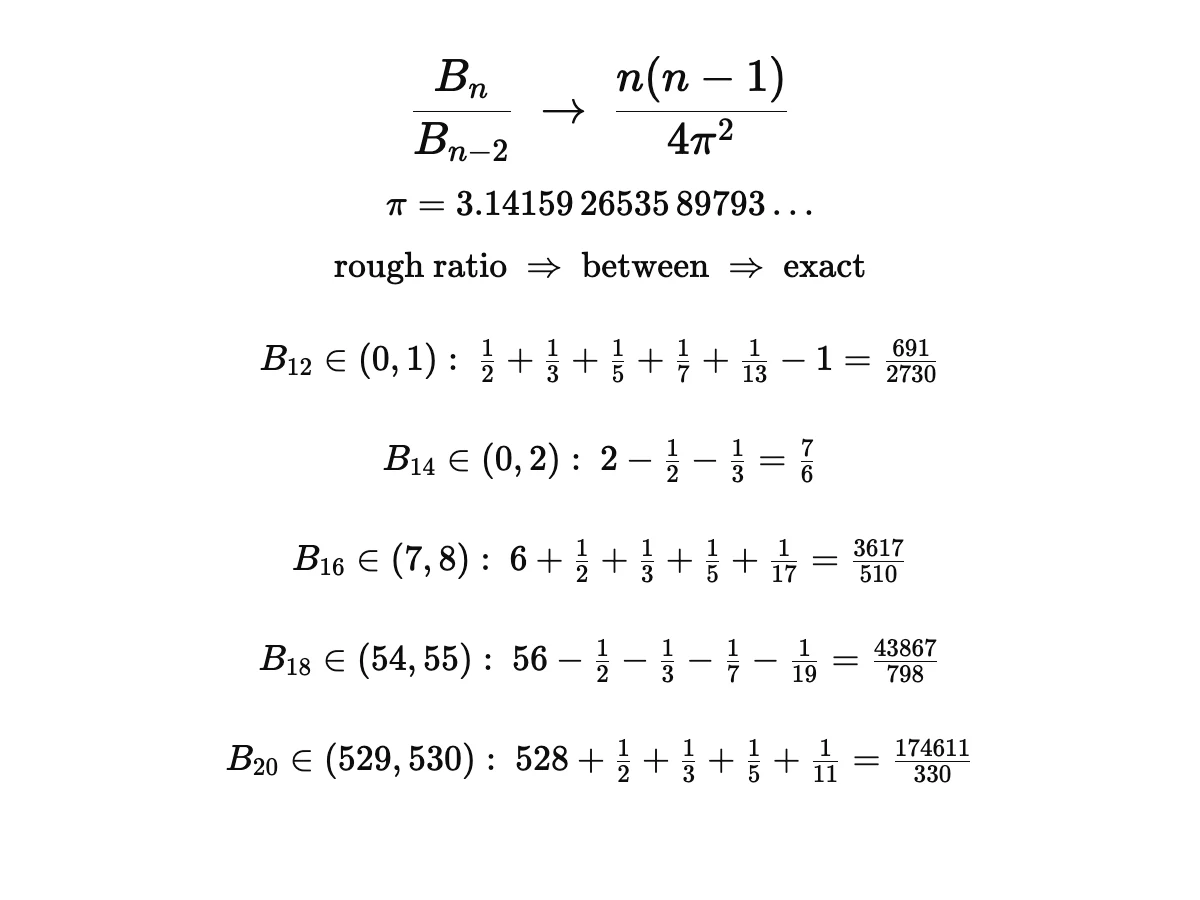
Sección 14. Cambiando n por n menos 2 en la ecuación veinticuatro y tomando el cociente de los dos resultados, tenemos Bₙ = (n(n − 1)/(4π²)) Bₙ₋₂ (1 − (2² − 1)/(2ⁿ − 1))(1 − (3² − 1)/(3ⁿ − 1))(1 − (5² − 1)/(5ⁿ − 1))⋯, la ecuación treinta y cuatro, donde 2, 3, 5, etcétera, son números primos.
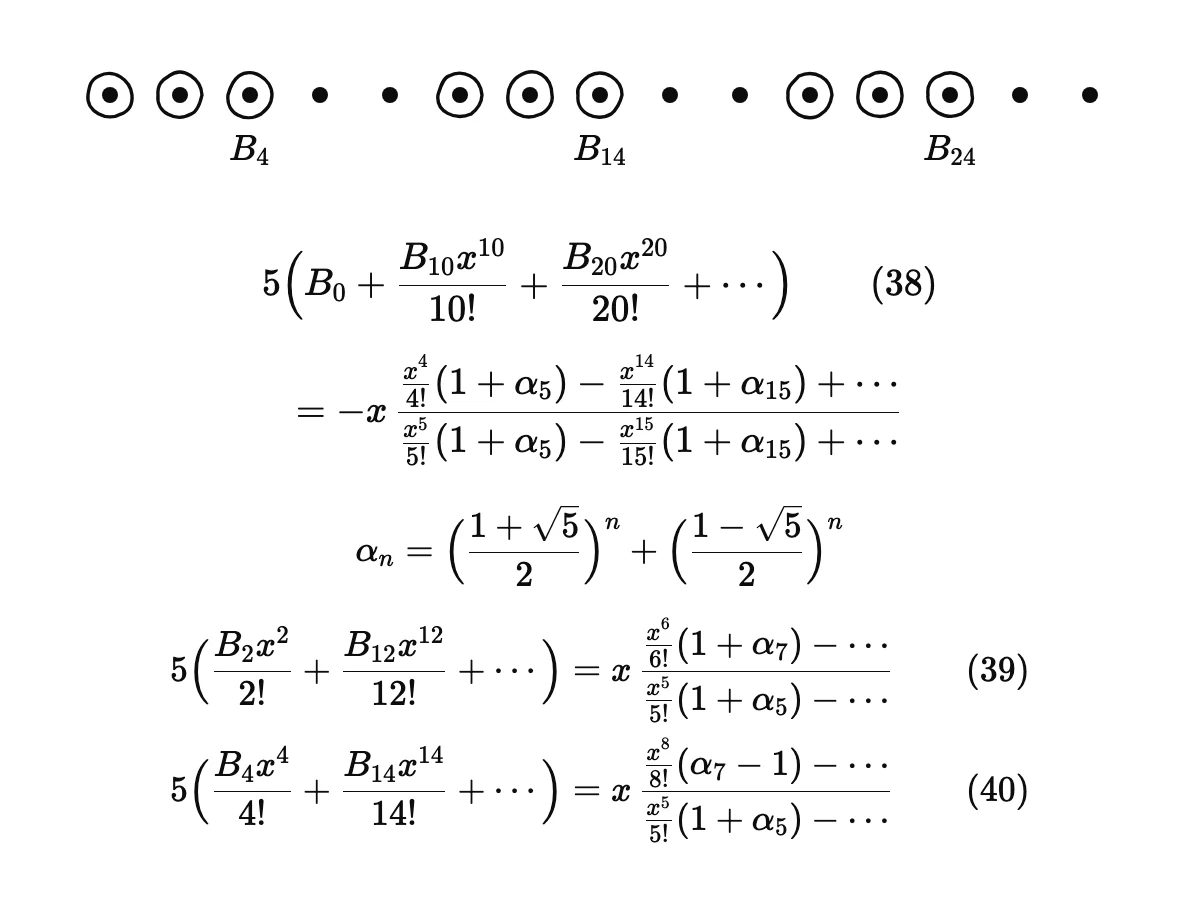
Tomando logaritmos y derivando ambos miembros, tenemos 5(B₀ + B₁₀x¹⁰/10! + B₂₀x²⁰/20! + B₃₀x³⁰/30! + ⋯) = −x ((x⁴/4!)(1 + α₅) − (x¹⁴/14!)(1 + α₁₅) + ⋯) / ((x⁵/5!)(1 + α₅) − (x¹⁵/15!)(1 + α₁₅) + ⋯), la ecuación treinta y ocho, donde αₙ = ((1 + √5)/2)ⁿ + ((1 − √5)/2)ⁿ, de modo que αₙαₘ = αₙ₊ₘ + (−1)ⁿαₘ₋ₙ.
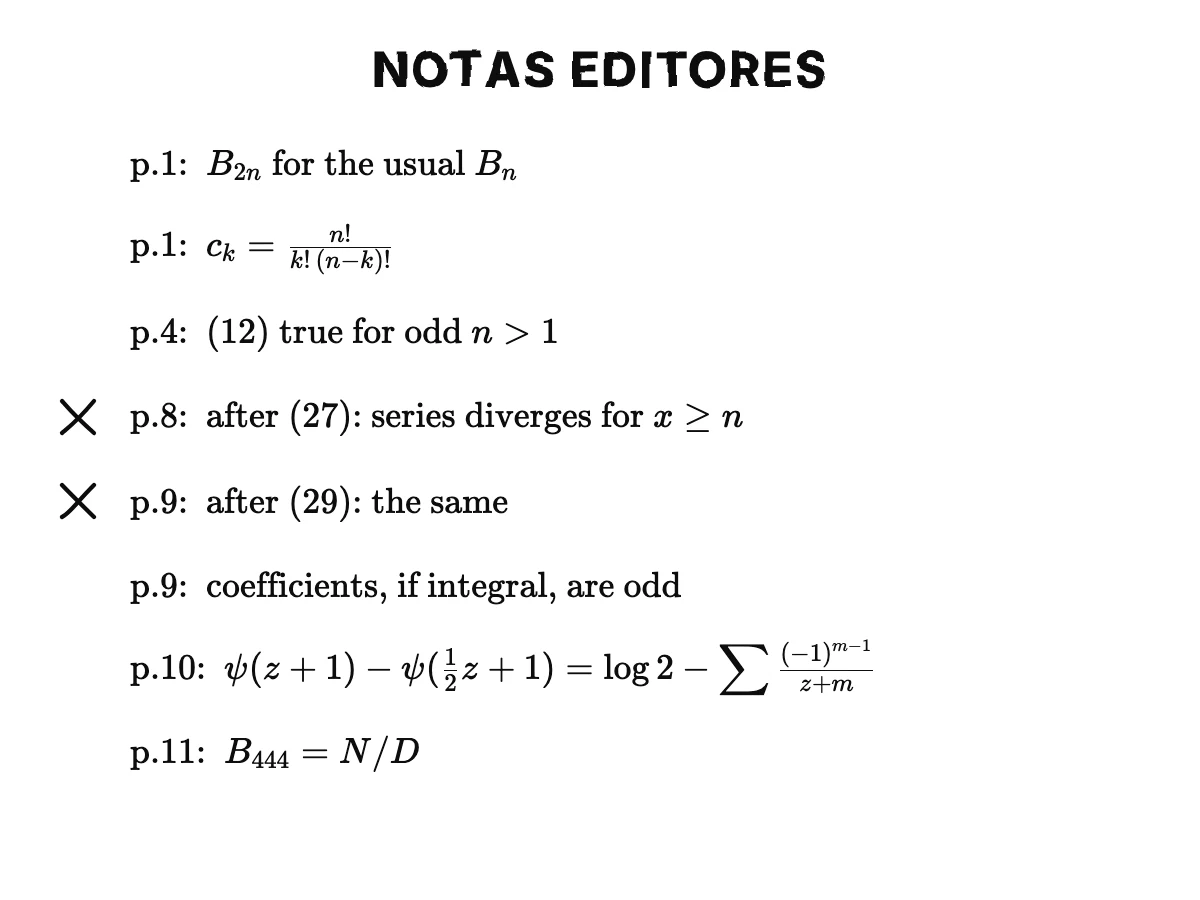
Nota de los editores, del Apéndice I, las notas sobre el artículo 1. Página 1, ecuación uno: Ramanujan escribe B₂ₙ donde lo habitual es Bₙ. Página 1, ecuación dos: cₖ = n!/(k!(n − k)!), el coeficiente binomial.
Examples for: a curious adult with school maths who likes number puzzles and knows Ramanujan's story; add one modern instance per idea, such as a calculator, computer algebra or cryptography
The lectures retell the English text of the Cambridge 1927 edition (Internet Archive pli.kerala.rare.28155). The author died in 1920; the work is in the public domain. The retelling, the drawings and the voice are made by AI and checked against the book by a second model; nothing was edited by hand. How AI is used.
The lectures are free to read, share and quote with a link to this page.
Upload a textbook or any difficult book. The first five minutes are free.
Upload a book