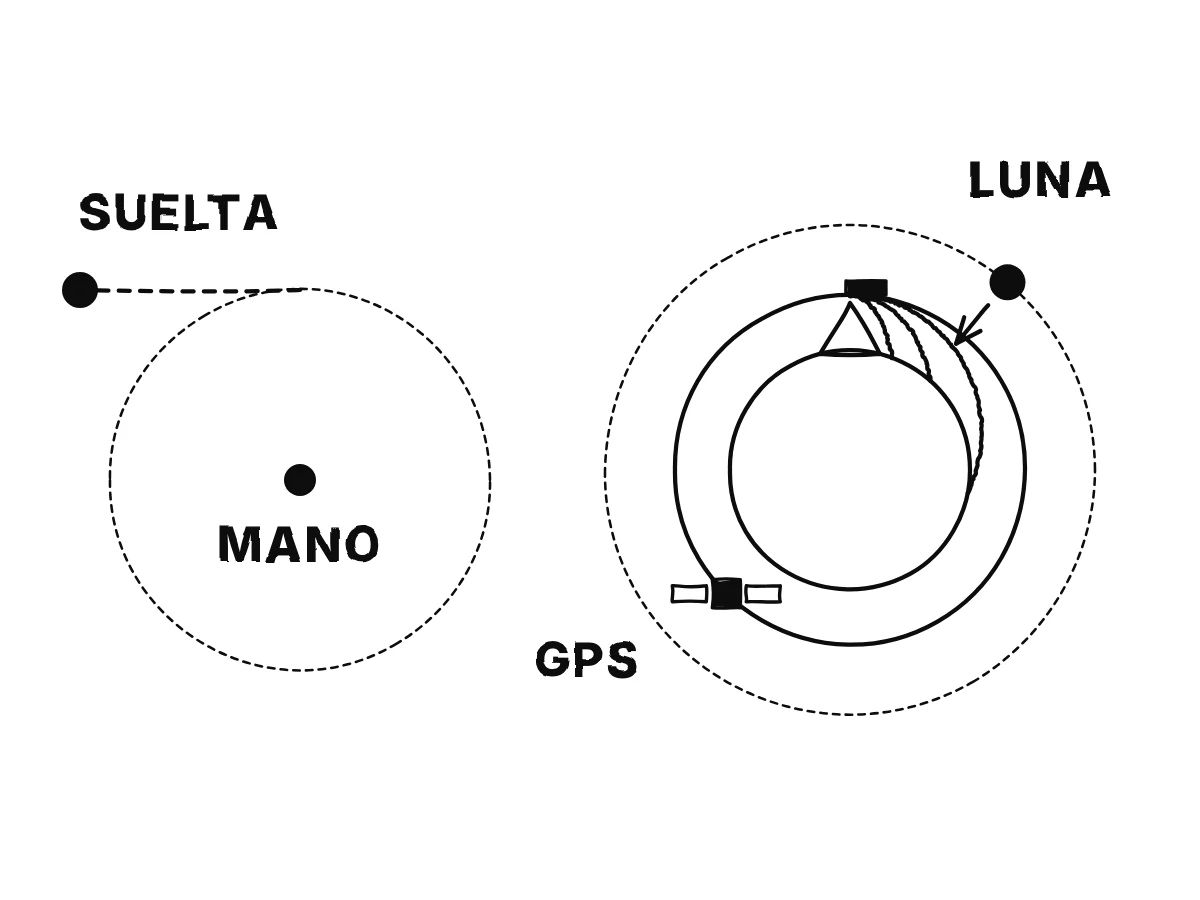
Atraído hacia un centro
La cuarta idea es la fuerza de la que trata todo el libro: un tirón hacia un centro, que él llama centrípeto. La gravedad, el magnetismo y lo que sea que sostiene a los planetas en sus caminos curvos son todos de este tipo.
Philosophiæ Naturalis Principia Mathematica

The same text, told at every level, in every language and look shown here. Pick, then listen or download.
The same player the product gives for your own book: the voice, the drawings as they are drawn, the text.
The book that founded physics. Its opening chapter defines mass, momentum and force, and asks what it means to move at all: absolute and relative time, space and motion, with the spinning bucket and the two globes on a cord.
This is a sample: 1 of 5 chapters.

La cuarta idea es la fuerza de la que trata todo el libro: un tirón hacia un centro, que él llama centrípeto. La gravedad, el magnetismo y lo que sea que sostiene a los planetas en sus caminos curvos son todos de este tipo.

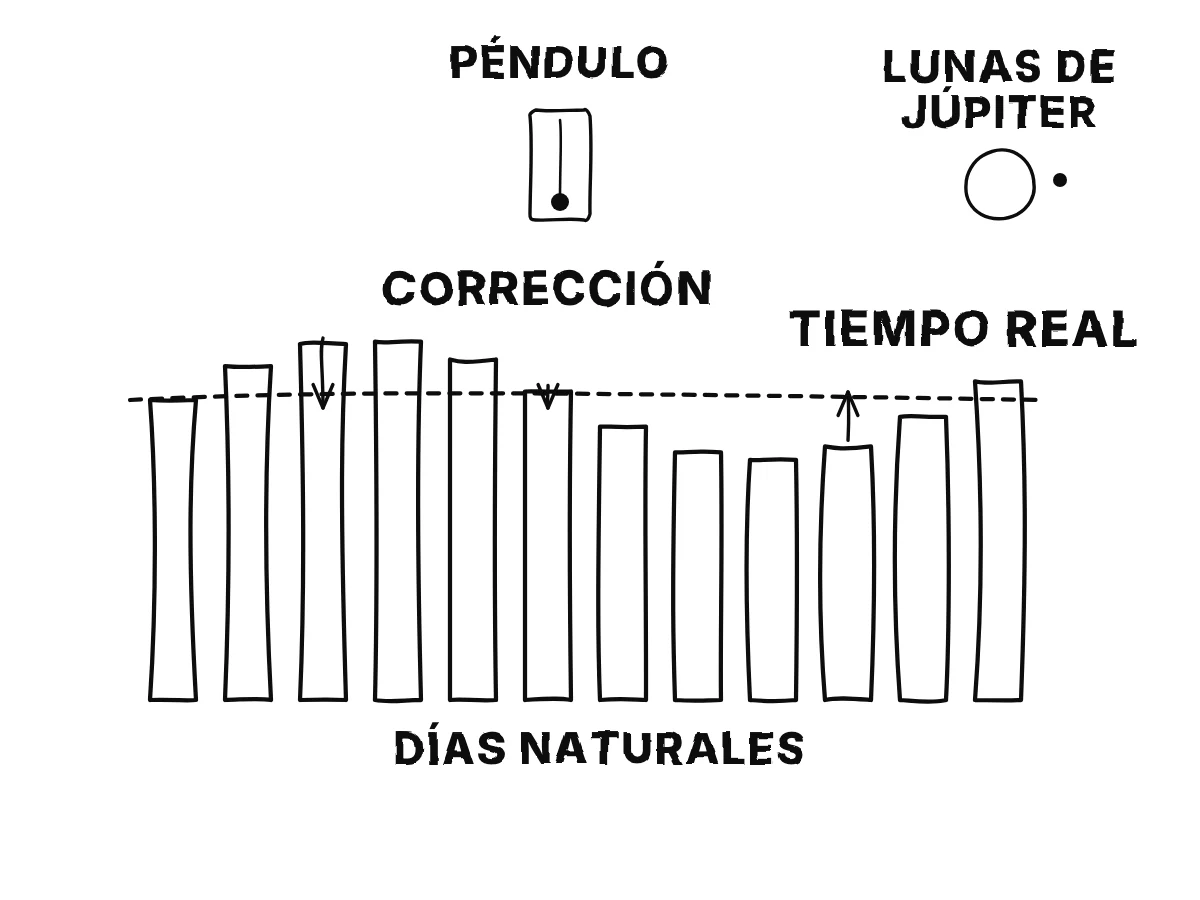
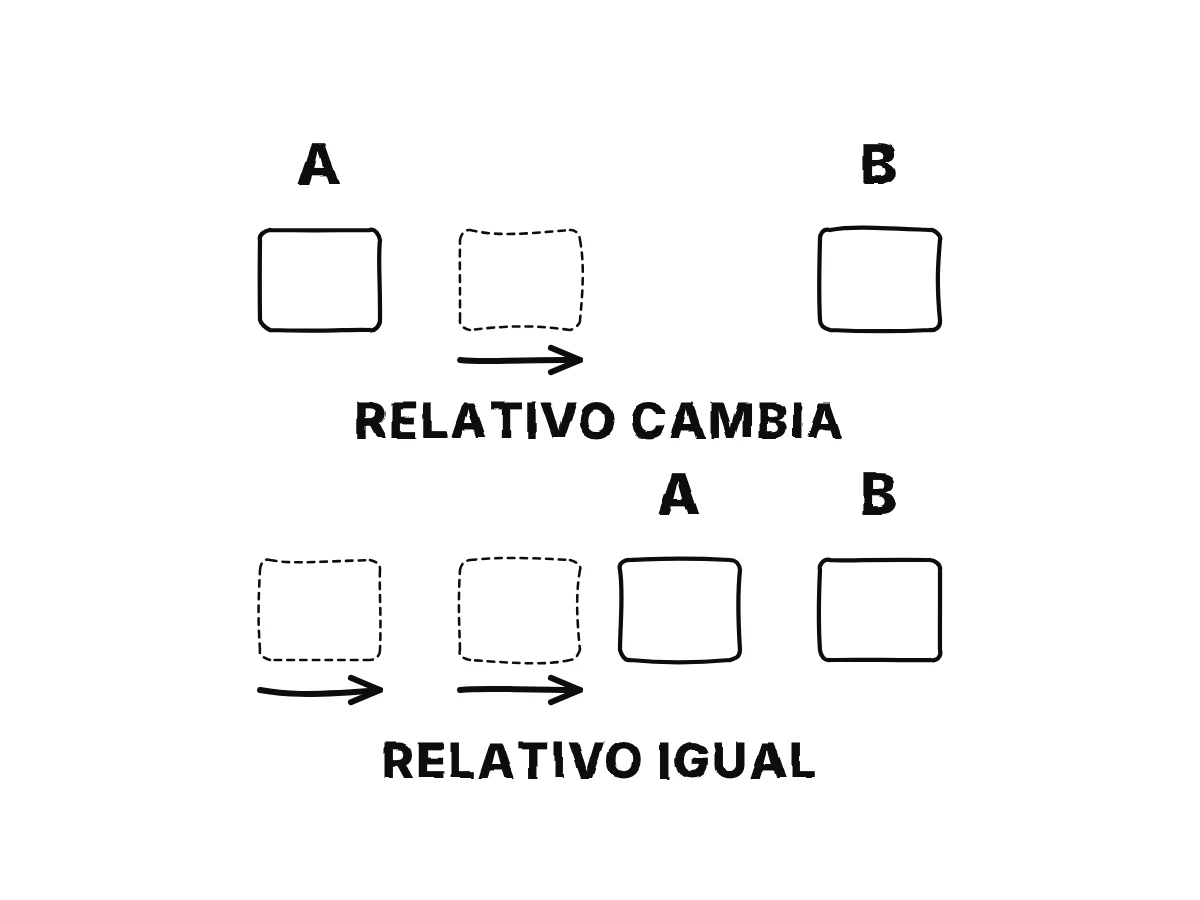
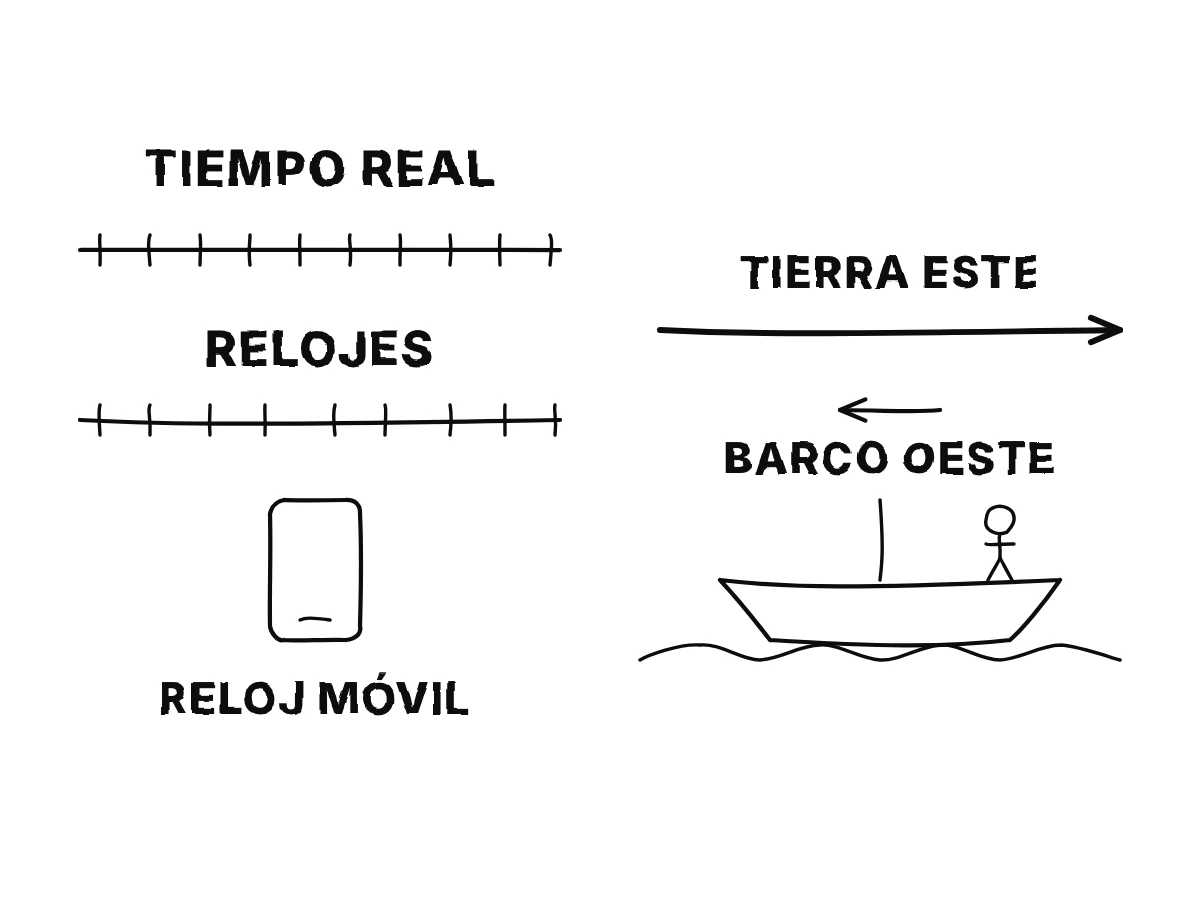
Sobre la segunda pregunta, se niega a definir el tiempo, el espacio, el lugar y el movimiento, que todo el mundo cree conocer, pero advierte que la gente solo los conoce a través de las cosas que ve, y eso la desorienta. Así que divide cada uno en una versión verdadera y una medida.

Newton empieza por el tiempo, porque el tiempo tiene el mismo problema. Medimos el tiempo por días, por el Sol que va de mediodía a mediodía, y todo el mundo trata esos días como iguales.

Las causas ayudan más. El movimiento verdadero solo cambia cuando una fuerza actúa sobre el propio cuerpo.

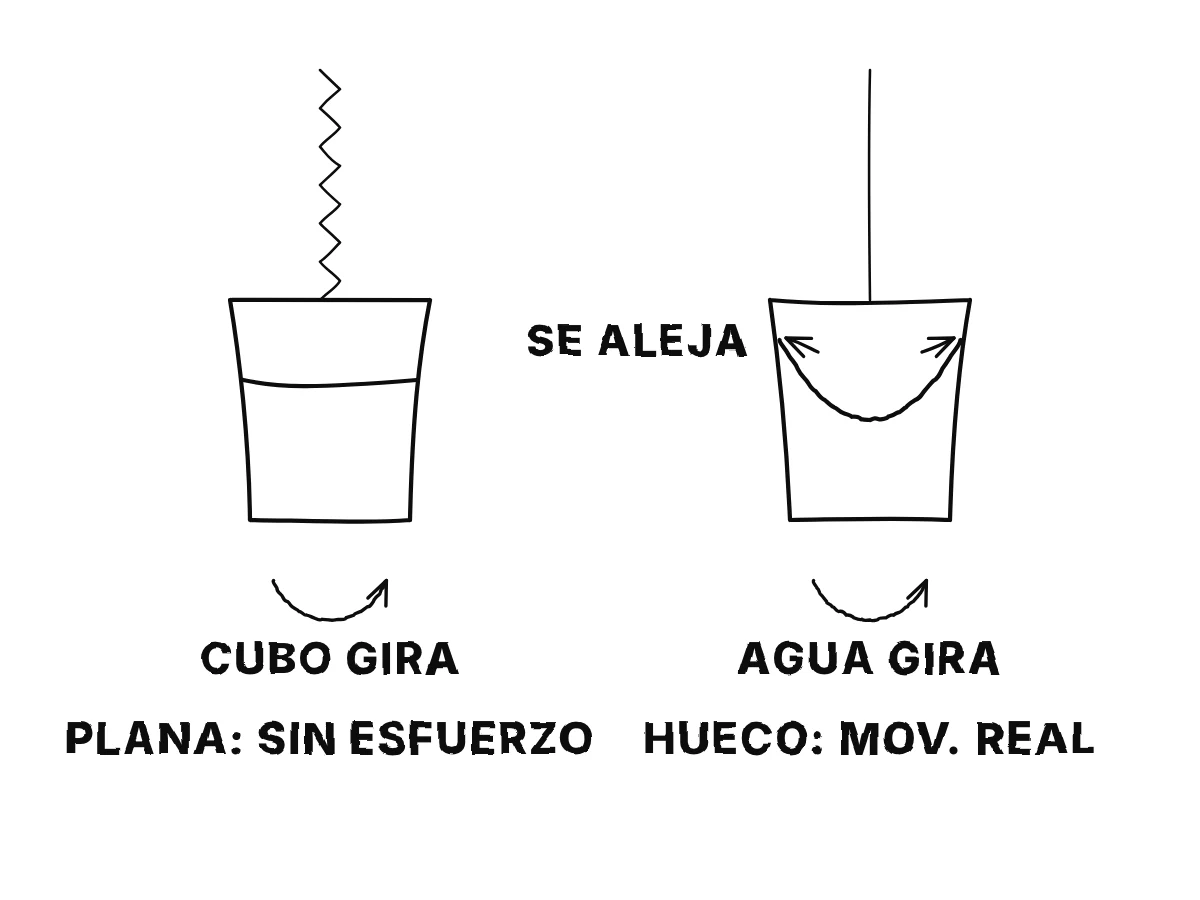
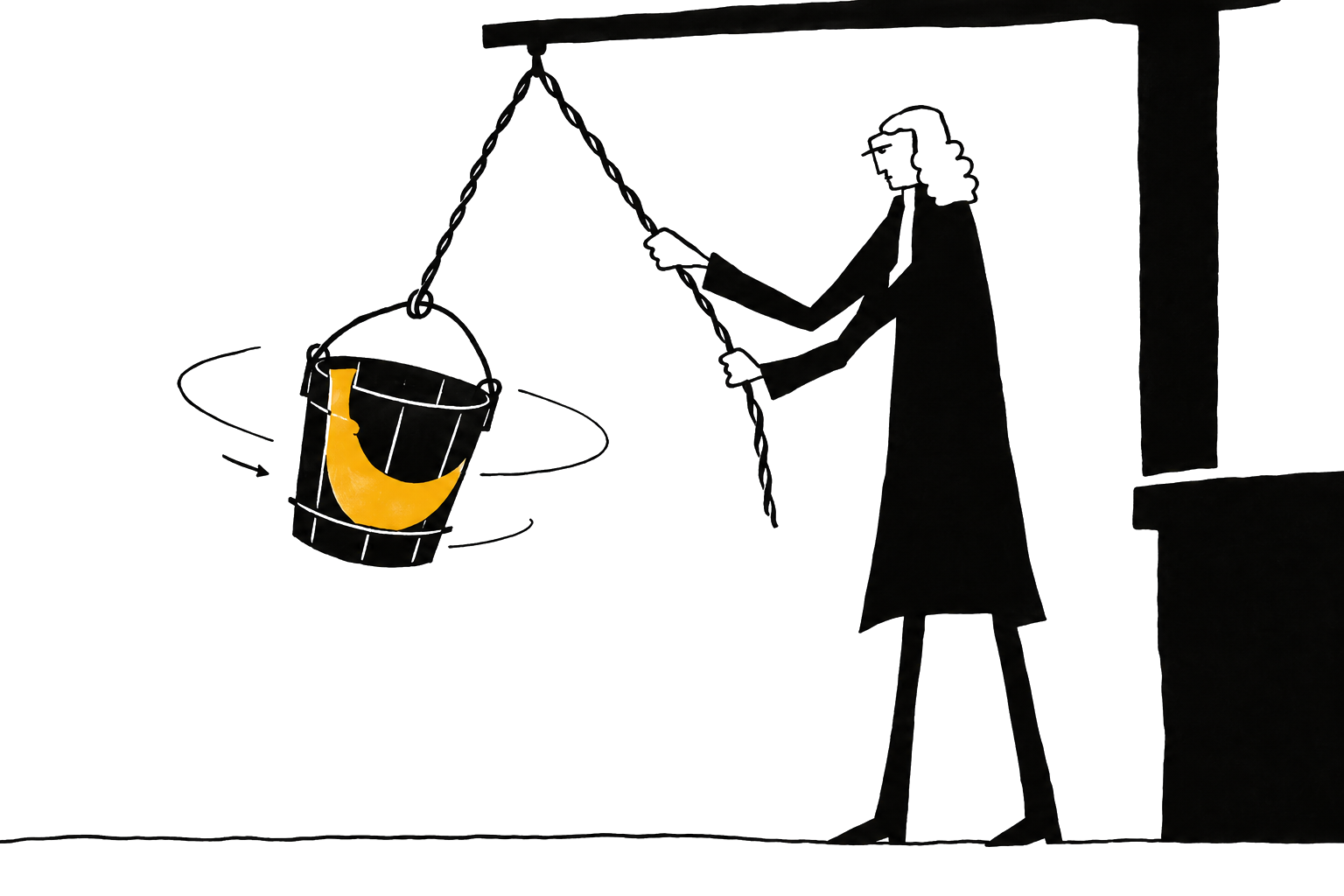
Los efectos son la pista decisiva, y aquí Newton describe un experimento que hizo él mismo. Colgó un cubo de agua de una cuerda larga, retorció la cuerda muchas veces, sujetó el cubo quieto y luego lo soltó.

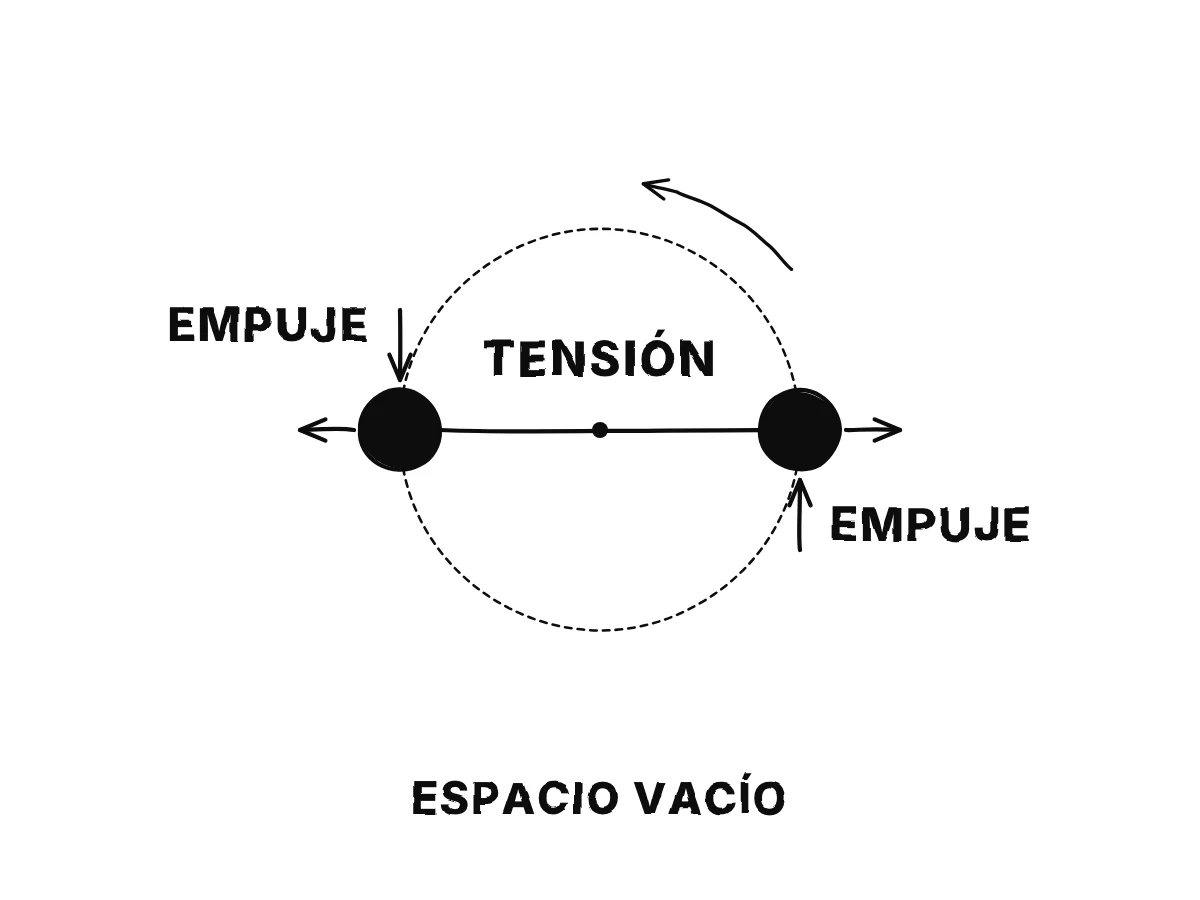
La cuerda entre las dos bolas se tensa por su esfuerzo hacia fuera, así que su tensión revela lo rápido que giran, y un empujón por lados correspondientes de las dos bolas revela en qué sentido, incluso sin nada más a la vista.
Examples for: a curious adult with school physics who uses a smartphone every day; add one modern instance per idea, such as GPS satellites, a phone's accelerometer or a car braking
The lectures retell the English text of Project Gutenberg #76404, Andrew Motte's translation (first American edition, 1846). The author died in 1727; the work is in the public domain. The retelling, the drawings and the voice are made by AI and checked against the book by a second model; nothing was edited by hand. How AI is used.
The lectures are free to read, share and quote with a link to this page.
Upload a textbook or any difficult book. The first five minutes are free.
Upload a book