Retold at your level
Keep every formula, or none. You choose how deep it goes.
Upload a textbook or any difficult book. Get it back explained at your level, read aloud, with a drawing for every idea.
Drop your book here
EPUB, FB2, PDF, DjVu or TXT, up to 200 MB
Your file stays private
The focal length f′ of a system is the distance from its rear principal plane H′ to the rear focal point F′. For a thin lens in air it is determined by the radii of curvature r₁, r₂ of its surfaces and the refractive index n of the glass: 1/f′ = (n − 1)(1/r₁ − 1/r₂).
A lens is stronger when its glass is denser and its surfaces are more curved. Take ordinary glass, in which light travels one and a half times slower than in air, and curve both sides like a ball twenty centimetres across. Work it through and the focal length comes out at about ten centimetres: sunlight gathers into a point a palm's width behind the lens.
Keep every formula, or none. You choose how deep it goes.
Your device reads each lecture aloud, free. The sentence being read stands out in the text.
Schemes and graphs build up step by step, in step with the voice.
Say what you work with, and the examples use your tools, not someone else’s.
Real books the product has made into illustrated audio lectures: every level, three languages, one voice. Open one and listen.
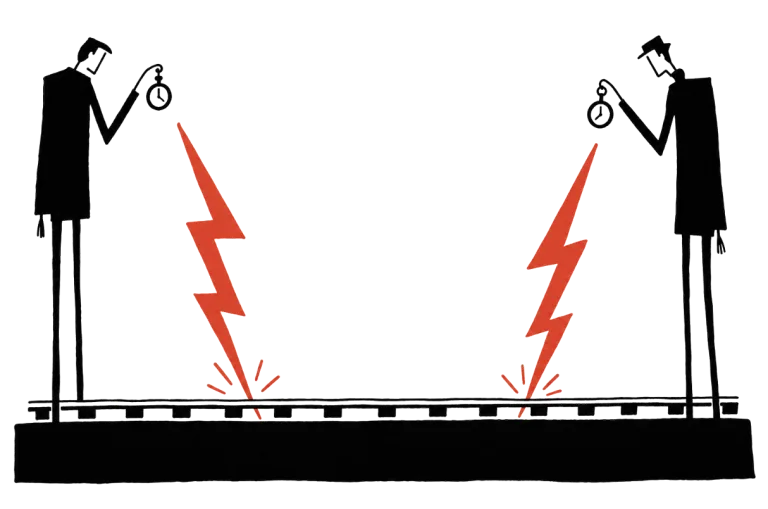 Relativity: The Special and General TheoryAlbert Einstein · 1917
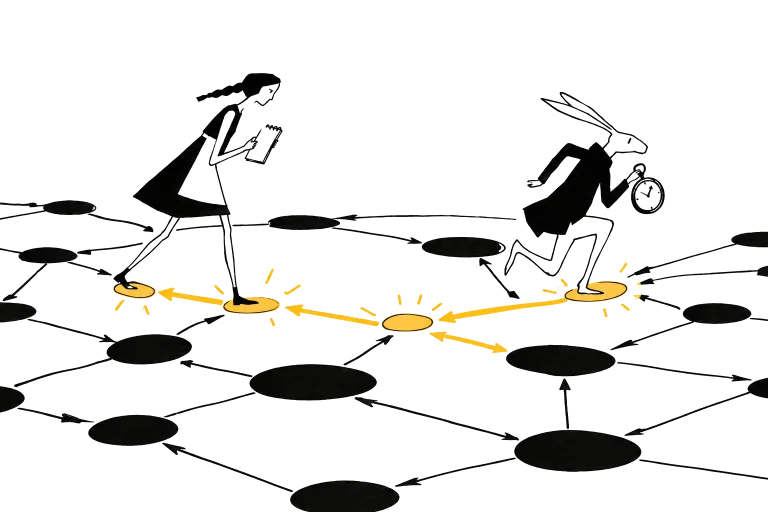 Alice's Adventures in a Differentiable WonderlandSimone Scardapane · 2024
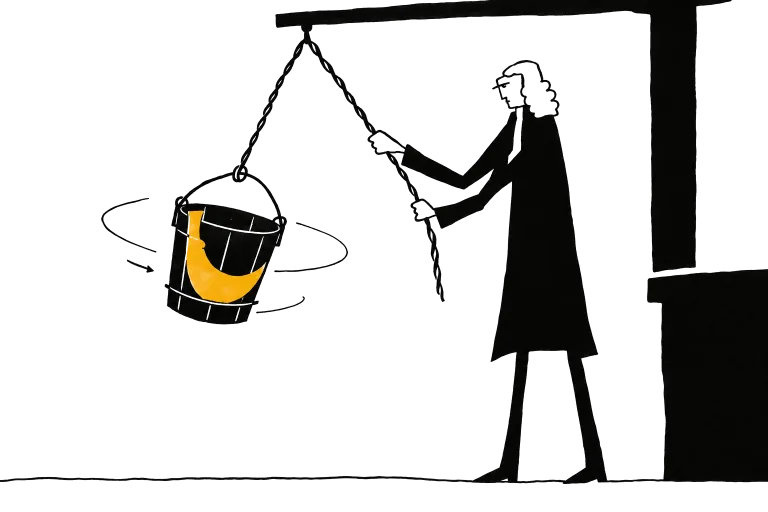 The Mathematical Principles of Natural PhilosophyIsaac Newton · 1687
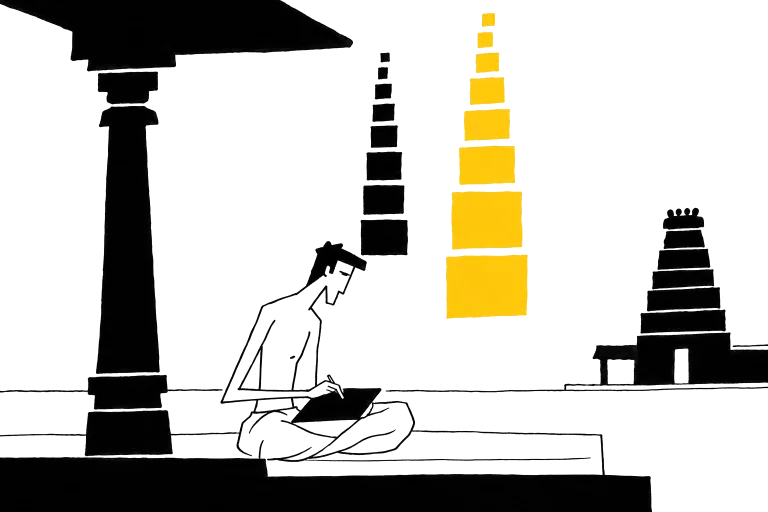 Collected Papers of Srinivasa RamanujanSrinivasa Ramanujan · 1911
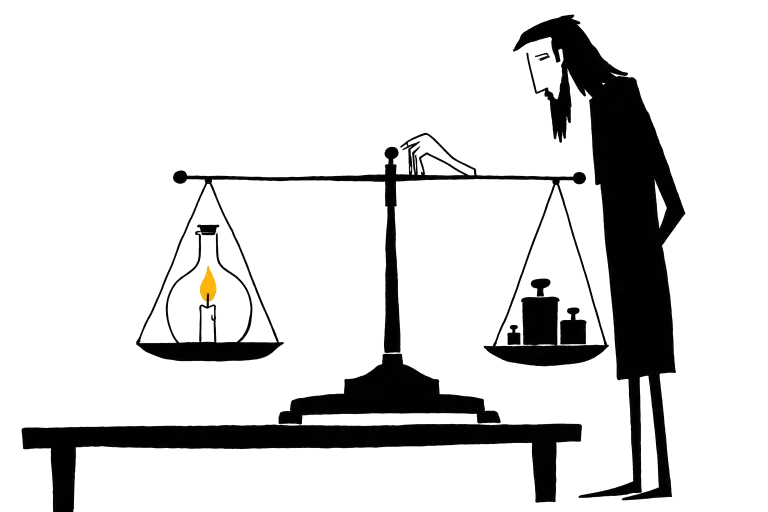 The Principles of ChemistryDmitri Mendeleev · 1903
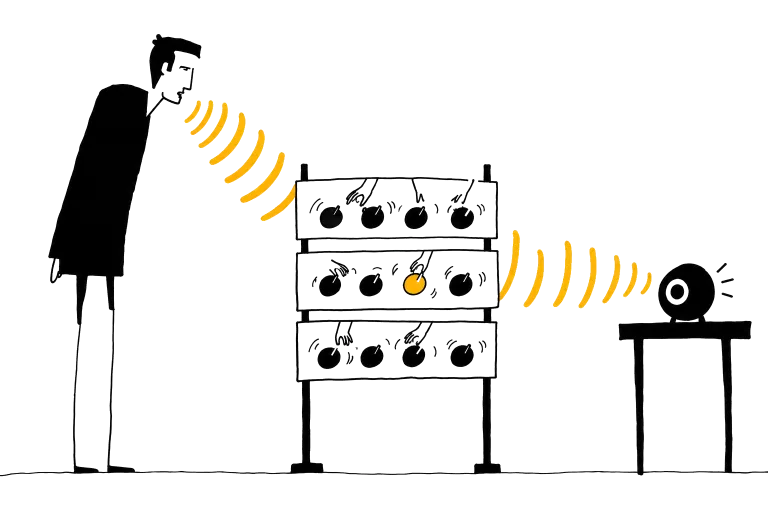 Dive into Deep LearningAston Zhang, Zachary C. Lipton, Mu Li, Alexander J. Smola · 2023
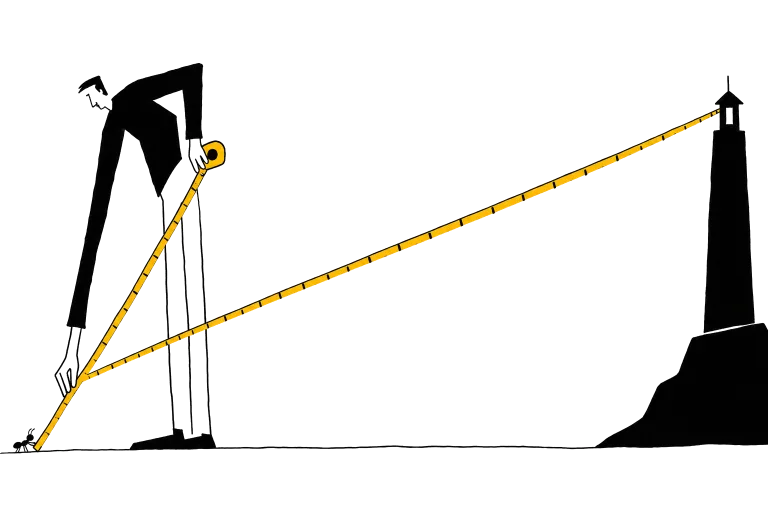 College PhysicsPaul Peter Urone, Roger Hinrichs (OpenStax) · 2022
A student before an exam and an engineer before a deadline need the same hard book in different ways. Pick the one closest to you.
The textbook of your course, explained so you can follow it tonight.
Learn moreThe main reference of your field, at exactly the depth today’s task needs.
Learn moreGet into a neighbouring field without losing a month to its textbook.
Learn moreFive different explanations of a hard chapter before you explain it yourself.
Learn moreThe great hard books you always meant to read, finally from start to finish.
Learn moreThe same paragraph at five levels. Before anything is made, you choose a level on a paragraph from your own book.
Formulas are told in words; hard concepts are retold with an example.
A lens is stronger when its glass is denser and its surfaces are more curved. Take ordinary glass, in which light travels one and a half times slower than in air, and curve both sides like a ball twenty centimetres across. Work it through and the focal length comes out at about ten centimetres: sunlight gathers into a point a palm’s width behind the lens.
An example paragraph. Yours will come from your book.
Say who you are, in a few words: a photographer, a lens maker, someone with a telescope. The examples are rewritten for you, and each one is marked in the text.
The reader said: “I shoot on a mirrorless camera with a 35 mm lens.”
A lens is stronger when its glass is denser and its surfaces are more curved. The distance at which it gathers sunlight into a point is its focal length. The 35 on your lens is that distance, in millimetres. Light from a far-off street meets about 35 mm behind the lens, and that is where your sensor waits for it.
An example. The ribbon is only on the page: the voice reads the lecture without it.
Add questions after each part, worked examples and a pointer back to the page. Each is optional. Try them here.
You swap a lens for one of the same shape made of denser glass. What happens to the point where sunlight gathers?
Ordinary glass, in which light travels one and a half times slower than in air. Both sides are curved like a ball twenty centimetres across. How far behind the lens does sunlight gather?
The same glass, but now one side is flat and only the other is curved. Where does the light gather?
Chapter 2. The thin lens · pages 41–44
Starts at: «The focal length f′ of a system is the distance from its rear principal plane H′ to the rear focal point F′…»
Every part says which chapter and pages of your book it retells. Cite the book, not the retelling, and open the original where it matters.
An example. Yours are written from your own book, and a second model answers every question before you see it. Available in the player
Five hard passages, five styles, every drawing made by our stage. Pick one style and every scene of the book follows it.
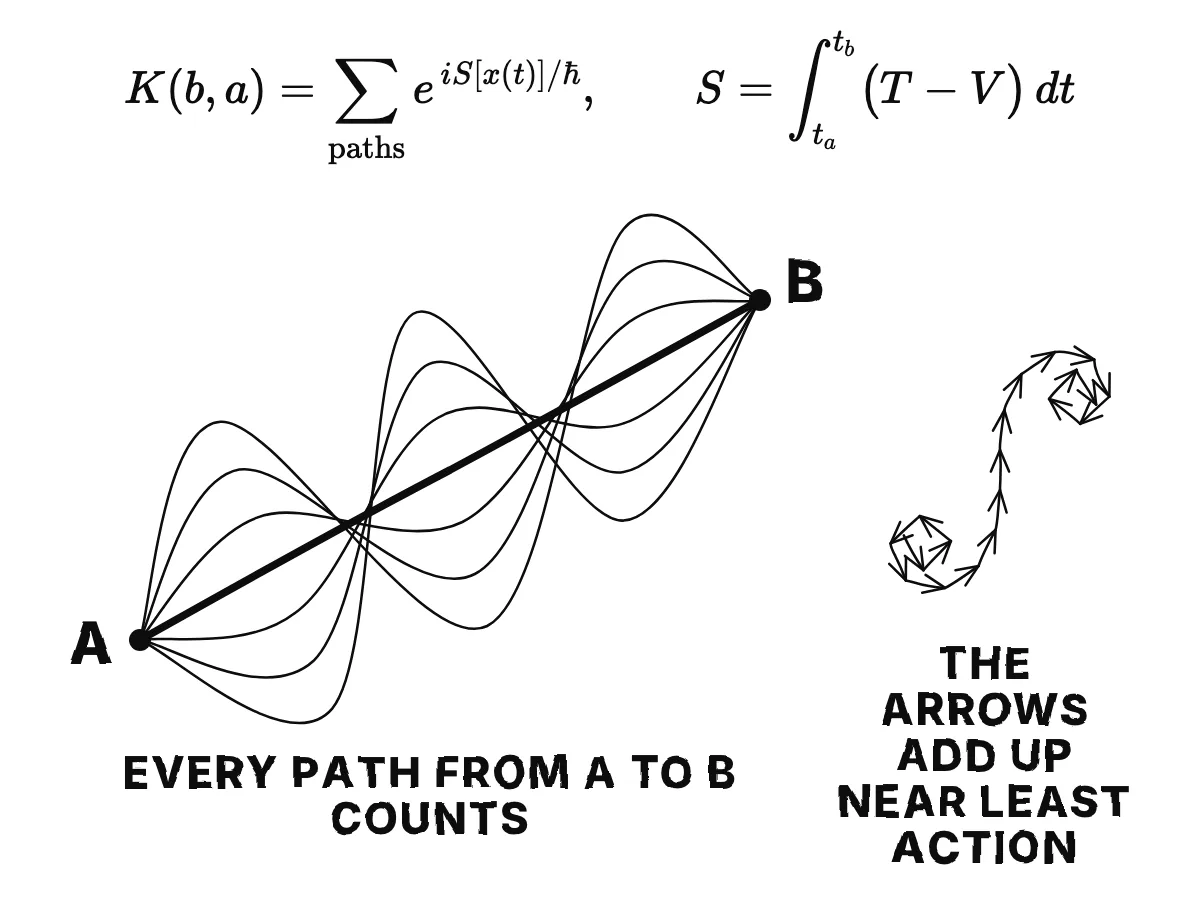
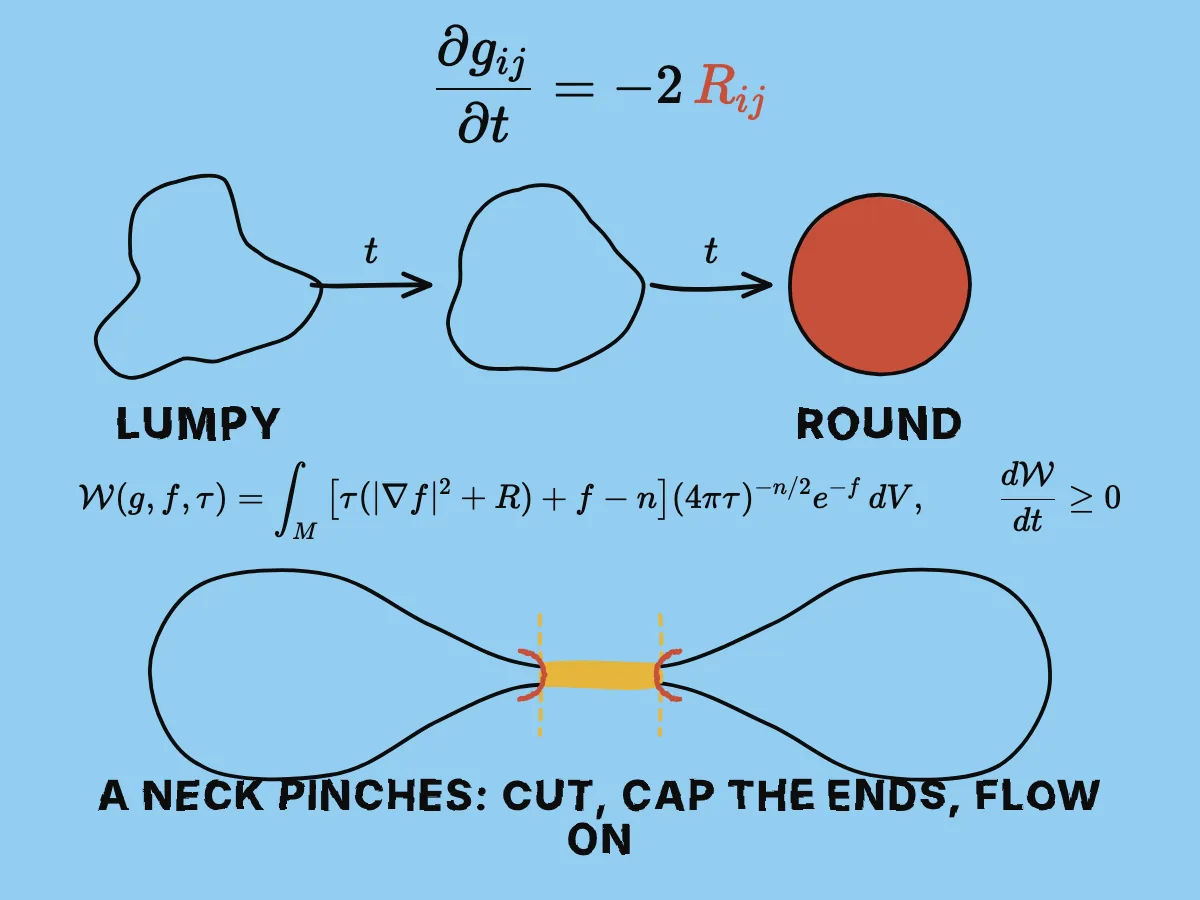
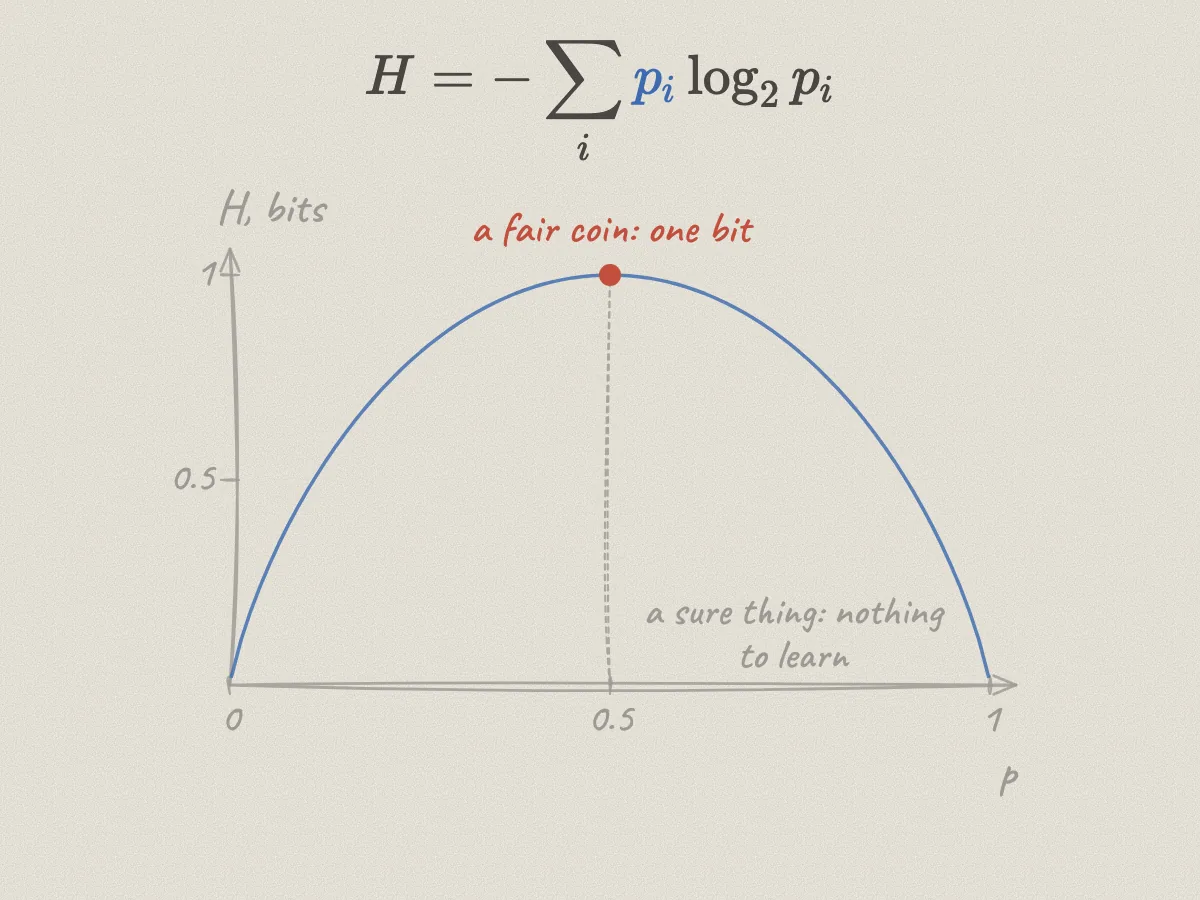
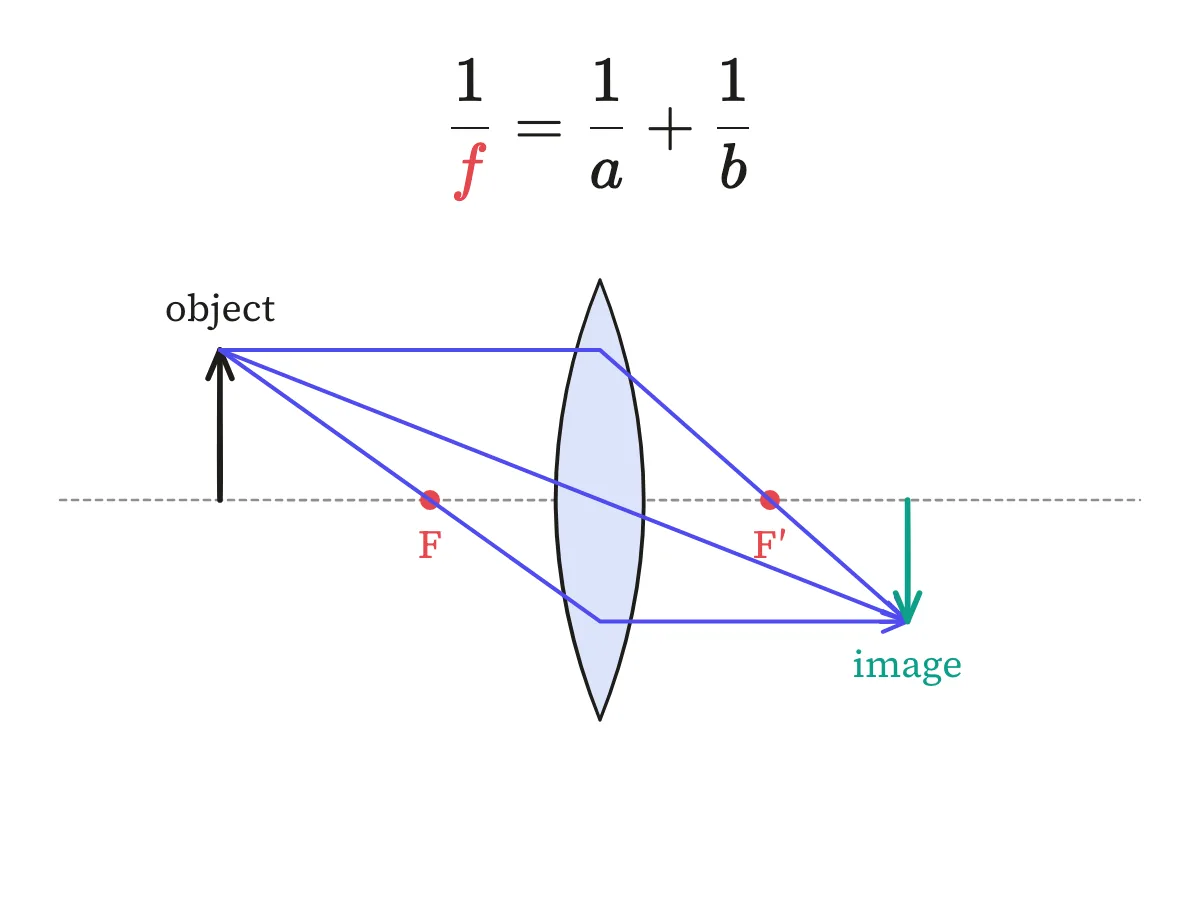
Voice, drawings and text in any combination. Switch whenever you like.
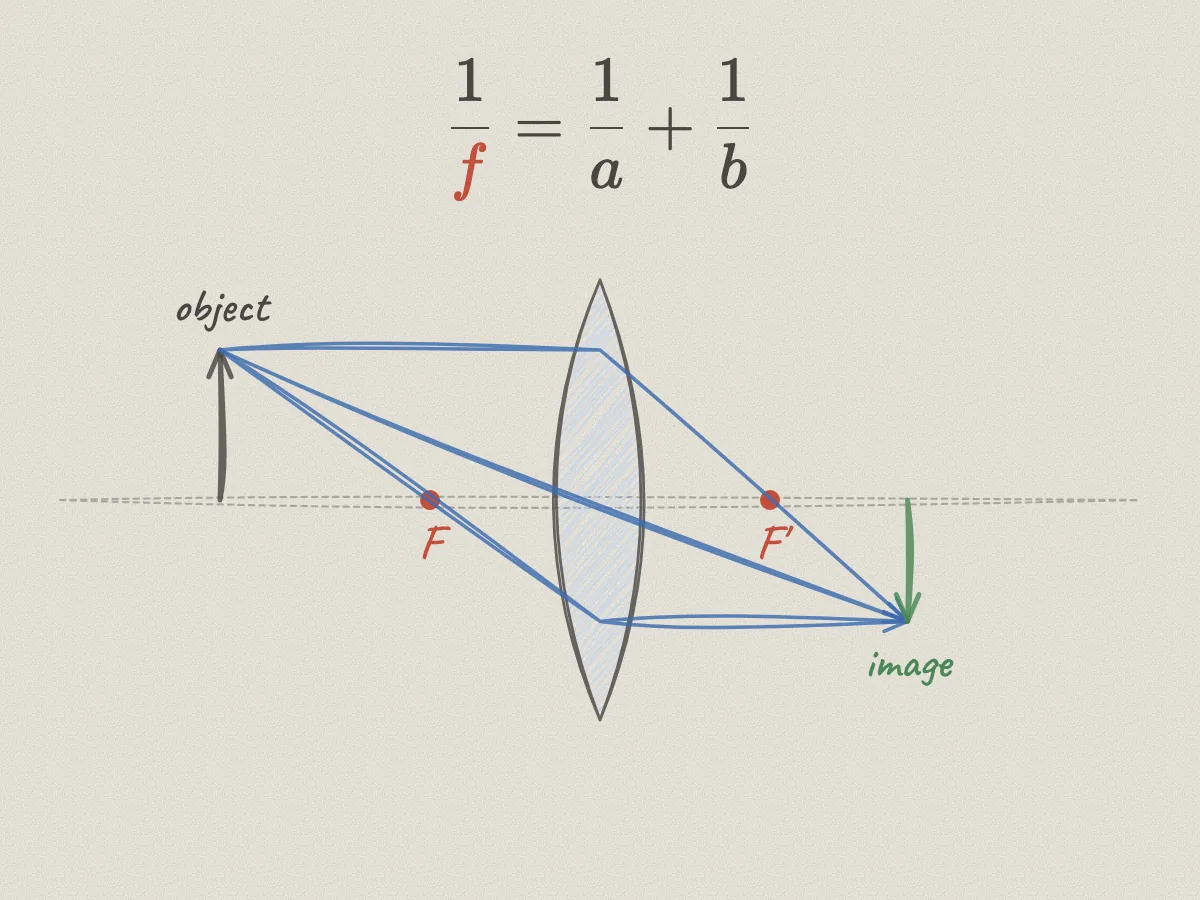
The first thing to know about a lens is how hard it bends light. Hold a magnifying glass in the sun: the rays arrive side by side, leave it leaning towards one another, and a little way behind the glass they meet in a bright dot. The distance from the glass to that dot is the focal length, and nearly everything else about the lens follows from it.
A lens is stronger when its glass is denser and its surfaces are more curved. Take ordinary glass, in which light travels one and a half times slower than in air, and curve both sides like a ball twenty centimetres across. Work it through and the focal length comes out at about ten centimetres: sunlight gathers into a point a palm's width behind the lens.
The book writes this as a formula, and we will come to it in a moment. It says no more than what we have just seen: denser glass or more curved surfaces, and the focal length gets shorter.
The distance from the glass to that dot is the focal length, and nearly everything else about the lens follows from it.
A lens is stronger when its glass is denser and its surfaces are more curved.
The drawing on the left page, the text on the right, the sentence being read in full ink.
The drawing on top and the current sentence below it. Or just the voice, on a walk.
Take it with you: MP3, MP4, EPUB, FB2, PDF.
EPUB, FB2, PDF or DjVu. Scanned pages are recognised.
Level, language, manner of the lecturer, drawing style, voice, your own examples.
The first five minutes, complete with voice and drawings.
The whole book or just the chapters you need. You see the price before anything is made.
The sample is free. After that the price depends on how much text is retold and how many drawings are made, and you see it before you start. Listening with your device’s voice costs nothing; studio narration is an extra. Top up a balance and spend it book by book.
About 10 hours of lectures and 45 drawings. A rough figure for level 3. The exact price is shown before anything is made, and the first five minutes are free.