A Family of Fractions in the Cotangent
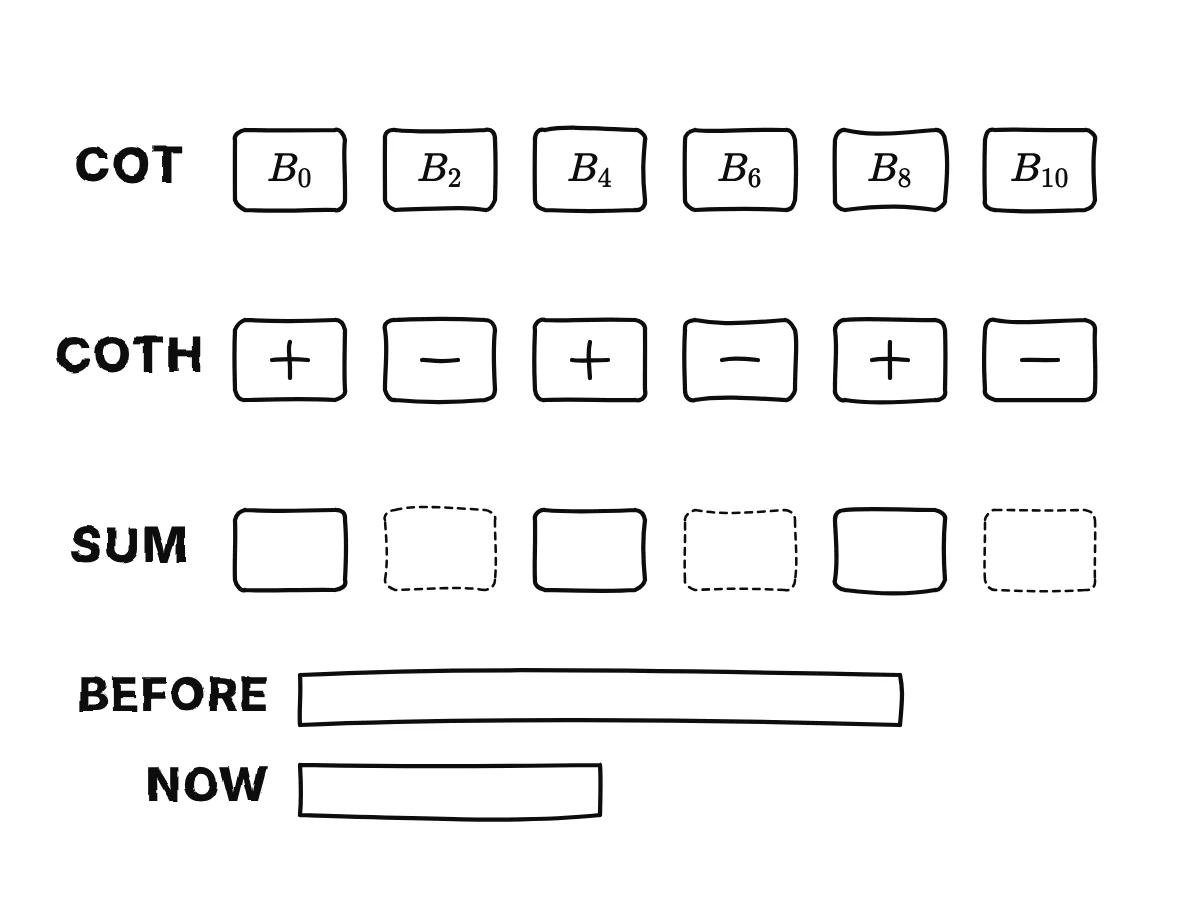
The twin cancels every second term
His second improvement mixes the ordinary cotangent with its hyperbolic twin, which is the same function evaluated on an imaginary argument.
Collected Papers of Srinivasa Ramanujan
The same text, told at every level, in every language and look shown here. Pick, then listen or download.
The same player the product gives for your own book: the voice, the drawings as they are drawn, the text.
The first paper the self-taught genius ever published, written in Madras at 23: strange patterns in the Bernoulli numbers, the numbers behind sums of powers. Most of his claims are true, some are guesses, and one is false; the lectures show which is which.
This is a sample: 1 of 37 papers.
His second improvement mixes the ordinary cotangent with its hyperbolic twin, which is the same function evaluated on an imaginary argument.
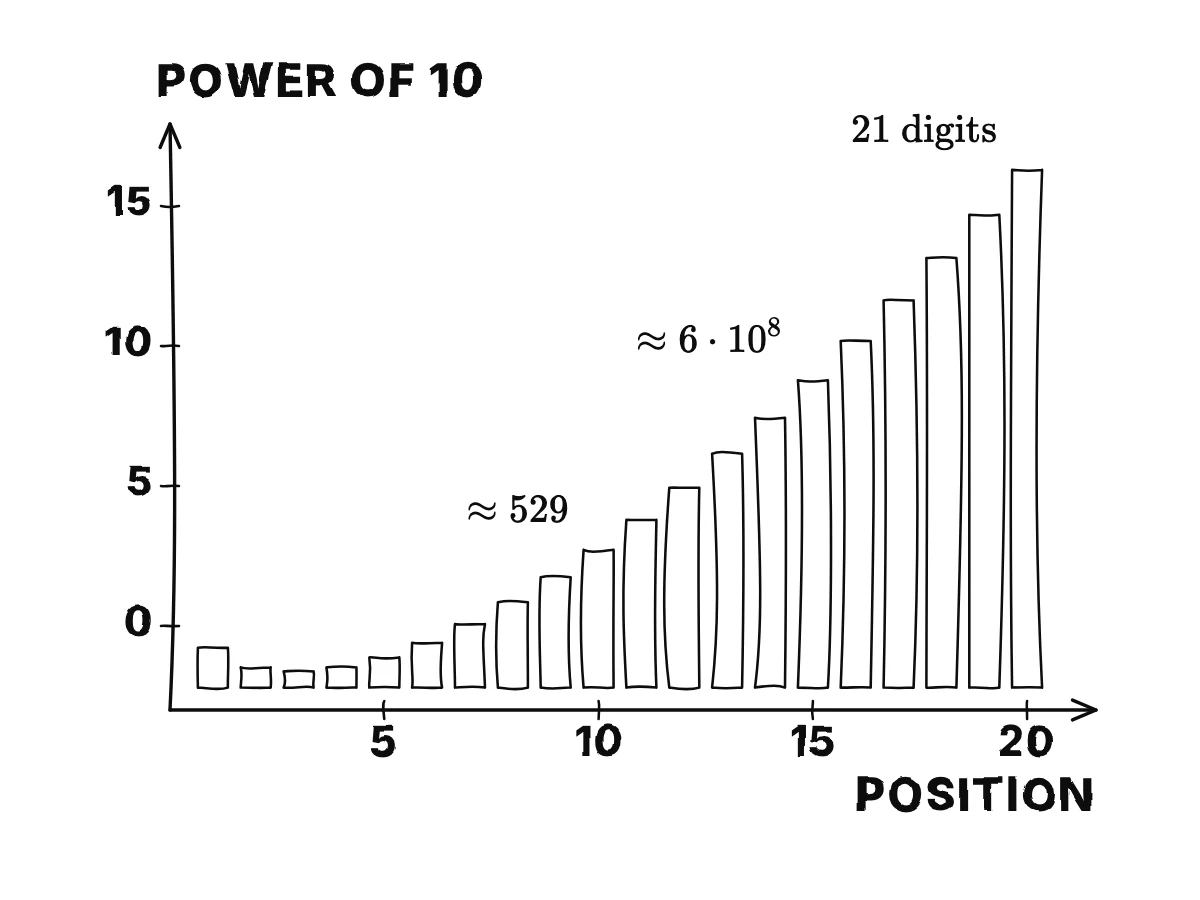
Going on like this, he lists twenty Bernoulli numbers. They stay small for a while, one sixth, one thirtieth, one forty-second, one thirtieth again, five sixty-sixths, then they climb fast.
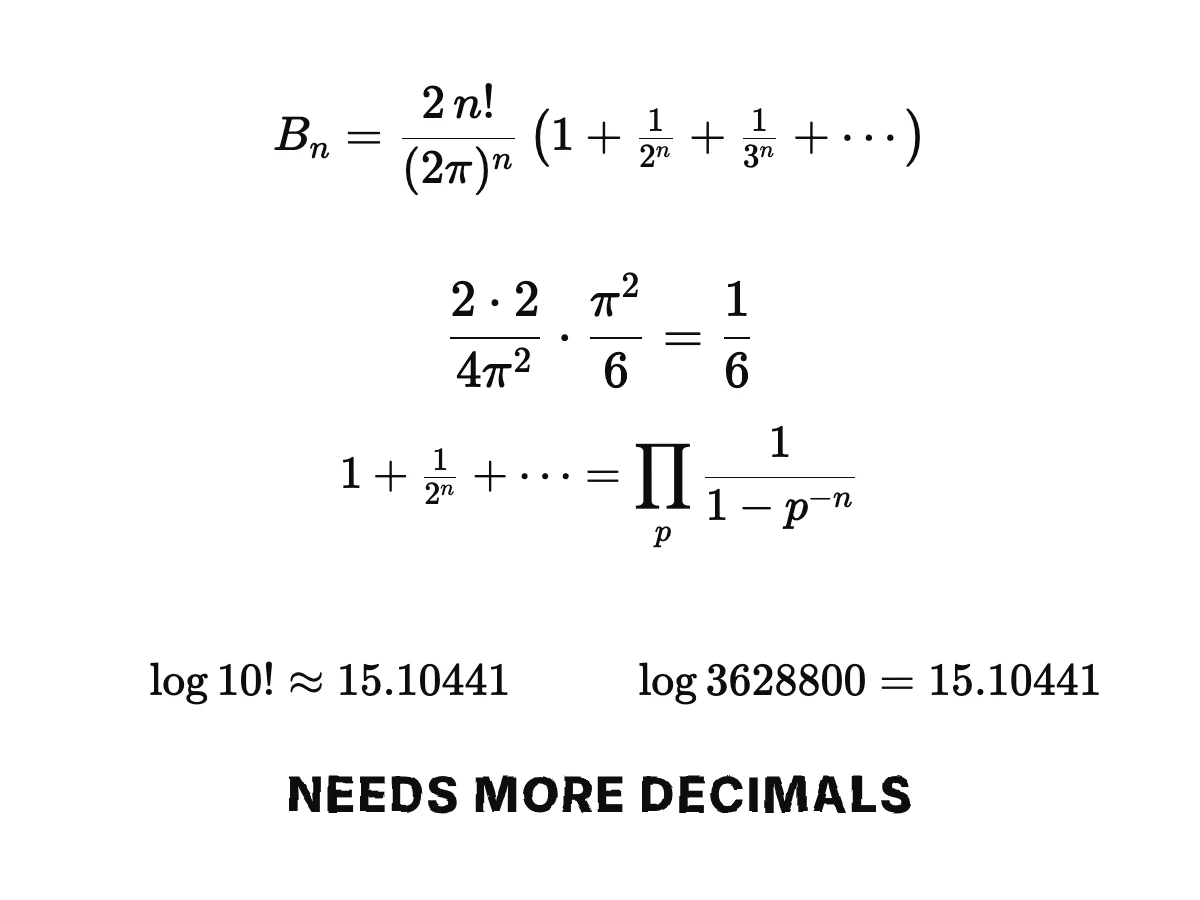
Where do such rough limits come from? Section eleven quotes a classical formula: a Bernoulli number equals two, times the factorial of its index, divided by two pi raised to the index, times the sum of one over every whole number raised to that index.
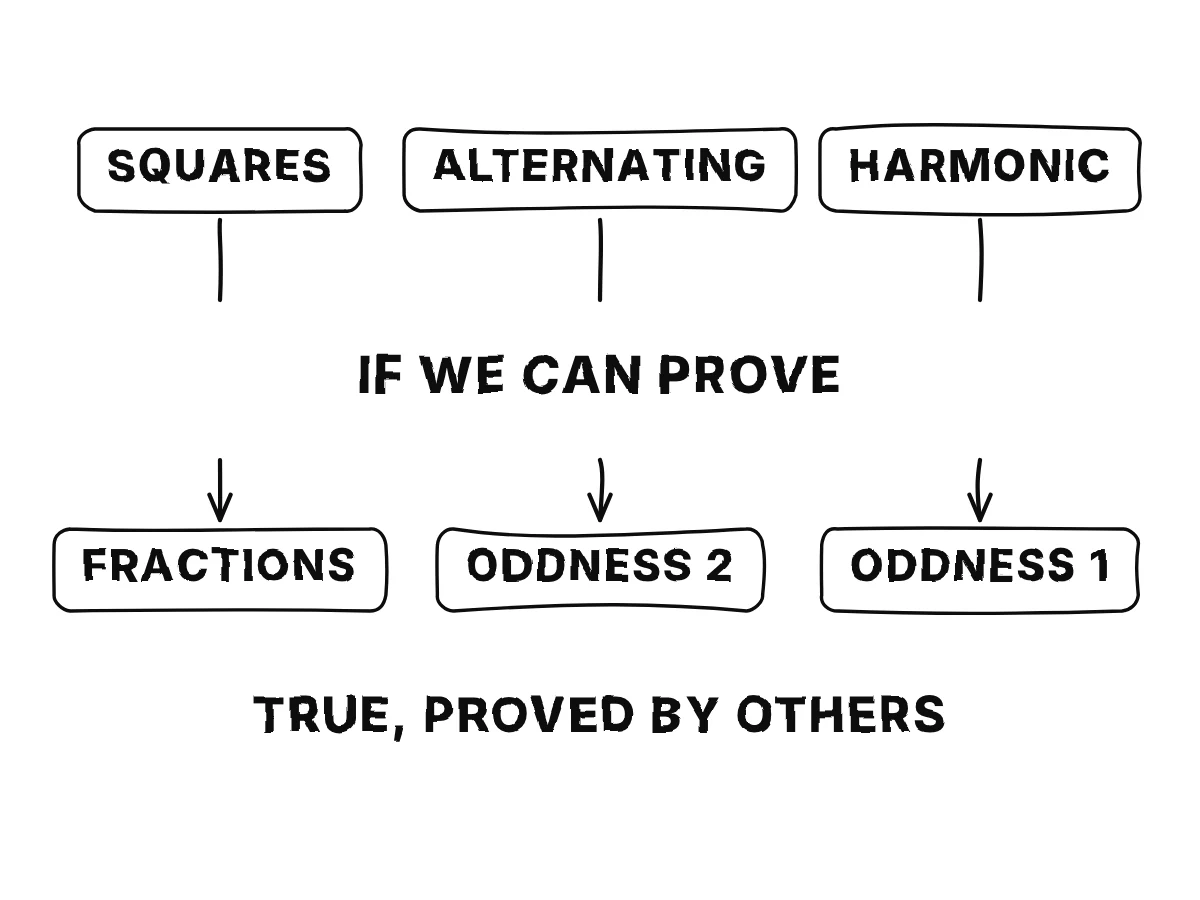
He then repeats the trick twice. Taking the same tail with alternating signs, he gets a series whose coefficients are Bernoulli numbers multiplied by one less than a power of two; if twice that alternating tail had whole-number coefficients, the second half of his oddness statement would follow.
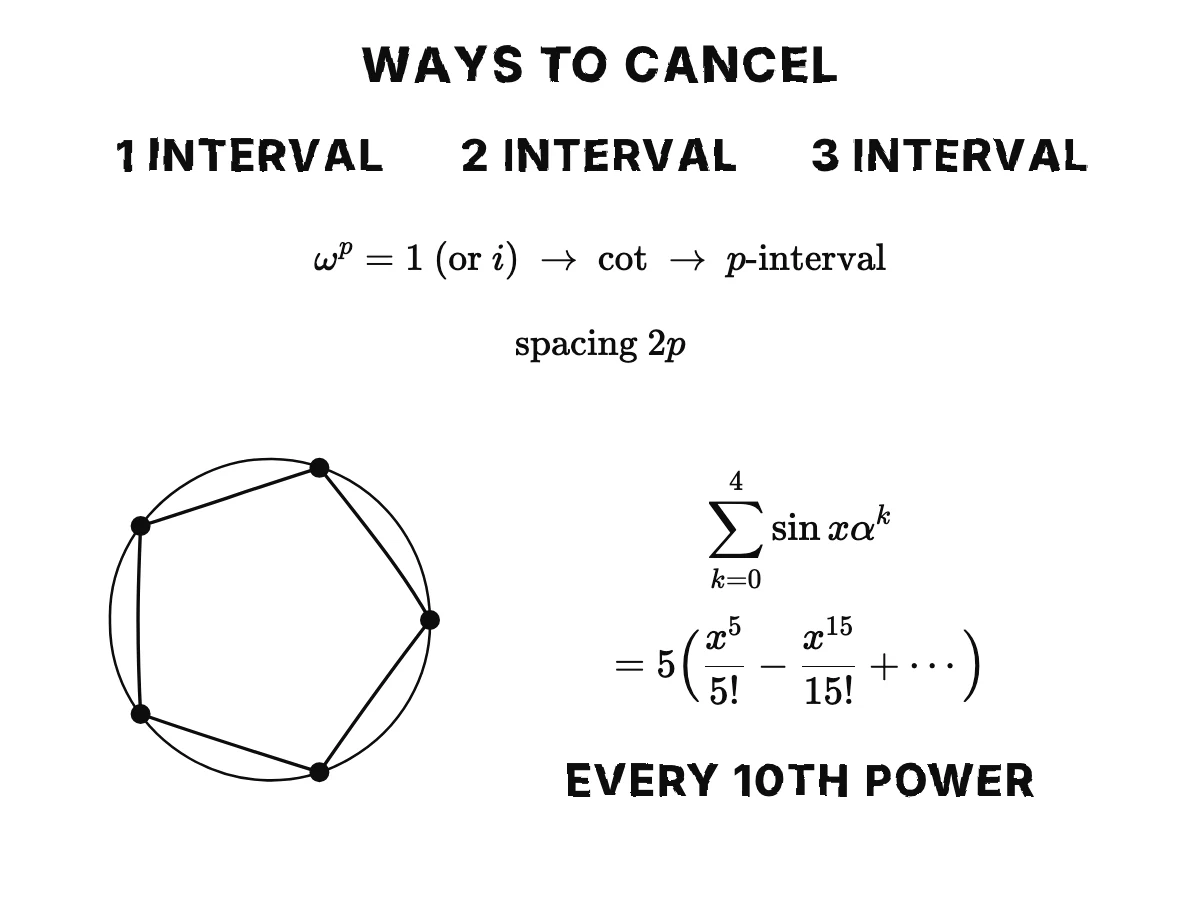
Second, the number of ways to cancel. Ramanujan names his earlier results the one-interval, two-interval and three-interval formulas, after how far apart the surviving Bernoulli numbers sit.
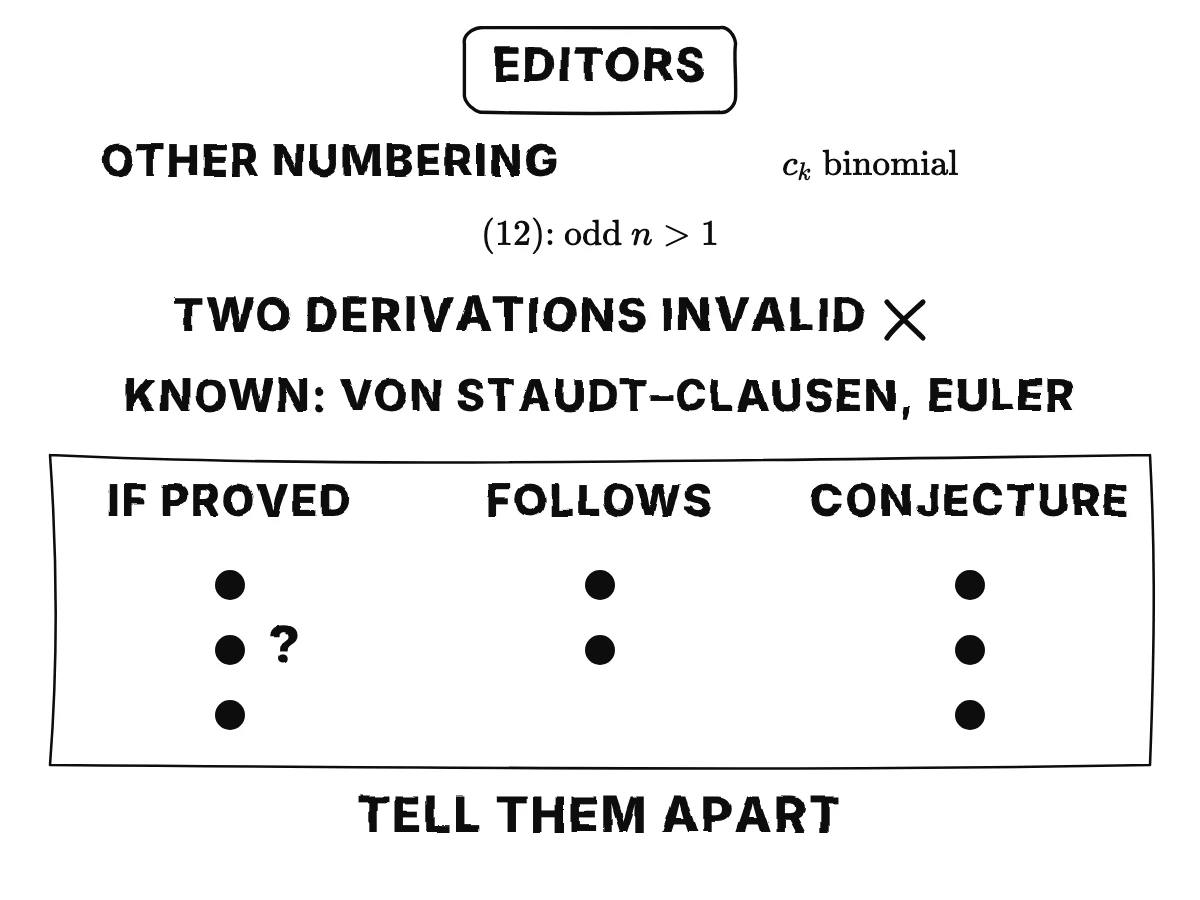
The book then prints a note from the editors of the collected papers, and it is the right place to take stock. First, small clarifications: Ramanujan numbers his Bernoulli numbers differently from most books, and the counting numbers in his equations are the usual binomial coefficients.
Examples for: a curious adult with school maths who likes number puzzles and knows Ramanujan's story; add one modern instance per idea, such as a calculator, computer algebra or cryptography
The lectures retell the English text of the Cambridge 1927 edition (Internet Archive pli.kerala.rare.28155). The author died in 1920; the work is in the public domain. The retelling, the drawings and the voice are made by AI and checked against the book by a second model; nothing was edited by hand. How AI is used.
The lectures are free to read, share and quote with a link to this page.
Upload a textbook or any difficult book. The first five minutes are free.
Upload a book