Library · Public domain

The Principlesof Chemistry

Основы химии

Cover illustration of the book

Choose your version

The same text, told at every level, in every language and look shown here. Pick, then listen or download.

Listen and watch

The same player the product gives for your own book: the voice, the drawings as they are drawn, the text.

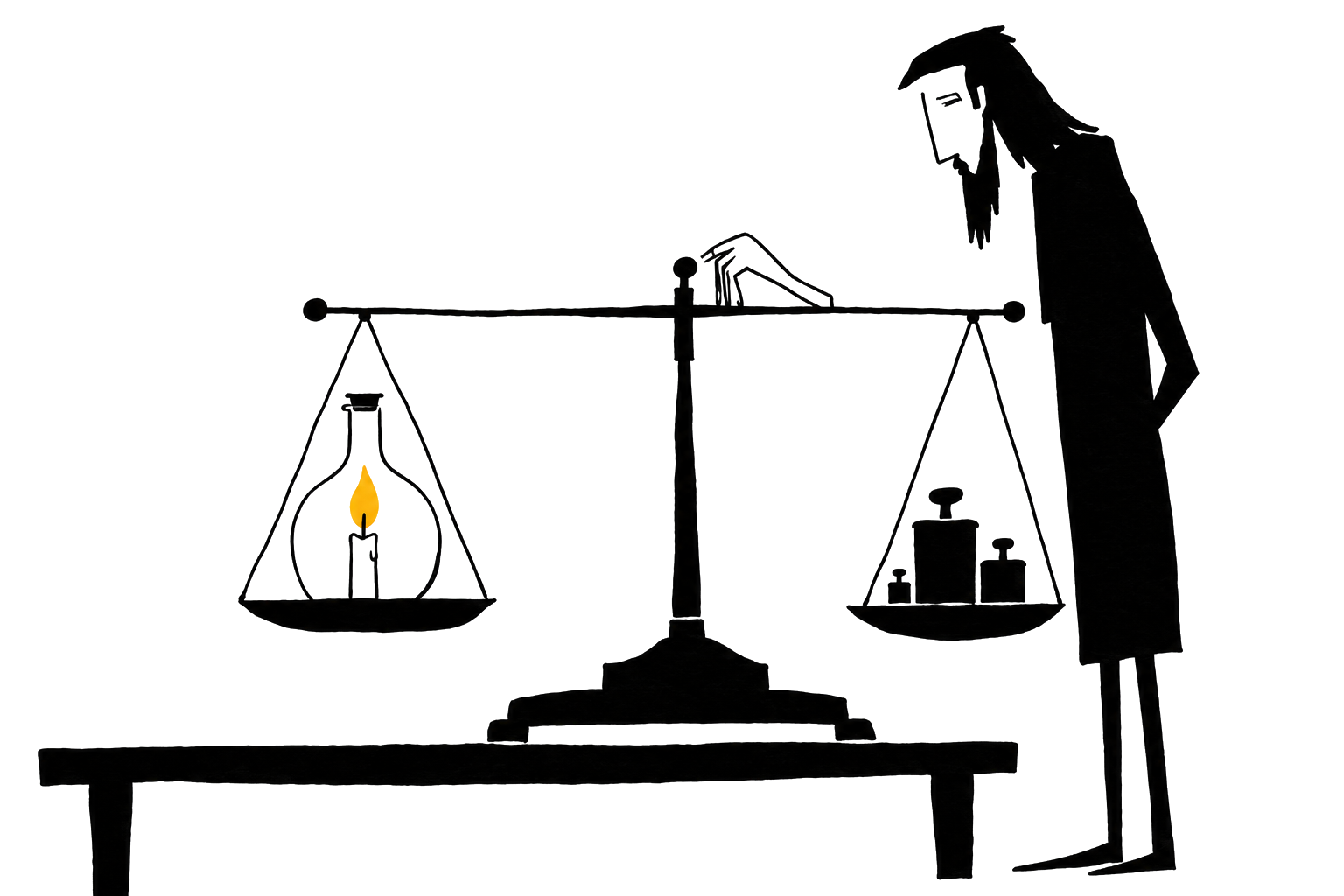
The textbook in which Mendeleev first set out his periodic law, in its last edition from his lifetime. Its Introduction asks what changes when one substance turns into another and what stays the same: the weight on Lavoisier's balance, the elements, the fixed proportions in which they combine.

This is a sample: 1 of 25 chapters.

From the lectures

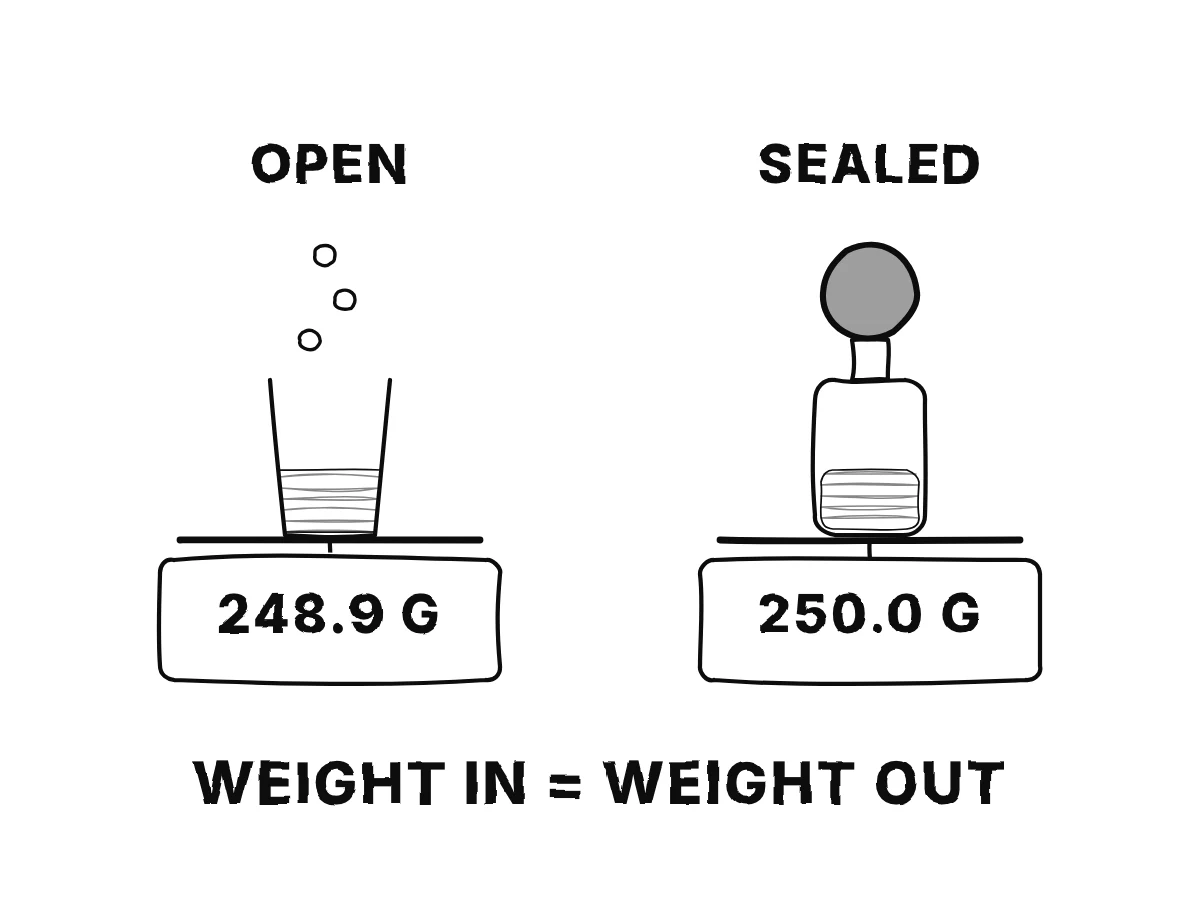
Two kitchen scales: on the left an open fizzing glass whose reading drops from 250.0 to 248.9 grams; on the right a sealed bottle with a balloon whose reading stays at 250.0 grams; below, 'products = reactants'.
Nothing Is Lost on the Scales

Open glass, sealed bottle

Put a glass of water and a small paper bag holding a spoonful of baking soda together on a kitchen scale, and note the reading. Pour a little vinegar into the glass first and weigh again with everything on the pan, then tip the soda in.
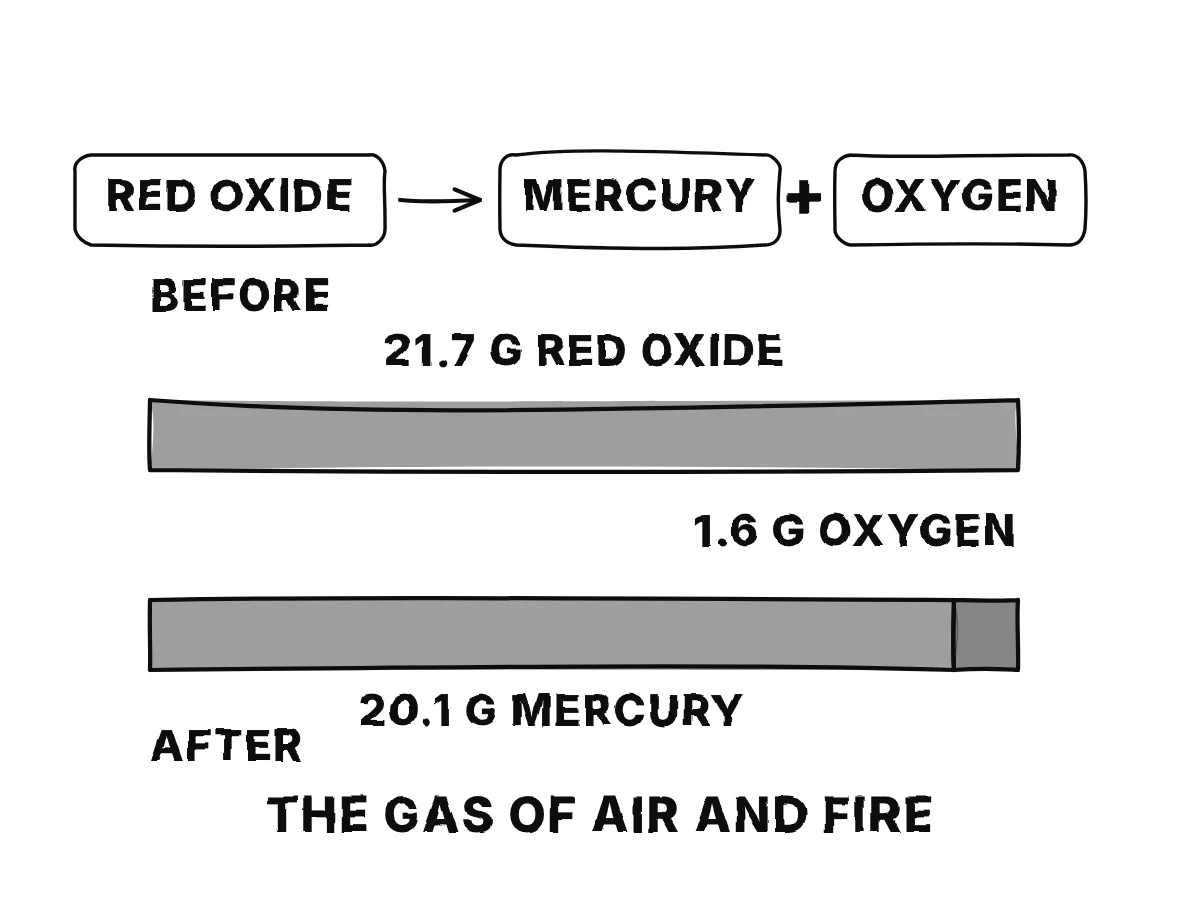
The red oxide splits into mercury and oxygen: a bar of 21.7 grams equals a bar of 20.1 grams of mercury plus a short bar of 1.6 grams of oxygen.
The Scales That Catch a Missing Gas

21.7 g = 20.1 g + 1.6 g

At the same time, a shining film and little droplets of liquid metal gather on the cool parts of the retort and in the bulb: mercury vapour condensing. So the red oxide gives two bodies, mercury and oxygen; one has become two, which makes it a decomposition. Again the weights account for each other.

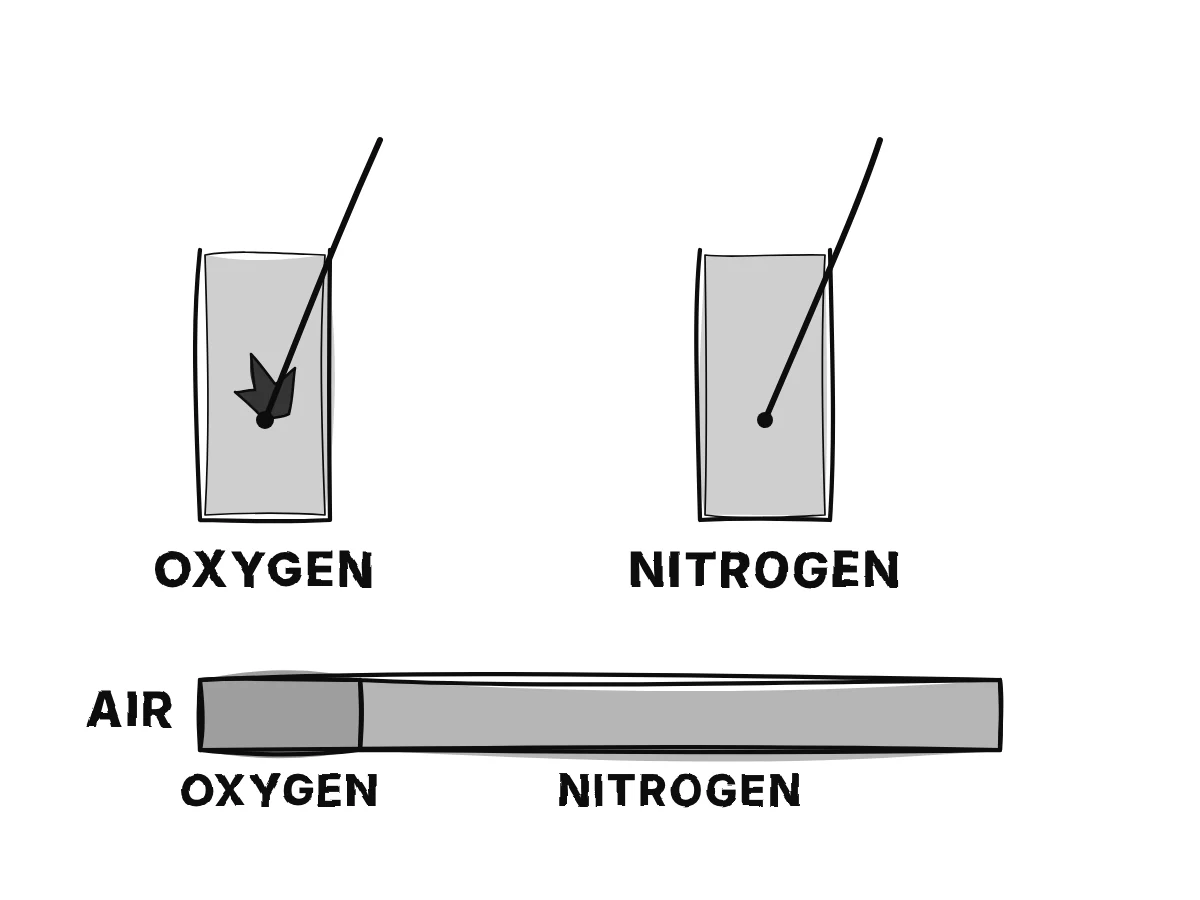
A glowing splinter blazes in a jar of oxygen and a burning splinter goes out in a jar of nitrogen; a bar of air is one fifth oxygen and four fifths nitrogen.
Twelve Days Under a Glass Bell

Air is two gases

Wet a pad of steel wool, push it into the bottom of a tall narrow glass, and stand the glass upside down in a saucer of water. Mark the water level inside the glass and look again after a few days.

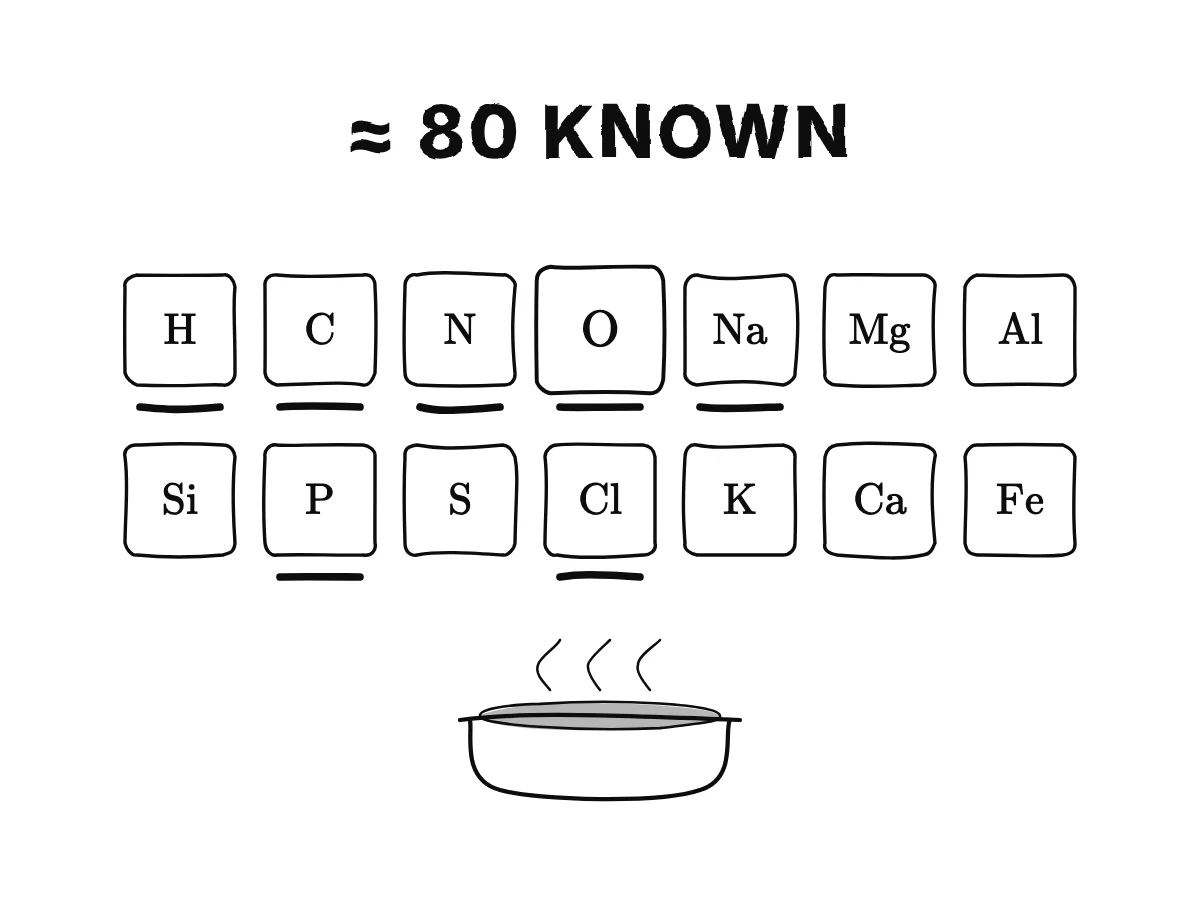
Fourteen tiles with the signs of the commonest simple substances, H, C, N, O, Na, Mg, Al, Si, P, S, Cl, K, Ca and Fe, with oxygen drawn largest; several light up for a bowl of salted soup.
Seventy-Seven Bricks and the Force That Binds Them

The fourteen commonest

Whatever the sorting, the ideas of element and simple substance are the foundation of chemistry, and Mendeleev gives a list of the simple substances right at the start to show the state of knowledge. About eighty simple substances are recognised.

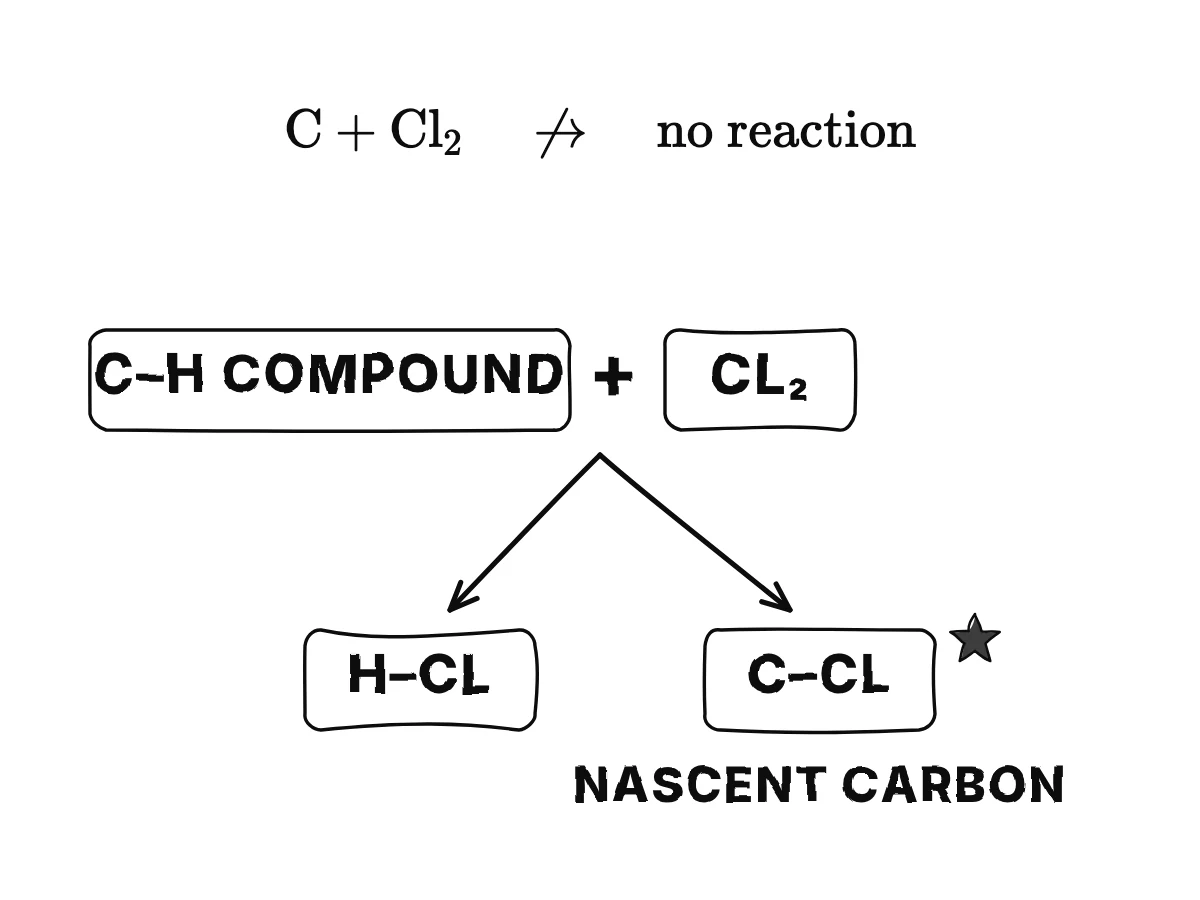
Chlorine and solid carbon do not react, shown with a crossed arrow; but chlorine acting on a carbon–hydrogen compound takes the hydrogen, and the carbon freed at that moment joins the rest of the chlorine.
The Hidden Store of Chemical Energy

Carbon meets chlorine sideways

To obtain such substances one needs a roundabout way. If one substance will not combine directly with another under any conditions, that does not mean their compound cannot exist.

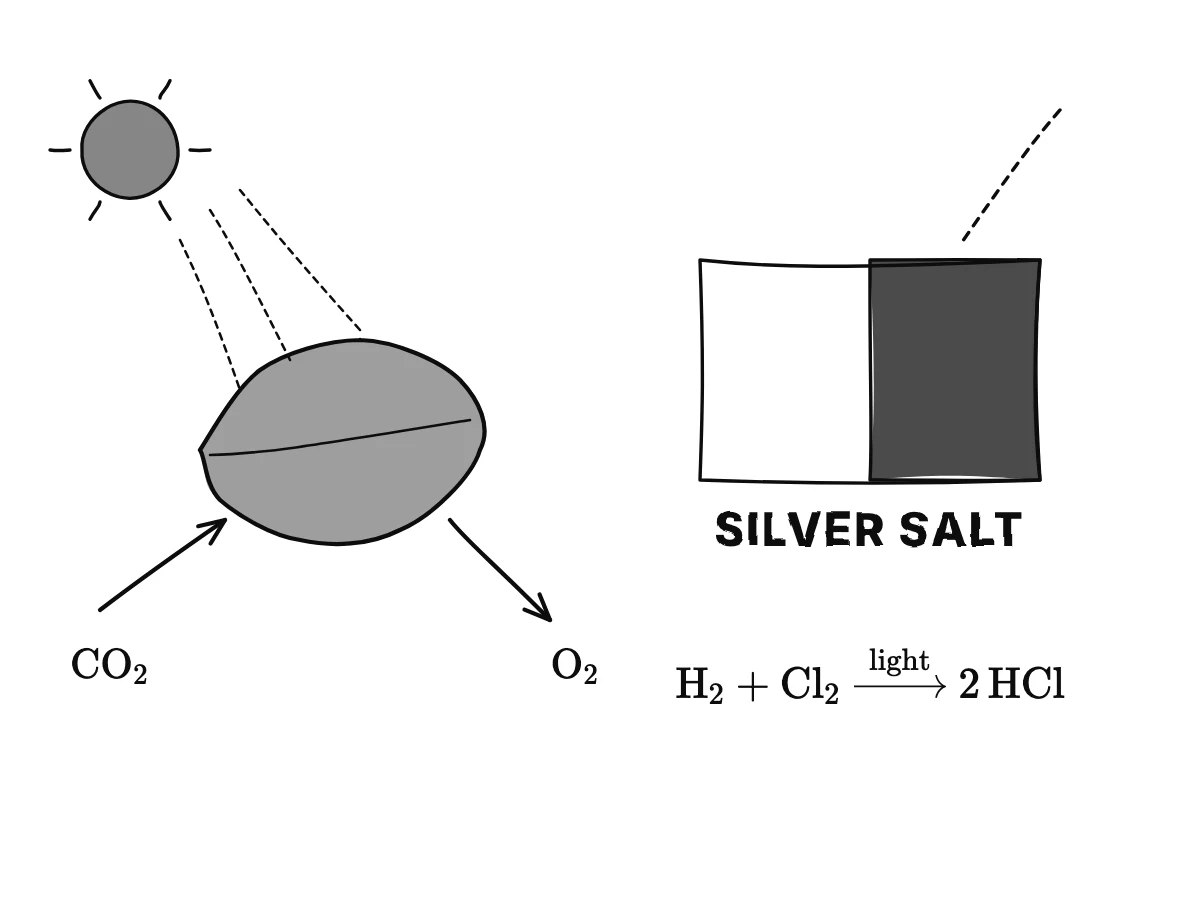
A leaf in sunlight takes in carbon dioxide and gives out oxygen; beside it light darkens a silver salt, as in a photograph, and makes chlorine and hydrogen combine.
Current, Light, a Blow and a Touch of Platinum

Light splits and joins

The third condition is light. Some unstable compounds are decomposed by light, and photography is based on this property of certain substances, such as silver salts.

How it was made

Examples for: a curious adult with school chemistry; add one modern instance per idea, such as a kitchen, a battery, a lab scale or a factory

The source

The lectures retell the Russian text of the 7th edition, St Petersburg 1903 (Internet Archive 20200627_mendeleev_basic). The author died in 1907; the work is in the public domain. The retelling, the drawings and the voice are made by AI and checked against the book by a second model; nothing was edited by hand. How AI is used.

The lectures are free to read, share and quote with a link to this page.

Your own hard book, the same way

Upload a textbook or any difficult book. The first five minutes are free.

Upload a book